This article first appeared at Today in Alternate History.
"The voyages of the great Chinese fleet were missions of exploration and commerce. They were not enterprises of conquest. No yearning for domination obliged Zheng to scorn or condemn what he found. What was not admirable was at least worthy of curiosity. And from trip to trip, the imperial library in Beijing continued growing until it held four thousand books that collected the wisdom of the world. At the time, the king of Portugal had six books." ~ Eduardo Galeano
In 1433, after an epic journey around the Cape of Good Hope and through the Strait of Gibraltar, the huge expeditionary fleet of Admiral Zheng He finally reached the continental boundary between Europe and Asia. Safe passage through the Mediterranean Sea was guaranteed by the Venetian Navy on the basis of a long-standing peaceful invitation to the Chinese Emperor made centuries before by Marco Polo. Exhausted by the Ottoman onslaught that had led to the military disaster at the Siege of Thessalonica, Venice did not have much choice.
To prevent the navy bottle-necking the Bosporus, the Admiral was forced to send ahead some smaller Fuchuan warships to complete the journey to Byzantium. Zheng He had spent three decades commanding seven expeditions through Indonesia, India, Arabia, and the east coast of Africa. Nevertheless his voyage to Byzantium, at the climax of his career, would be truly historic. This was largely because of good timing - his arrival was warmly welcomed by John VIII Palaiologos. Facing an existential crisis, the Byzantine Emperor was desperately in need of aid from any source in order to continue a losing fight against the resurgent Ottomans. The Chinese were potential saviors, even though their influence would lead to yet another major religion, Buddhism, becoming a part of the already complicated Byzantine social dynamic.
Zheng He was himself born of a Muslim family, and his voyage was one of exploration rather than conquest, but even so his arrival was hugely consequential. With a military alliance affirmed, Zheng He's fleet, featuring numerous ships larger and more heavily armed than any Europe or the Middle East had ever seen, made short work of the Ottoman fleet that had dominated the Bosporus. Suddenly cut off from supply, sultan Murad II's tremendous advance through the Balkans came to a halt. In a series of battles behind enemy lines that would have impressed Hannibal himself, Murad held onto his position until his death in a decisive defeat at the hands of an army of the Serbian-Hungarian alliance. Murad's son Ahmed was placed on the throne, followed by Alaeddin, and ultimately Mehmed II as a series of early deaths plagued the household. Mehmed would cut his leadership teeth battling the Timurid Empire in the east, expanding the Ottoman Empire far into the Middle East as he gained the epithet "Conqueror."
In addition to tipping the balance in the favor of Byzantium, Zheng He brought with him applied science and technology that would transform the fortunes of the vulnerable Byzantine Empire at its weakest moment. Most significant of all the fortifications of the capital city would be dramatically improved by the time of the succession to Constantine XI in 1448. The Ottomans had missed their chance and decided never to return in another siege attempt. Instead, their conquests stretched from Persia all the way down the eastern coast of Africa to the Great Zimbabwe.
The wealth and power of Zheng He's fleet would have a massive effect on Byzantium, which would become the industrial center of the world by the dawn of the eighteenth century. Steam-driven ships brought in textiles and other raw materials, then exported manufactured goods back to ports as far away as China and the Americas. The Byzantine Empire dominated the region, serving as a perfect balance between Christian and Muslim influences with a booming multi-faith population.
Author's note: In reality Zheng He died in 1433 in Calicut, India. By then, China's expeditions had started to go out of fashion with the emperor as policies turned back toward isolationist Confucian ideals. Soon the size of ships was legally restricted to prevent reckless gambling on oversea ventures.
Provine's coda:
With the Balkan states coming into their own, Byzantium found itself in a new world.The city, now a shadow of its former empire that once spread across the
Mediterranean world, was precariously balanced between Orthodox
Christians to the west, Catholic Christians in the north, and Muslims to
the east. Papal influence in the region waned since the promised rescue by the Holy Roman Empire was delivered instead by non-Christian Zheng He. Fortunately, the Byzantine emperors knew something everyone could believe in: money.
Word soon spread about the development in Germany of a printing press that could produce 3,600 pages in the same day a scribe could write 40, which the inventor Guttenberg planned to use to sell mass-produced Bibles. Religious implications aside, the Byzantines were far undermanned and an increase in production like that was much needed. The city was already a center of engineering: even hundreds of years before, ambassadors were greeted by mechanical birds singing artificial songs and a throne that could rise thirty feet in the air on hydraulic pumps. If engineers could make machines to sing, why not to do practical things? Encouraged by an imperial bounty, designers from all over the world, including the Chinese on the lengthy route around Africa, flooded the city with machines that could automatically spin, weave, and sew textiles into completed garments. The same happened with pottery, furniture, paper, practically anything that could be manufactured. Factories powered by pneumatic and hydraulic engines lined the landscape, and Byzantium earned a new nickname as "the World's Factory" as raw materials flowed in and goods flowed out.
Other nations hurried to catch up, such as the popes working to modernize Rome, the states of Germany building an iron-based trade network, and the Ottomans rebuilding the Pharaoh's Canal to shorten the travel time by boat to the Far East. China, too, felt the effects of closer east-west relations. Rather than following Confucian ideals toward closing off the nation, new models of Confucian thought drove the emperor to expand Chinese influence into "untamed" regions that they felt could benefit from their teaching. In an impressive feat of international agreement build a railway linking Byzantium with Beijing.
While the proximity meant potential for wealth, Byzantium long knew the significance of industrial espionage. A millennium before, Nestorian monks had smuggled silkworms in hollowed-out walking staffs and ended China's monopoly on silk production. The Byzantines greedily guarded their industrial secrets and built up a city guard that kept a careful eye on anyone who knew even parts of how machines worked. Witch hunts routinely broke out, leading to executions of engineers, such as that of famed designer Leonardo da Vinci when he refused to give up the codes embedded in his sketchbooks.
Monday, June 15, 2020

Sunday, June 7, 2020
458 - Biological Warfare Counters the Huna
The expansive Gupta Empire ruled for hundreds of years over
northern India, stretching from the mouth of the Ganges River in the Bay of
Bengal to the Indus River pouring into the Arabian Sea. Successive generations
of rulers such as Chandragupta and Samudragupta added substantial territory to
their influence as well as securing important trade routes that funded the
flourishing empire. In the middle fifth century, however, invasion from the
north seemed it would break apart imperial rule.

Skandagupta, who came to the throne as the lesser son of
Kumaragupta after a forceful seizure of power in about 455, sought to defend
his lands from the Huna, also known as Alchon Huns or White Huns, whose
migratory conquests marched south from Central Asia. The Huna had gained political
recognition by the Sassanid Empire to the west, guarding each other’s flanks while
the Sassanids fought Byzantines in the Middle East and the Huna sought to
expand. Skandagupta used the heavy cavalry, supported by war elephants and
infantry, that had brought together the Gupta Empire to drive away the Huna
incursion. It was obvious, however, that Skandagupta’s victory would only be
temporary as the Huna were a quickly growing power.
Pondering the issue, Skandagupta looked out over his empire,
which was often presented as the most advanced in the world. Analytical texts
such as Kama Sutra had studied
aspects of the human experience that many considered beyond understanding, Jainist
mathematicians had defined principles of infinity, and creators had synthesized
the logic of warfare into the game that the world would come to know as chess.
No problem should be beyond their collective minds, so Skandagupta put out an
edict that whoever discovered the best solution would be given a great reward.
Numerous designs for innovative weapons and techniques flooded the palace at
Pataliputra. Skandagupta’s choice was one that had been a part of human
strategy for centuries: biological warfare.
The strength of the Huna rested in their herds, particularly
their warhorses. Gathering sick horses from outbreaks in corners of the empire
of diseases such as equine influenza and glanders, the imperial guard smuggled
them into the northwest to be sold, allowed to be stolen, or simply let go to blend
in with the Huna’s own. One strategy even had horses the guise of an Ashvamedha
sacrifice in which soldiers would protect a horse as it wandered freely through
the empire for one year, proving the stability of the imperial rule. Proving to
be much less expensive than keeping up a large army to deter Huna invasion,
Skandagupta and his descendants repeatedly introduced waves of plagues among
the horsemen, devastating their herds and base of their economy.
In generations to come, however, the Guptas felt the
consequences of the plagues as they often spread back into the empire from the
west. Horse populations dropped, and the empire found itself with a dire
shortage of beasts of burden. Attempts were made to expand the use of elephants
and even camels, but elephants took a long time to propagate and camels did not
do well in more humid climates. In about 500, Skandagupta’s great-grandson
Budhagupta followed his ancestor’s example to appeal for ideas to resolve the
burden issue.
By then, the Gupta Empire had grown by leaps in its science.
Aryabhata had summarized Indian knowledge of mathematics and astronomy into one
great work and clarified the place-value system that implied the existence of a
“zero.” While he supported a geocentric model of the universe, he did show the
Earth was round and rotated on an axis with the moon using reflected sunlight.
Art and architecture had thrived with the imperial households increasingly
supporting Buddhism with new temples. Numerous scholars focused their attention
on contagions to better understand how to protect local horse herds. After
reviewing complex schemes for mass canal systems and improved designs for
carts, Budhagupta approved an engine that mimicked the power of a horse by steam
from a boiler. Steadily steam engines came into use with iron soon replacing
early brass models.
While the first steam engines were used to pull carts, soon
the devices were being used in stationary form at mills. Religious objection to
using forests for fuel were met with increased mining of the empire’s extensive
coal resources. Demand for iron drove Gupta conquests southward into the
kingdoms of the Vakatakas, beginning a new era of expansion for the empire. As the
economic middle classes grew throughout the caste system, the newly rich
patronized engineers and scholars, especially when their discoveries in
chemistry or physics could make money. Varahamihira furthered geometry and
trigonometry and define reflection and refraction in optics, leading to the
development of lenses that soon allowed for telescopy, microscopy, and
photography.
The Gupta Empire lasted approximately three hundred years
before its satellite provinces in Southeast Asia broke into smaller states and
revolution changed the imperial structure for more representation. By then, the
technology and culture of India had spread widely, and, even in a different
political form, northern India remained the scientific and economic center of
the world. Indian steamships circumnavigated Africa to Europe and reached as
far as Japan and New Zealand, establishing colonies for trade all along their
paths. Buddhism, the imperially supported religion above others, spread along
with the economic wealth, creating a complex mixture of versions of related
religions throughout the world. Buddhism grew further under the Indian-influenced
Song dynasty in China, where scholar-bureaucrats continued the Guptan practice
of encouraging technological development and launched expeditions to map the
western hemisphere.
--
In reality, the Huna continued generational invasions of
northern India going as far as Eran midway through the subcontinent. Conquerors
such as Toramana and Mihirakula were seen as bitterly cruel, especially as
Mihirakula’s beliefs in Shiva drove him to destroy temples and any recorded
knowledge. Eventually the Guptas and their allies defeated the Huna, but by
then the trade routes had been wrecked and the empire had been worn down.
Monday, June 1, 2020
Guest Post: Black Hand Overthrows Serbia, sowing seeds of July Crisis
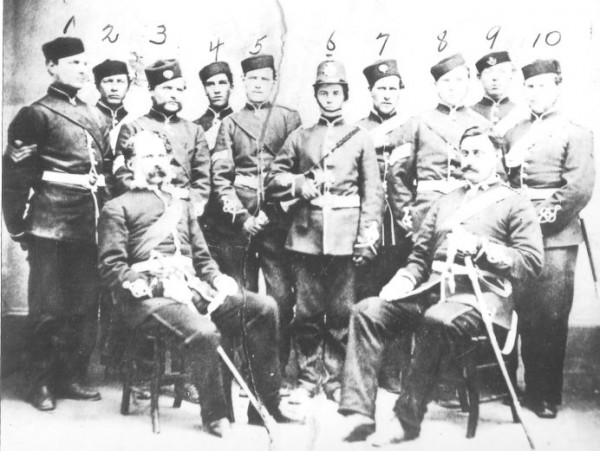
This article first appeared on Today in Alternate History.
"You have made a mistake. We were all over the countryside and, without exception among the Serbian population, greeted in such a friendly manner, with such sincerity and unrestrained warmth that we are really happy about it," Sophie, Duchess of Hohenberg playfully reprimanded a leading Croat politician who had begged them not to go to Sarajevo the following morning, June 27, 1914.
On May 30, 1914, Serbian army officers in the Black Hand organization overthrew the government of Prime Minister Nikola Pašič to push forward their agenda of uniting all Serbian-majority territories. Pašič had long been affiliated with the group, but his relationship had faltered due to bickering with the military about administration of new territories gained in the First and Second Balkan Wars. Pašič argued for democratic elections and ultimately dismissed the military administrator ahead of planned elections later in 1914. The Black Hand struck back, seizing all administrative power with the nod of of the king. This ill-fated coup was brought about by the rising tensions that were spreading across the Balkans region. Far from being an isolated event in Belgrade, it would have huge consequences and ultimately lead to the "July Crisis" of increasingly desperate diplomacy in Eastern Europe.
It was another step in the rising nationalism that had brought a new anti-Austrian king, Peter I, to the throne of Serbia a decade earlier. The Serbian emerging desire to expand their South Slav state of Serbs, Croats and Muslims had then been frustrated by the Austrian annexation of Bosnia-Herzegovina during 1908. The Russian Empire put intense pressure on the Serbs to accept this imposed outcome to the Bosnian Crisis since Austria had supported Russia annexation of Bessarabia. Bulgaria and then Albania gained independence from the Ottoman Empire. Serbian army officers had been ready to make a positive move when the Balkan Wars of 1912-3 began, further weakening the Ottomans' centuries-long grip on the region. Serbia's strong military performance worked against them and kept Pašič in office with the support of powerful Russian sponsors even though Austria still led influence in the Balkans.
At the end of the conflict, Archduke Franz Ferdinand, the Habsburg heir, was appointed Inspector-General of Imperial Forces. This meant that any subsequent action he took could be seen as an official act on behalf of the military. Worse still, it implied that his programme of change would be led (or even reinforced) by the military. Certainly, the Austrian Commander-in-Chief Franz Conrad von Hötzendorf believed that military intervention was necessary to prevent Serbia getting access to the ports on the Adriatic Sea.
As the Ottoman Empire declined, Russian-Austrian relations continued to deteriorate, and Serbians grew bolder. Given the impressive size of the sprawling Austro-Hungarian Empire, even the new government in Belgrade could not dare an aggressive move to occupy Bosnia-Herzegovina. Instead, they opted to win more public support broadcasting that Franz Ferdinand wanted to form a South Slav province of the empire and deny self-rule.
This identity-grab was his first move in an overarching plan to breathe new life into the empire and permit Habsburg domination of the southern Slavs to continue indefinitely. The archduke was a single-minded and determined individual who had married his Czech wife against the wishes of the emperor on the condition she could never become empress and their children could not ascend to the Habsburg throne. It might have been much wiser to wait until his succession to the eighty-four year old Emperor, his uncle Franz Josef, but Franz Ferdinand was not one to wait. For his southern aims, he unwisely planned a provocative state visit to Sarajevo on the anniversary of the Battle of Kosovo, a historic date in the Serbian calendar. The Habsburg Governor Oskar Potiorek needed the visit to be a success in order to demonstrate control over the new imperial province.
The Serbian government appealed to Nicholas Hartwig, the powerful Russian ambassador to Belgrade. He was reluctantly convinced that Franz Ferdinand's visit to Sarajevo was essentially an overstep that could soon lead to the proclamation of a South Slav province, a subjugation wholly unacceptable to the Russians. Their ambassador to Vienna Nikolay Nikolayevich Shebeko demanded that the visit be cancelled. The Archduke and his Czech wife ignored the demand, which was interpreted as over-lordship. Division arose among the South Slavs, some welcoming the tour while others spoke of rebellion.
This diplomatic dispute dominated the whole of July as Russia and Austria headed toward a Third Balkan War that Franz Ferdinand soon realized could be the end of both empires. It was tragic, since he had seen himself only proposing an imaginative solution to the restless struggle in the whole region. The rest of Europe watched on as the Balkans once again became embroiled in war, curious but unwilling to be any part of it.
Author's Note:
In reality, the Black Hand Society backed the Young Bosnians, a revolutionary movement that assassinated Archduke Franz Ferdinand.
Saturday, May 23, 2020
Guest Post: May 22, 1871 - Coalition Forces capture Paris

"In the presence of the enemy, who will soon be outside Paris, we have just one thing to do; to retire from here with dignity" ~ Adolphe Thiers
In 1871, the surrender at Sedan was ordered by Emperor Napoleon III out of the need to save French lives. But unfortunately, the slaughter of his former subjects would continue long after the collapse of the Second Empire.
The main reason for this continuation tragedy was that the Prussian demand for the province of Alsace was politically unacceptable. This dispute undermined President-designate Adolphe Thiers' authority at a crucial time when he was seeking to form the Third Republic. Having defeated the Danes, Austrians and now the French, the rise of the German Empire was unstoppable but the acquisition of French territory was a step too far, it was intolerable. For the sake of France, Thiers was prepared to accept the loss of Alsace and even to make the Prussians the large payment demanded by Otto von Bismarck. This wasn't a deliberate choice, it was a dirty compromise, the indirect result of the unhelpful disengaged position of the British Government and also the fact that the victorious Prussian Army was camped outside of Paris while Bismarck awaited his Danegeld. However, in Paris the Communards considered themselves undefeated and swore to fight on. It was readily apparent to many that the Iron Chancellor's insistence had caused a national humiliation that fueled the flames of a terrible Civil War. This realization was made even though Parisians could not even agree on who was to blame - Napoleon III, Bismarck or Thiers. The truth was all three and British Prime Minister William Gladstone had his own share of responsibility in the tragedy that would follow.
The previous century had been an extended period of political tumult for France. Monarchist deputies wanted the return of Orléanist rule. Revolutionaries in Paris wanted to establish what Fredrich Engels would describe as a "dictatorship of the proletariat". The country was simply too divided to confront this new crisis. The ageing French statesman and historian Thiers was a veteran of the February Revolution of 1848 that had pitted Orléanists, Bonapartists, Republicans and radical Revolutionaries against each other in a microcosm of a century of struggle. Using the unique perspectives he had developed from this experience, Thiers had hoped to gain the support necessary to lift the Siege of Paris through negotiation. But he failed because Gladstone insisted upon British Neutrality. He fled and the government of National Defense was seated in Bordeaux. But meanwhile, Communards seized power in Paris and other big French cities such as Lyon and Marseilles. When the Paris Commune found common cause with the Versailles Troops, it was clear that the Third French Republic would fail.
The only military power that could subdue the Communards was the Prussian Army; however, the capture of Paris would be risky, dangerous and counter-productive. In the interests of French unity, Gladstone agreed to provide British regiments to serve in a Coalition Force that could re-establish the authority of the French government without directly intervening in the war itself. These Coalition Forces of the Third Republic, Prussia and Great Britain captured the members of the Committee of the Public Safety who was running the Paris Commune from the Hôtel de Ville.
The fall of Paris and the presence of British Foreign Minister Lord Glanville at the declaration of the German Empire were historic moments. Great Britain had been present at the formation of the Second German Reich and their alliance would be the cornerstone of European security over the course of the next century.
Author's Notes:
In reality, the Paris Commune was suppressed during "The Bloody Week" by the regular French Army.
Monday, May 18, 2020
c. 1040 - A Vision of Water Running Uphill from Lake Titicaca
The Tiwanaku state in the middle region of the Andes
Mountains faced terrible strife. Social unrest had shaken the region a
generation before, wrecking urban centers with such ferocity that even the enormous
stone Gateway of the Sun had been toppled. Later scholars would believe this low
point was due to the beginning of drying climatic change for the region as food
prices rose due to poor harvests. If not for a miraculous discovery of
hydro-engineering, the entire region could have collapsed.

Tiwanaku peoples had flourished centuries before thanks to
the development of farming using flooded-raised fields. Compared with
traditional farming that would yield some 2.4 metric tons of potatoes per
hectare, the system
of using raised mounds surrounded by shallow canals generated some 21 metric
tons in the same space. The water in the canals prevented frosts from damaging
much of the farmland. Further, the canals could be used as fish farms, adding
available protein while fertilizing the raised mounds. Adopting high-yield agriculture
allowed specialization, turning much of the population to manufacturers of
ceramics, textiles, and metalwork. Everything depended upon good rains,
however, and the increasingly bad droughts might soon promote a mass exodus to
wetter regions south.
In the midst of the coming disaster, a priest of Viracocha, the
creator of all things, called a public assembly to demonstrate a new method of
drawing water out of Lake Titicaca. He had been granted a vision during his
prayers of crying out to the hot sun to turn to rainstorms when he saw the
waters of the lake flow upward onto the land to refill the deserted canals.
Some scoffed, saying the amount of work needed to run jars of water could not
be kept up, but the priest countered by rotating his staff in the water with attached
potsherds that drew up the water at regular intervals. Later European visitors
would recognize the device being similar to a water screw, also called the Archimedes’
screw.
Religious fervor seized the troubled region, and enormous
versions of the water-raising tools were constructed with each contributor
receiving a guaranteed share of the crops in proportion to their input.
Harvests recovered, and social issues with wealthy landowners stockpiling food were
widely alleviated. As the culture returned to specialization, a new branch of
priests and priestesses arose to divine other new technology from the gods. It
was a clear religious continuation: the ancient legend of Manco Capac and Mama
Ocllo told how these descendants of Viracocha had been born out of Lake
Titicaca in ancient days when humans lived as animals to teach them agriculture,
weaving and sewing, construction, law, and to make fire.
In the coming years, the technology-driven priesthood would
devise numerous inventions for making labor more efficient. Spinning devices
and looms revolutionized the textile industry so that one person could do the
work of a dozen. The quipu, a system of knotted strings to hold records, had
long existed with distinct meaning to the placement and size of knots. By
running the knots as a “program” through machines, looms could be automated to
create particular designs with colored string.
The rains returned to the region, and the water screws were
no longer necessary for irrigation, so many were reversed to create screw turbines
that generated power. Rather than requiring human or animal labor to drive
their machines, Tiwanaku peoples could tap into the flow of water to drive
their work. Soon organized factories rose up along the waterways with a
moneyless system of exchange through goods and labor.
Metallurgy improved, too, which drove other discoveries.
Being high in the mountains, furnaces required specialized air-blowing systems
to be hot enough to smelt ore. Artisans noted how the hot air rose and sought
to capture it for work as the flowing waters had been. Weak turbine engines
gradually came into development, along with specially stretched and tanned
animal intestines that made balloons for religious services. Mining tapped new
sources of iron and coal that enabled fire-driven engines to drive machines
away from rivers.
In the 1400s, one of the neighboring states in Cusco, the
Inca, rose up to conquer the others. Their creation legend included further
siblings to Mama Ocllo and Manco Capac (whom they called Ayar Manco and considered
their first king), including the warrior goddess Mama Huaca. Taking command in
1438, divine ruler Pachacuti began a tradition of aggressive expansion through
spying out power centers and sending ambassadors to persuade them to join him
with promises of expanded wealth. If the local leaders refused, military
conquest followed with the leaders being executed. Either way, the conquered
area soon prospered under Inca administration. Through only a few generations,
the empire grew up and down the west coast of South America, uniting a wide
language base.
During this conquest, the Inca weaponized technology, such
as adapting balloons into siege weapons to drop diseased animals into
strongholds for biological warfare. The balloons also became a method of
communication by using mirrors to deliver messages in a complex code based on
reflecting sunlight on silver mirrors for certain intervals and durations, much
like the quipu. Chasqui runners on foot carried quipu and oral messages as much
as 150 miles per day while llamas laden with goods acted as transport along
mountain roads.
A new crisis struck the area with visitors from Europe.
While the attempted coup by Spaniard Pizzaro ended in disaster with the emperor
Athualpca’s escape via his royal balloon, the Inca were ravaged by diseases
brought by trade. The scientific priesthood turned their attention fully to the
plague, and methods of quarantine and controlled exposure to weaker strains
through variolation minimized the effects as much as could be possible. Counter-expeditions
by the Inca seized European technology such as the wagon, tacking to sail into
the wind, iron weapons, and written records. Wheeled transport with Incan
gas-turbine engines expanded trade, and turbine-driven balloons made conquest
eastward over the mountains possible. While Incan chemistry could not unravel
gunpowder, the Incan pneumatic rifle was smokeless and had a better rate of
fire.
Eventually the Incan Empire normalized relations with the
outside world, gaining allies to balance against Spanish incursion to the north
and Portuguese to the east. English and Dutch ships were eager to buy up Incan
manufactures, which soon outpaced China as the biggest exporter in the world
economy. As calculations became too complex even for advanced yupana tables
that used spatial meaning, Inca priest-engineers adapted their quipu-programmed
automated looms into mechanical, and then electrical, computing. Inca
technology became the groundwork of the icon-based worldwide digital
communication network.
--
In reality, the Tiwanaku state did collapse roughly 1,000
years ago, although the exact reasons remain unknown. The Incan empire grew up
in the region several hundred years later, ruling a vast stretch of land over
2,500 miles long. It came under a new stress of disease and civil war shortly
before being overtaken by Spanish Conquistadors.
Subscribe to:
Posts (Atom)