Wednesday, October 21, 2020

Guest Post: Triumph on Sullivan's Island

This article first appeared on Today In Alternate History.


"General Lee ... wishes you to evacuate the fort. You will not, without [an] order from me. I would sooner cut off my hand than write one" ~ John Rutledge

June 28th, 1776 - The defining moment in the birth of the Palmetto Republic was undoubtedly the hard-fought Battle of Fort Sullivan.

The fort's construction work was only half complete when nine British warships under Admiral Sir Peter Parker prepared to launch an attack on Charleston Harbor. Patriot reinforcements under General Charles Lee of the Continental Army had marched from North Carolina in anticipation of this aggressive move. Lee made an incorrect estimate that the fort would fall within thirty minutes and all of the defenders perish. Instead, the 2nd South Carolina Regiment under Colonel William Moultrie drove off the British in a famous victory.
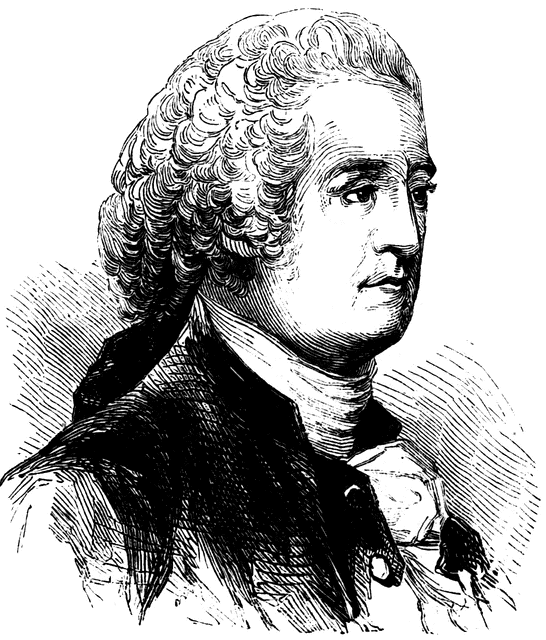
It was the president of South Carolina "Dictator John" Rutledge that had ordered Moultrie to fight. One of the accidental factors in the victory was that the British cannonballs could not penetrate the fort's walls, which had been made out of palmetto logs packed with sand. Charleston had been saved, the men were heroes, and the palmetto was an enduring symbol of South Carolinian courage.

For the next seven years, nearly a third of the combat activities of the Revolutionary War occurred in South Carolina. This was partly because setbacks in the North had encouraged the Royal Navy to attempt to retake Charleston. As a result of the famous victory, Rutledge had become a central figure in the patriot struggle. His bitter disputes with Lee widened into a feud with the leadership of the Continental Congress.

South Carolina was considered large enough to be a viable independent polity. With the national legislature preparing a new constitution for a direct democracy to enfranchise property-holders, Rutledge decided that he had to seize the moment once again. Using his control of the militia, he took South Carolina in a radically different direction, following the example of Vermont, which continued to govern itself as a sovereign entity based in the eastern town of Windsor. Inevitably, the Union attempted the same tactics as it did in disagreement with Rhode Island by threatening a blockade with no trading. However, South Carolina was willing to pay this price for its independence.

A decade later, Rutledge led the Palmetto Republic's celebrations of Carolina Day, marking the tenth anniversary of the battle. By the time that representatives to the Constitutional Convention arrived in Philadelphia a year later, it was abundantly clear that the long-term future of South Carolina would exist outside of the United States. The original Articles of Confederation had recognized the thirteen members of the Continental Congress as having diverse interests and goals, but the idea had already taken hold that Americans had to form one single lock-step federal government.
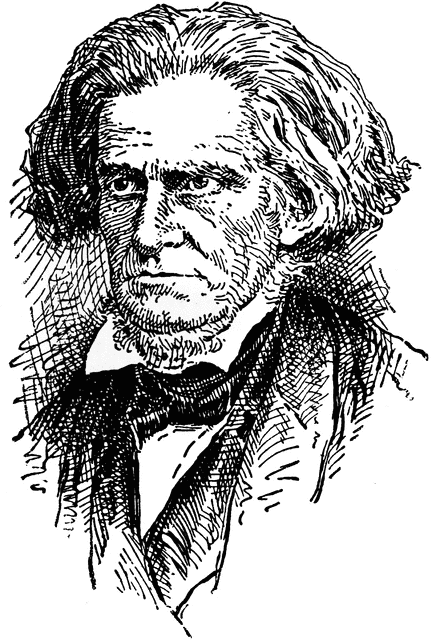
This emerging consensus only validated Rutledge's political thought and inspired independence. Nevertheless, his outcome would cause border disputes with neighboroughing Georgia and North Carolina. Tension was to be expected, just as this was the issue of land claims with New York and New Hampshire that had prevented Vermont joining the Union. Rutledge hoped to build a Carolinian Confederation that combined all the former southern colonies. That herculean near-impossible task would fall to his firebrand successor, John C. Calhoun, at a time when the bonds of union had weakened and Georgia and North Carolina were beginning to dream of secession.
 

South Carolinian Jurist James L. Petigru would famously observe that "the territory of Palmetto is too small for a republic and too large for an insane asylum." During the nineteenth century, many US politicians would consider it a good thing that South Carolina was safely outside the Union. Ironically, Palmetto also struggled to trade with the increasingly anti-slavery British Empire. One of the key battlegrounds of the Revolutionary War, a State of South Carolina might well have been a key battlegrounds of a civil war if South Carolinian firebrands had fueled the calls for secession from inside the Union.

Author's Note:

In reality, Rutledge represented South Carolina in the Philadelphia Convention. He played a leading role resulting in his elevation to the Supreme Court.


Provine's Addendum:

Over the course of the coming centuries, settlers would spread westward, causing friction with the Americans' neighbors to the north and Mexico in the south. After the disastrous War of 1812, both sides were nervous about another war caused by the disagreement of national boundaries in the northeast. Taking the success of landlocked Vermont as an example of a neutral barrier (that both could still attempt to manipulate through trade and diplomacy), the United States and British Empire both recognized the Republic of Madawaska in 1827. The hasty settlement of the Oregon territory claimed by both sides again left a wide gap. After much deliberation and influence, an independent nation was founded in 1843.

Meanwhile, disagreements in the southwest turned to violent revolutions. While the United States did not directly declare war for its own territory, Americans readily backed revolution in Texas in 1835 and another in California during the Second Texas-Mexican War in 1846. Both nations became close allies to the United States, although no one took suggestions of cessation seriously.

Even after the nineteenth century, further breaks would be seen in North American English-speaking nations. California had nearly lost its northeastern corner to a settlement dubbed "Deseret," but the anti-Mormon Nataqua War in the 1850s and '60s maintained dependence. In 1941, Oregonians and Californians who shared rural ideals felt ignored by their capitals and formed up a new allied nation called Jefferson, all under the careful guidance of the United States, which was eager to avoid a fight in the western hemisphere as Europe and Asia ground on in a second World War. Another cultural shift saw the southern end of the Carolian Confederation break away from Florida in 2008 with a new capital in Miami.

In the many years of organizing nations after the breakaway of the Carolinas, it is remarkable to historians that Virginia never vowed for independence, especially during the turbulent times after the Revolution. Virginia first grew by accepting and then giving away former North Carolinian claims to what became the state of Franklin. Later, Virginia would let go of its western claims to form Westylvania and Kentucky. Perhaps it was Virginia's dedication to work within the Union while championing local authority that prevented any notion of civil war and instead led to the plethora of US states, such as Superior above Lake Michigan, Empire in upstate New York, and Chicagoland separated from Illinois.


Thursday, September 24, 2020

Guest Post: American engineer Tom Dolan Dies in Car Crash

This post originally appeared at Today in Alternate History with input from Allen W. McDonnell. 

 In 1958, a young American engineer named Thomas Dolan was tragically killed in an automobile accident travelling to work at Vought Astronautics Division near Dallas. His vehicle turned over on the highway and caught fire. Dolan's charred body was barely recognizable and his priceless research papers reduced to ashes.

The incalculable loss to scientific research was that Dolan had recently conceived the experimental concept of a Lunar orbit rendezvous (LOR) through which a smaller lunar lander might independently descend to the surface of the Moon. In all probability, he was wasting his time with this brilliant idea because of the mule-headed stubbornness of the development team director, Wernher von Braun. Even when he was proven totally wrong on judgement calls such as the four-inch flight, von Braun relied on emotional appeals to plead for more time, money or one last chance.

Even to his closest colleagues, it was clear that von Braun exercised an unhealthy control over the direction of the space program. His obsession with rocketry maintained a single-minded focus on the anachronistic concept of direct ascent via a single launch vehicle. A third lunar-landing alternative was Earth Orbit Rendezvous (EOR) to assemble, and possibly fuel, components of a translunar vehicle in low Earth orbit. By order of magnitude, LOR was costly, EOR was expensive, and Direct Ascent was mind bogglingly insanely expensive in comparison.

Due to these cost considerations, EOR was developed using piloted reusable first stages to save money. Still, NASA relied upon von Braun's advanced skills in political manipulation. He fueled the fears of politicians in Washington that the Soviets would win the race to the Moon. The NASA budget rose to an incredible 1.5 percent of total federal funding. Much of the new money was taken from defense, and plans to send military advisors to Vietnam quietly scrapped.

America fulfilled President Kennedy's pledge to land a Man on the Moon before the end of the sixties. For the piloted first stage developed for EOR the E-1 engine was selected for development and demonstrated its reliability for decades in reusable piloted stages. The Aerospike version first used in 1968 for the first manned lunar mission was designed to be efficient at a broad range of altitudes unlike earlier models that were optimized for efficiency at sea level altitude.

With the benefit of hindsight, it was obvious that the right choice had been made for the long-term strategy of space flight. This was because direct ascent was grossly expensive with very limited usefulness once the basic moon landing series was completed. LOR was less expensive if the only goal was a limited number of moon landings for political effect. However, EOR with reusable piloted first stage although initially more expensive to develop, was a future-proof technology for later programs. As a result, by the time that Von Braun died in summer 1977, the future of space platforms was clear. The journey from space stations to permanent bases on the Moon and other planets in the Solar System was well underway.

Author's Note:

In reality, Dolan proposed the first fully developed concept of Lunar orbit rendezvous (LOR) but NASA officials initially considered the associated risks unacceptable. The Gemini missions proved them wrong, paving the way for his idea to be put into practice. For the NOVA and later Saturn V first stage, NASA selected the Rocketdyne F-1 rather than the E-1 model because of von Braun's desire for Direct Ascent.


Provine's Addendum:

As the Cold War ground on after the successful American lunar landing, space again became a major player as the Reagan administration was swept into office in 1980. Many blamed the Democratic party for the expansion of communism over southeast Asia with revolutions in Cambodia, Malaysia, and Indonesia following that in Vietnam. Central Asia seemed to be following, too, with the Soviet invasion in 1979. Reagan promised regaining the upper-hand, literally, in 1983 with a Strategic Defense Initiative including an orbital grid of anti-missile weapons. While labs across the country worked on R&D projects, budget-minded administrators sought more efficient means of launch. Ironically the spending escalated to the construction of a magnetic coilgun, which proved to be a good investment as the cost for individual payloads dwindled to a few hundred dollars per kilogram.

While the government budgets swelled, the Cold War ended in the '90s with the collapse of the Soviet Union and widening US-China relations. The Coilgun, built on the equatorial Jarvis Island isolated both for defense as well as Cold War secrecy, turned to civilian use. Communication satellites presented opportunities for hundreds of new cable television stations and satellite-linked telephones became the norm worldwide. With low start-up costs, numerous companies launched in the early 2000s with hopes of gold-mining on the Moon or founding the first permanent Martian city.

Friday, September 18, 2020

1118 – Songs prop up Liao Dynasty

In 1115, Song diplomats met with their counterparts in service of the Jurchen warlord Wanyan Aguda disguised as horse-traders. The Jurchen lived to the northeast of the realm of the Liao, a Khitan dynasty who had long been the rivals of the Songs in the south. The first Song emperor, Taizong, had attempted to invade the Liao to recapture the lost Sixteen Prefectures that once served as the northern frontier of imperial Chinese lands. Taizong’s invasion reached modern Beijing in 976, where he laid siege. The Liao managed to dig an extensive tunnel underneath the Song siege, reinforcing the city and ultimately drive the Song away. After more than a decade of warfare, the two finally brokered peace with the Song paying an annual tribute of more than three tons of silver and 200,000 bolts of silk. The proud Song describe the protection money as “gifts” rather than protection money to barbaric northerners.

A century later, the Jurchen rebelled against their Liao oppressors. Aguda established a new dynasty, the Jin, and looked to conquer the Liao utterly. As the region fell into war, the Liao struggled to meet the ferocity of the Jurchen, many of whom sought vengeance for humiliations of their families and women. Seeking to further break the Liao, the Song and Jurchen considered joining forces. After years of debate, however, the Song court under Huizong looked back on the previous defeat of the great Taizong. The Song were excellent organizers and manufacturers, but they did not seem to have the warrior’s lust for battle. Ultimately they refused the Jin offer and instead renegotiated with the Liao to send men and materiel for the war while ending their tribute.

The north continued as a warzone for decades, and the Song proved to be masterful in profiteering. The Songs had long been dedicated to producing, following the wisdom of Confucius on working hard and investing profits. During their reign, the population of China had doubled twice while rebuilding from the losses under the Tang dynasty. Much of the growth was thanks to expansion of high-yield rice crops and improved infrastructure. The Songs innovated as well, introducing woodblock printing, paper money backed by national banks, and gunpowder. Young men from across the empire took civil service examinations to test their worth under Confucian ideals, helping to create a powerful class of bureaucrats who sought to maximize the glory of the empire. Artists and merchants formed guilds while business drove expansion in manufacturing and mining.

Following the extensive war in the north, the nearly exhausted Liao drove many of the Jurchen westward, which caused a decades-long reorganization of the nomadic peoples living there. The Song finally had their own vengeance, retaking the Sixteen Prefectures by purchasing the land and encouraging the Liao to move northwest themselves with their new investment. Growing Mongol forces a century later struggled with the Jurchen and Liao, never quite organizing into empire themselves as the Song skillfully bribed competing tribes to work against each other.

The Song, meanwhile, became increasingly imperialistic. Invigorated by neo-Confucianism that blended universalist ideals of Buddhism, Song merchants reached farther than ever for new markets that could benefit from the products created at home while coffers swelled with profits in doing so. Confucian rationalism also borrowed from Daoism to understand the laws of nature, greatly expanding Chinese science in anatomy, physics, and chemistry. Iron smelting led to interest in hot coal-fires, which soon transitioned into steam-driven engines. Adapting paddle-wheel ships already created for naval engagements, Chinese merchants soon sailed even faster than the wind. It would still be centuries before steam-driven land vehicles followed the seaborne ones, but in time Chinese railroads would stretch to markets across continents.

China’s major rival for trade during its rapid growth was the Abbasid Caliphate, which from its capital Baghdad controlled routes leading to Europe and Africa as well as already having many inroads with Indian ports. Looking to avoid costly trade wars like the disputes that had risen in India and Indonesia where their spheres of influence overlapped, Chinese exploratory fleets of enormous ships some four hundred feet long headed eastward with hopes of sailing around the world to reach these western markets. Instead, they instead two new continents running nearly from pole to pole. Direct trade with Europe was stalled by nearly a century, but the Chinese did establish relations with the Inca and Aztec empires as well as founding new provinces around valuable mining centers.

By the twentieth century, China was the unquestioned master of the Pacific, although its position of world superpower could be challenged by the Ottomans whose empire reached from the Chinese frontier to the Atlantic and readily adapted Chinese technology. Although often antagonists, the two empires also work together, such as the express rail link from Casablanca to Kaifeng. Squabbling nations of Europe, meanwhile, manage their own corner of the northern Atlantic.


--

In reality, the Song made an alliance with the Jin to mutually attack the Liao and divide up their lands. Observing the Song struggle militarily in their invasion, the Jin broke the alliance in 1125 and marched southward. They conquered the capital and northern regions held by the Song, ending the Northern Song dynasty. The remaining Song reestablished their capital in the south and continued to rule until conquest by the Mongols founded the Yuan Dynasty.

Saturday, September 5, 2020

Guest Post: Manila Devastated by the Eruption of Mount Pinatubo

This post originally appeared on Today in Alternate History.

By 1880, the strategically located port of Manila was the western hub of Spain's trans-Pacific trade. These rich benefits covered the high expense of maintaining the Spanish colony of the Philippines long after the independence of the viceroyalty of New Spain. This economic calculation changed overnight with the September 3, 1891, eruption of Mount Pinatubo in the Luzon Volcanic Arc. After the catastrophe of this natural disaster, the islands were quietly abandoned to their fate, becoming a backwater by the outbreak of the war with the United States in 1898. Under the Treaty of Paris, they nominally entered US possession with the loss of the last remnants of the Spanish Empire.

Spared the volcanic eruption, the Philippines could well have become the prime American holding in Asia. Instead, America focused her attention elsewhere on the territories of Guam and Puerto Rico. In one of the last acts of Herbert Hoover's regime, the Philippine islands were granted independence by the US Congress in the Hare-Hawes-Cutting Act. At the time, the US was looking inwards in isolation, mired in the Great Depression and the resulting social unrest. One of the casualties of the era was Chief of Staff Douglas MacArthur who was fired for his mishandling of the Bonus Army Protestors.

Meanwhile, the security situation in the Pacific was fast deteriorating. Chiang Kai-shek was sufficiently alarmed that he hired MacArthur as a consulting adviser to help re-organize the Chinese Nationalist Army. Ten years after Philippine independence, the forces of the Empire of Japan used the islands as a low-profile staging point for the invasion of French Indochina. The sparsely populated islands briefly became under Japanese control.

The much-admired five star General Dwight D. Eisenhower would mastermind a famous victory over Japan, working closely with the US Navy to drive through the Central Pacific. In the wake of World War Two, he would be elected President and guide Puerto Rico and Guam (incorporated into Hawaii due to its small population) towards statehood within the Union. In contrast, these positive developments would be overshadowed by the very poor management of the occupation of Japan, leading to a diplomatic coldness between the two and the push toward conservatism in the 1960s restoring earlier Japanese cultural aspects over American ideals like overt advertising and public displays of affection.

Nevertheless, the Pacific Rim slowly began to emerge as a key region in the global economy. There would even be a slow paced resurgence on the Philippine islands. Growth and expansion would eventually lead to the development of a small Christian republic on Luzon by the turn of the twenty-first century. Despite centuries of Catholic legacy, Protestantism would increasingly dominate by the millennium.

Wikipedia Note:

In reality, the 1991 eruption of Mount Pinatubo in the Philippines' Luzon Volcanic Arc was the second-largest volcanic eruption of the 20th century, behind only the 1912 eruption of Novarupta in Alaska. Today, Manila, alongside Mexico City and Madrid are considered the world's original set of Global Cities due to Manila's commercial networks being the first to traverse the Pacific Ocean.

 Provine's Addendum:

The precedent of religious separatism in the Republic of Luzon led to a "balkanization" of the region during the turbulent era of decolonization. Indonesia's many islands divided into modernist Islamic West Indonesia, traditional Islamic Java, Protestant Eastern Indonesia, Hindu Bali, and the twin Catholic nations of Flores and East Timor, which would later unify. Nearby Papua New Guinea divided into the Protestant south and Catholic north, nearly along the lines of the old British/German colonies. Many historians traced back the focus on religions for political division to the American efforts to study local culture in Vietnam after such struggles with the occupation of Japan, which prompted the CIA to pull support from Ngo Dinh Diem after he refused the plan for the smaller, more stable South Vietnam that remains today.

Wednesday, August 26, 2020

Guest Post: The Fat Boy Drops Early

This post first appeared on Today in Alternate History.
 

"We - the President of the United States, the President of the National Government of the Republic of China, and the Prime Minister of Great Britain, representing the hundreds of millions of our countrymen, have conferred and agree that Japan shall be given an opportunity to end this war. We call upon the government of Japan to proclaim now the unconditional surrender of all Japanese armed forces, and to provide proper and adequate assurances of their good faith in such action. The alternative for Japan is prompt and utter destruction." ~ OTL Potsdam Declaration

June 15, 1945 - Nationalist China is saved by Fat Boy

In early 1945, the progress of the Manhattan Project was rapidly accelerated by the strategic choice of Uranium Implosion over easier but inefficient impact detonation. This bold decision was taken despite many leading scientists expressing deep concern that the design was far too theoretical to implement.

The benefits soon became clear. Less than a fortnight after the fall of Berlin, one atomic weapons was ready for immediate deployment and enough uranium was available to rapidly build four more. This compressed timing of the deployment schedule was highly significant because the tentative plan had always been for the Soviets to declare war on Japan within three months of victory in Europe. With the Red Army occupying Eastern Europe, the Western Allies suddenly had an opportunity for victory on their own exclusive terms. Such an outcome would transform the post-war landscape, having profound affects not only for Japan, but for Mao Zedong's Communists also.

The detonation of the world's first atomic bomb would be a supreme expression of American authority. Although many other Allied nations might profit from an earlier victory over Japan, the main beneficiary would of course be US hegemony. In the long-term, history would draw a straight line from Admiral Perry's arrival in Tokyo Bay through Theodore Roosevelt's mediation of the Russo-Japanese War and onto VJ Day. Despite this contemporary perspective, explosive experts from the United Kingdom had played a major part in the breakthrough. As a result of this decisive contribution, the UK would gain a third part of the arsenal and become the second atomic weapon-state.

The detonation of the "Fat Boy" device over the Japanese city of Hiroshima was insufficient to force the Supreme War Council to capitulate. However, the subsequent threat of further bombs - and critically the assurance that the Emperor could rule as a figurehead under Allied Occupation - was enough to swing Foreign Minister Togo into the peace camp. Despite the rising threat of insurrection, Japan would issue a declaration of unconditional surrender before the end of June.

There would be a very high price to be paid for victory. For example, Manchuria had been an independent nation prior to 1931. The Japanese Kwantung Army was undefeated in the field and many Japanese colonists in Manchuria had suddenly become stateless citizens. Moreover, it was improbable that the Soviets would fully accept this status quo even though the UN Security Council was stacked with capitalist victor powers. Once Eastern Europe was under control, the Soviets began to clandestinely support liberation movements across the Far East in a determined attempt to undo American influence. The inevitable consequence was a huge commitment to post-war Asia.

Many political analysts confidently predicted that Chiang Kai-shek's National Regime was doomed anyway. These unresolved concerns for the future would overshadow the peace settlement even though Britain, France, and the Netherlands would quickly move to reoccupy the territories in their Asian Empires. Of course, because the French and Dutch were not yet nuclear powers, they did not have the chance to threaten guerrilla armies with the atomic bomb. By the time that France had the capability to do so, the war in Indochina was already lost.

Author's Note:

In reality, the Manchurian Strategic Offensive Operation would set the stage for the Chinese Civil War and the triumph of Mao Zedong. President Truman would be accused of "losing China." In this scenario, we imagine the possibility of a region-wide Vietnam scenario.

Tuesday, August 11, 2020

Guest Post: Day of Infamy

This post originally appeared on Today in Alternate History.

"Yesterday, December 7th, 1941 - a date which will live in infamy - the United States of America was suddenly and deliberately attacked by naval and air forces of the Empire of Japan". ~ FDR's OTL "Day of Infamy" Speech 

December 7, 1941 - On this fateful day, the US naval base at Pearl Harbor in Honolulu, Territory of Hawaii, was destroyed by an atomic discharge.

This terrifying weapon was developed by the Empire of Japan as a result of technology espionage arising from a chance meeting six years earlier in Nazi Germany. The founding father of modern physics research in Japan, Dr Yoshio Noshina, had travelled to the Max Planck Institute in Munich. It was there that he met a Jewish researcher called Lise Meitner, an Austrian-Swedish physicist praised by Albert Einstein as the "German Marie Curie". Needing to escape Nazi harassment, Noshina convinced Meitner to return with him to Japan to continue her work.

Whether Meitner later developed misgivings is unclear; however, in the medium-term, her work convinced the Japanese leadership to throw national resources at weaponizing the project. This huge programme included the mining of uranium in eastern China as well as the close cooperation of the Armed Services (not easy as much inter-service rivalry had plagued Japan for many years). By the outbreak of war in Europe, Noshina's team had overcome the major technical obstacles and were rapidly in the process of developing the world's first atomic weapon.

The expansion of the Co-Prosperity Sphere had been challenged by what the Japanese saw as a series of unnecessary provocations from President Roosevelt. Although they fully understood that America was expanding and desired greater influence, they believed that it was still possible to expel Western interest from the entire region. Their leadership realized that due to the industrial might of the United States, it was unrealistic to expect that the Japan could ever prevail in a long drawn-out conflict. What they needed then was a knock-out blow that would force the Americans to withdraw from Asia Pacific before overwhelming resources could be brought to bear.

But they had misunderstood the Western mindset because FDR was even more aggressive as a result of the atomic discharge. He was encouraged by British Prime Minister Winston Churchill's words - "What kind of people do they think we are? Is it possible they do not realize that we shall never cease to persevere against them until they have been taught a lesson which they and the world will never forget?" From their bellicose reaction to the surprise attack on Pearl Harbor, it was abundantly clear that Britain and America were more than willing to fight on no matter what, despite the imbalance in technology. The next phase of the war was even more frightening, with biological weapons being deployed by Japan in the form of a deadly virus sent over the American West Coast in air balloons.

Despite their many victories and occasional high moments, the Axis Powers never had the overwhelming capability to occupy the vastness of North America. With American and exiled British forces subdued but undefeated, the War dragged on for almost a decade. Finally, a long-running stalemate on the Eastern front led to a Soviet-Nazi armistice. This slowdown of military action triggered a general uneasy peace settlement that left Western Europe in German hands, and the Japanese preeminent in Asia Pacific. But the rivalry continued unabated as the Great Powers continued to develop even more terrifying weapons that would allow them to resume, and then win, a continuation war in the near future.

Author's Note:

In reality, the attack was a surprise military strike with conventional weapons by the Imperial Japanese Navy Air Service. Disputes about the status of the Japanese Atomic Bomb Development project remain unresolved to this day.

Friday, August 7, 2020

Guest Post: Roswell UFO Recovered

This post first appeared on Today In Alternate History.

"It was not anything from this Earth, that I'm quite sure of... I was familiar with just about all materials used in aircraft and/or air travel. This was nothing like that...It could not have been." ~ RAAF Major Jesse Marcel

 July 8th, 1947 - Roswell Army Air Field (RAAF) public information officer Walter Haut issued a press release stating that personnel from the field's 509th Operations Group had recovered a "flying disc," which had crashed on a ranch near Roswell.

As reported by a foreman called William Brazel, the debris was spread over a wide area on the J.B. Foster ranch. A thorough investigation by the United States Army Air Force (USAAF) determined that the "flying disc" was an unmanned probe of extraterrestrial hardware. Although the individual components were vastly superior to human technology, the fundamental sub-system design was recognizable. The two notable exceptions were the "intelligent" exterior metal that looked like aluminum foil but had the startling ability to return to its original shape and also the anti-gravity sub-system.

But from a political perspective, the bigger concern was the crash site - being so close to the location of the atomic bomb program. Non-aligned members states of the United Nations claimed that American doomsday technology had irresponsibly drawn the interest of extraterrestrial threats to the human race. With the Cold War getting fully underway, there was even a cynical suggestion that the USAAF had intentionally shot down the probe. By international agreement, a UN team selected members from six countries (US, USSR, UK, Republic of China, South Africa, Iran, and Brazil) that represented all continents apart from Australia to meet in Roswell and inspect the probe. The team subsequently reported that based on the available information, the crash was due to malfunction rather than malicious intent.

The investigation restored good faith between nations while the extraterrestrial threat continued to focus minds and, to a surprising degree, create a new unity of purpose. The internationalization of the Roswell UFO Incident proved to be a significant step forward in human development. Mankind had orientated itself towards the opportunities and threats in outer space. Even though the USA, followed by USSR, were the first space-faring nations that landed men on the lunar surface it was decided to divide the moon into international zones. This arrangement was undertaken in a similar fashion that was later adopted for the Antarctica territory.

The two decades between Roswell and Apollo 11 were insufficient to fully take advantage of the technologies present in the craft. However, the emergence of microchips and anti-gravity technology would continue to be developed under the auspices of the United Nations. By the third decade of the twenty-first century, there were increasingly loud calls for a truly international space program that could exploit the Roswell technologies and take mankind forward more quickly. Cynics have suggested that a second alien crash is the breakthrough needed to force such a change.

Author's Note:

In reality, Roswell has been described as "the world's most famous, most exhaustively investigated, and most thoroughly debunked UFO claim."


Provine's Addendum:

Confirmation of an advanced alien civilization, although little more could be learned about it, made a radical impact on human culture. The adapted technology alone presented a world straight out of Jules Verne. Anti-gravity devices provided for flying cars, which experienced rough takeoffs in the 1970s with the Ford Flier models before the efforts of the DeLorean Motor Company showed how effective travel without roads could be. Flying cars were commonplace by the 1990s with microchip-driven safety features, while long-distance travel took place in luxurious airliners that arched into low orbit for fast intercontinental travel. Cold-fusion reactors emulating the UFO's power system generated clean energy that became the world's leading power source after the Oil Crisis of the 1970s left the petroleum industry as a shadow of its former self.

Beyond technology, many humans were shaken on a spiritual level. While churches re-envisioned their perception of Earth being a unique creation, New Age cults were built around the largely indecipherable symbols from the UFO. Fears of a coming alien assault through the 1950s directed the West and Communists to organize territorial disputes as old empires unwound, ending with the division of North and South China and the controlled de-colonization of French Indochina. The Iron Curtain would eventually rust out, leading to experiments with capitalism zones in Eastern Europe and Asia.

For a time, humanity became captivated with space. Travel with the alien anti-gravity technology was easy enough, and the U.S. and Soviet Union competed briefly with improved craft while captured German rocket scientists gave the Russians an early lead on flight control before the Americans' ion-drives dominated with speed. Expensive military outposts were established in orbit and on the Moon while expeditions send manned missions to Mars and three Jovian moons. As the observatories failed to return any further evidence of alien incursion and crop circles were revealed as hoaxes, however, budgets were cut thin to maintaining a few token research stations. Without any real economic incentive to colonize, space remained a novelty. Some have suggested renewed nuclear tests on the moon to attempt attracting another alien observation probe, but no one in leadership seems genuinely interested.

Site Meter