Friday, October 8, 2021

Guest Post: Chronovisor

 This article first appeared on Today in Alternate History.


May 2, 1972 - World Learns of the Existence of the Chronovisor

Tthe Italian weekly news magazine La Domenica del Corriere published photographs of Christ's crucifixion in a sensationally controversial article titled "A Machine That Photographs The Past Has Finally Been Invented."

Within hours the world learned the existence of a functional time-viewer in the Vatican. Initial skepticism was swept away by recorded footage of the the final days of Jesus that was transmitted on terrestrial television later that eventful summer. This shocker triggered the release of further revelations. It was widely reported that Papal authorities supposedly held the device in a privatized cell within the Palace of the Government protected around the clock by Swiss Guards.

Built in the 1950s, The Chronovisor was reportedly a large cabinet with a cathode ray tube for viewing the received events and a series of buttons, levers, and other controls for selecting the time and the location to be viewed. It could also locate and track specific individuals. Development had been led by the Italian Benedictine monk Pellegrino Ernetti and the Nobel peace prize winning Italian physicist Enrico Fermi with assistance from famous rocket scientist Wernher von Braun. He had been able to contribute key technical lessons from his involvement in the failed development of Die Glocke a decade earlier.

Skepticism over its existence was replaced with a new cynicism after Ernetti warned of the emergence of the "most fearsome dictatorship the world has ever seen." This could only be by the Papal Authorities, and it was surmised that rogue elements in the Roman Catholic Church had been developing a secret agenda ever since the Second Vatican Council. That agenda would validate the teachings of the Bible in order to reverse the sharp decline in global faith since World War 2.

Oddly enough, one of the many implications of the whole affair was to draw attention to the role of Roman authorities in the Crucifixion. Combined with the acute problems of security in the Vatican City, the Papal Authorities were forced to relocate to Rio de Janeiro with a new enclave built in the shadow of the Art Deco statue Christ the Redeemer. This move had the consequential effect of rooting the Roman Catholic Church more deeply into the southern hemisphere, leading to a succession of Latin and African popes.

In 2002, Father François Brune would publish Petite Renaissance, a wide-ranging study of ecclesial transformation. Nevertheless, by the time of his death seventeen years later, no further recordings had been released, and the existence of the Chronovisor remained a mystery. Investigators routinely pleaded for access, hoping to solve murders and disappearances such as that of Amelia Earhart.

Author's Note:

In reality, the existence or functionality of the chronovisor has never been confirmed. The alleged existence has fueled a whole series of conspiracy theories but is widely debunked as an elaborate hoax.

OTL Father Pellegrino Ernetti six years after the Vatican issued a decree in which it warned that "anyone using, an instrument of such characteristics would be excommunicated" said, "Pope Pius XII forbade us to disclose any details about this device because the machine was very dangerous. It can restrain the freedom of man."

Monday, October 4, 2021

Guest Post: 28 December, 1913 - Brazilian Dreadnoughts sold to the Ottoman Navy

 This article first appeared on Today in Alternate History.

"It is no longer possible to force the Dardanelles, and nobody would expose a modern fleet to such peril" ~ OTL First Lord of the Admiralty Churchill in 1911; however, he would change his mind three years later.

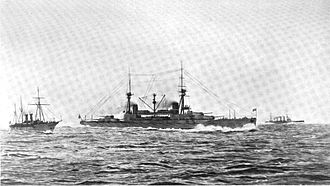
On this fateful day in alternate history, President Hermes da Fonseca of Brazil negotiated the sale of two under-construction dreadnoughts to the Ottoman Navy. Because the shipbuilding was in a third country, the agents of the two parties had wisely taken the precaution of obtaining secret guarantees from the British government.

It was a prudent choice given the global uncertainty. Circumstances had radically altered in the two years since the order for the Sultan Osman-I Evvel and the Resadiye had been placed, and the Brazilian Republic could no longer afford, and actually did not need, them. This was because the rubber boom had collapsed due to the loss of monopoly to British plantations in the Far East. Also, as a nation she was far more secure having experienced warming in relations with her chief rival, the neighboring country of Argentina. Other financial priorities would prevail.

Following successful sea trials, the Ottoman crew duly arrived to collect the Sultan Osman-I Evvel and the Resadiye from the shipbuilding yard in Newcastle. The newly-constructed Ottoman battleships arrived in the Black Sea on the eve of the July Crisis. Evidence of the British government's secret guarantees were revealed by Sultan Mehmed VI unexpectedly declaring neutrality following the outbreak of war. In hindsight, this would prove to be a serious strategic error because the Entente Powers were prevented from re-supplying the Russians via the Black Sea. The Tsar, who wanted Istanbul for the Russians, fell from power long before the Central Powers were defeated.

Meanwhile, the First Lord of the Admiralty Winston Churchill had bitterly opposed this ruthless political horse-trading, wanting to abrogate the agreement and seize the vessels for use by the Royal Navy. Disgusted by the sickening cynicism of Westminster, he was drawn to the Royal Flying Corps' motto "Through Adversity to the Stars." Not yet forty, he decided to resign from the government and apply for a war-time commission in an aeroplane squadron.

It was during his wartime service that Churchill came to meet Oswald Mosley, a kindred spirit who had transferred from a British cavalry unit. Both men shared a common reputation for being brave and somewhat reckless, and their relationship continued strongly after the war. Due to his injuries experienced from a crash, Churchill became somewhat of a reclusive figure at Blenheim Palace, continuing to paint and write fiction and occasional journalism. With a great deal of time on his hand he also served as a mentor to the younger Mosley who entered the House of Commons in the general election of 1918. It was Churchill that discouraged Moseley from falling out with the Conservatives over the operations of the Black and Tans in Ireland against civilians.

Meanwhile, the tottering Ottoman Empire was experiencing a remarkable recovery following the discovery of vast oil reserves in the Middle East. The disgruntled heads of the former Royal Families of Austria, Germany, and Russia could only wonder how this weaker empire had survived their own fall from power. Like the blue-blooded Churchill, they would be mere spectators in the unfolding world crisis.

Rising to Party Leader, Mosley would eventually become Prime Minister in 1931 after the collapse of the second Labour government. As the Head of a Government of National Unity, he was largely free from the vagaries of the electoral cycle. A dominant figure, he would use his authority to form an unsavory relationship with the German Fuhrer Adolf Hitler. In this policy he was strongly supported by other members of the British Ruling Class who had lost many sons during the Great War, and preferred a working relationship that would avoid a repetition of that conflict.

Hitler would laud him as a world statesman for his diplomatic role in the peaceful resolution of the Sudeten Crisis. With the Czechs abandoned to their fate, it soon became apparent that Mosley's Britain would not stand in the way of a grand settlement of other territories disputed since the Treaty of Versailles. An even more embittered Churchill would slowly come to realize his error, in his biopic "The World Crisis" he would quote the figurative expression of Robert Southey who wrote, "Curses are like young chickens, they always come home to roost."

With the French Third Republic weakened by political crisis, the German Reich restored her 1914 border with the exception of Alsace-Lorraine and her African possessions.

While many actually believed in Mosley's false promise of "peace in our time," a phrase already familiar to the British public by its longstanding appearance in the Book of Common Prayer, the Soviet Union prepared for a final showdown with the capitalist powers. Stalin feared that he would have no Allies in this future conflict and was forced to fight his instincts to purge the Red Army. By the early 1940s, he was ready to invade Western Europe.

With the former victor powers disengaged from this existential struggle, the alignment of Ottoman Turkey would become a decisive factor in whether Hitler or Stalin would have access to the fuel necessary to power their mobile forces and navies. Writing in the Sunday Times, Churchill predicted that the future of Christendom lay at the whim of a Muslim, Sultan Abdulmejid II.

Author's Note:

In reality, sea trials were ongoing at the outbreak of war and the British government seized both dreadnoughts for use by the Royal Navy. This act caused resentment in the Ottoman Empire, as the payments for both ships were complete, and contributed to the decision of the Ottoman government to join the Central Powers. The seizure, and the gift of the German battlecruiser Goeben to the Ottomans, influenced public opinion in the empire to turn away from Britain, and they entered the war on the side of Germany and the Austro-Hungarian Empire against the Triple Entente of Britain, France, and Russia on 29 October, after Goeben had attacked Russian facilities in the Black Sea.

Tuesday, September 21, 2021

Guest Post: Titanis by Allen W. McDonnell

Allen W. McDonnell imagines a world where these prehistoric birds survived the arrival of First People in the Americans and were still around when the Europeans were seizing territory. This article first appeared on Today In Alternate History.

September 19, 1782: For a national emblem on the Great Seal, Congress selected the Titanis, a giant flightless terror bird with a sprint of fifty miles per hour. The Bald Eagle and Bison were seriously considered national bird and mammal, respectively. However, the land-based predator best symbolized the historic nature of human settlement across North America.

Pre-history

Sometime around 2.8 million years ago, the volcanic Isthmus of Panama rose up from the sea floor and bridged the formerly separated continents. Among the animal life that fled during the Great American Interchange, the giant birds migrated in flocks all the way from Columbia to Florida overland in the face of competition from all the native predatory mammals.

In this new habitat, they survived for millennia until the human Stone Age began. While other megafauna was wiped out, humans worshipped the Titanis as reincarnated spirits, the sacred cow equivalent of North America. This taboo enabled them to avoid extinction alongside species such as the Mammoth, Mastodon, and Wooly Rhinoceros.

Pre-Columbian Era

Although the First Nations would not hunt the giant birds, cultural imperatives did not prevent them from taming them for specific riding purposes. As a consequence of the resulting development of their civilization, First Nations were in a much better place to withstand the arrival of Europeans and the diseases that spread following the first contact. It was during the 1600's that Titan Pox swept Europe, killing 30 percent of the adults who caught it, and slowed colonization efforts.

Rise of a Hybrid America

As the Mississippian Culture slowly recovered from First Contact, the Americas became a patchwork of nations. European-dominated territories were scattered around, surviving alongside First Nations. Aspects of North American development found a parallel with both Australia and South Africa.

Although Europeans had brought horses, they also learnt to ride the giant birds as well. When the colonies rose in revolt during the 1770s, British horse cavalry was overwhelmed by Patriots riding the Titanis. An enduring image of national pride would be General George Washington riding a Titanis into New York following the Treaty of Paris.

Ever-present in the modern-day, a tamed Titanis has played the role of "Big Bird" in episodes of the children's TV show Sesame Street, which premiered way back in 1969.

Author's Note:

In reality, extinction resulted during the period known as the Great American Interchange probably as a result of competition with carnivores that radiated in the same ancient terrestrial ecosystems. In James Robert Smith's best-selling novel The Flock, the Titanis is the predatory bird is found in a remote Florida swamp, having escaped the mass extinction that killed off the dinosaurs, relying on stealth, cunning, and killer instinct.

Tuesday, August 24, 2021

Guest Post: France Cedes Alsace (and not Lorraine) under Treaty of Frankfurt

This post originally appeared on Today in Alternate History.

August 22, 1871 - France Cedes Alsace under Treaty of Frankfurt 

"If France persists in wanting the republic, which would be a bad neighbor for Germany, we will persist with our territorial demands" ~ OTL Chancellor Bismarck in the aftermath of the Franco-Prussian War

Culturally and dialectically German, Alsace had been French territory for over two and a half centuries. This occupation was to keep it out of the hands of the Spanish Habsburgs, despite it being heavily contested between France and various German states in wars and diplomatic conferences. 

The latest external threat had come from the Prussians who had inflicted a series of defeats that brought the Second French Empire to the verge of disaster. Not needing to be reminded that it was Marshall Blücher's Prussians that turned the tide at Waterloo, the French Emperor was determined to seek a different fate from his illustrious uncle. After yet another defeat at Beaumont-en-Argonne, Napoleon III decided that instead of simply leading his troops in a charge to break out, it was time to find a new way to fight.

This tactic resulted in the onset of Trench Warfare at Sedan. Although France had avoided a military collapse, the victory was German's. Nevertheless, Wilhelm's territorial ambitions were sharply diminished. Bismarck wisely cautioned against the collapse of Bonapartist rule because it would likely backfire by creating a vengeful republican neighbor. 

https://upload.wikimedia.org/wikipedia/commons/thumb/2/22/Alsace-lorraine.JPG/1200px-Alsace-lorraine.JPG Napoleon III reluctantly ceded the disputed territory of Alsace to Kaiser Wilhelm I under the provisions of the ill-fated Treaty of Frankfurt. Consequently, Lorraine remained in French hands, Napoleon III remained on the throne, and talk of a Capetian restoration or a republican overthrow came to naught.

Trouble was still around the corner because Napoleon refused to recognize the new German Empire. Despite the peaceful intentions of elder statesmen, the separation of Alsace-Lorraine was to open the door to a second Franco-Prussian War fought by their successors. Napoleon IV succeeded his father in 1873, whose dying words were, "Be brave as we were at Sedan." During his reign the Second French Empire invested heavily in efficient railway infrastructure that enabled troops to be rushed to the border and dig in with only hours' notice.

In response, the Germans developed a military machine with the intent of breaking trench defenses. The "kampfwagen" ("battle wagon") was an armored motorized transport powered by steam. After Bismarck was fired by Wilhelm II in 1890, the new king paid a needlessly provocative visit to Strasbourg that humiliated France's national prestige. His assassination by a French-speaking Alsatian stoked the cinders of the still-burning dispute and triggered the outbreak of a devastating conflict in Europe. New diesel-powered kampfwagene stormed France, conquering Paris in a matter of weeks.

Wikipedia Note:

In reality, following an armistice with France, the Treaty of Frankfurt was signed on 10 May 1871, giving Germany billions of francs in war indemnity, as well as most of Alsace and parts of Lorraine, which became the Imperial Territory of Alsace-Lorraine. French determination to regain Alsace-Lorraine and fear of another Franco-German war, along with British apprehension about the shifting balance of power towards Germany, were among the factors that caused World War I.

Jeff Provine's Note:

In reality, Napoleon III ordered several attempts at breaching the German siege at Sedan. By September 2, when it became obvious that they were trapped, Napoleon surrendered himself and his massive army. The French Empire collapsed, and the resulting Treaty of Frankfurt would unify Germany under the rule of Wilhelm. Napoleon III would be exiled to London, where he would die in 1873 with his last words, "We were not cowards at Sedan, were we?"

 Provine's Scenario Addendum:

After the fall of Paris, France faced peril not only from German invasion but from republicanists suggesting the imperial government-in-exile at Orleans should be removed. Napoleon IV had successfully created a line of defense in the Loire River, blowing bridges and ensuring water flowed deeply enough to flood any potential diesel engines trying to cross. With modern warfare still being largely experimental, the emperor was open to ideas, prompting the Philippe, the pretender Duke of Orleans, to present a battle plan. Philippe had come to France illegally in 1886, breaking the law of exile, and lived in Switzerland when not adventuring in Africa and Asia.

Following Philippe's strategy of semi-scorched earth, French soldiers attacked the German supply lines and destroyed all possible sources of diesel fuel. Soon the German army found itself trapped far behind enemy lines with kampfwagene that were little more than artillery placements already low on ammunition. German attempts to free the army in Paris were as ineffectual as the French incursions into Alsace and the Rhineland. The war dragged on with both countries growing weary until at last a new peace was made. With no territories exchanged and photographs of devastated French land stretching for miles in the newspapers, much of Europe was disgusted by the seeming pointlessness of war. Germany even famously sat by, watching Russia attempt to meddle in Balkan affairs alongside the crumbling Austro-Hungarian Empire to the detriment of both.

In France, Napoleon IV received much of the blame despite his efforts to make the nation ready for invasion. Military historians note that without his improvements to infrastructure, the nation would have collapsed, but, at the time, Napoleon IV had to abdicate to save his house from being ejected from France. His cousin Victor became Napoleon V, causing trouble even among the Napoleonists who argued it should have been Victor's father or even his popular younger brother Louis. They were united, however, in that the Duke of Orleans should not come to the throne, as many called him the "Savior of France." Victor proved to be a good compromise overall, appealing to republicanists with his moderate politics and never backing down from the growing Orleans faction.

Germany, meanwhile, puzzled over the military struggling in a conflict that should have been won as quickly as the earlier Franco-Prussian War. It was agreed the issue was supply, so Wilhelm II's government invested heavily in Zeppelin's designs of airships, creating ones massive enough to carry industrial payloads. As the airships were easy targets for high-speed smaller aircraft, a generation of designers made improvements such as anti-aircraft defenses, internal lift-bags, and helium harvested from uranium mines. The demand for helium drove many of the schemes of Wilhelm III (then Prince Wilhelm and later "The Empire-Builder") to industrialize German colonies and build relations with the United States. Other designers focused on improving combat airplanes to serve as escorts, developing lighter, faster engines. Military advisers worldwide agreed the next war would be won by air superiority.

Monday, August 2, 2021

Guest Post: Graham Island

This post first appeared on Today In Alternate History. 

10 July, 1831 - Graham Island emerged, following a month of intense seismic activity, as a full-grown islet between Sicily and Tunisia in the Mediterranean Sea.

During August, sailors of the Royal Navy ship of the line HMS St Vincent planted the Union Jack. Claiming terra nullius (free for anyone to occupy), they named the island Graham, to honour the First Lord of the Admiralty, Sir James Graham. The triumphalist report from Captain Humphrey Fleming Senhouse spurred Graham to declare the island a strategic foothold in the Mediterranean. Naval reinforcements were promptly dispatched to prevent French or Sicilian privateers from gaining control of the area at the heart of European shipping routes.

Even before these vessels could arrive, a four-way sovereignty dispute had developed. Claiming for the Bourbon crown, Sicilians sent their own ships, naming the island Ferdinandea after the King of the Two Sicilies, Ferdinand II. Yet even they were beaten to the chase by the French Navy who made a landing, and called the island Julia, because it was born in July. It was also in reference to France's July Monarchy, which had seen the Orleanists overthrow the Bourbons. Spain, too, declared its territorial ambitions.

None of these four nations would back down although the appetite for conflict was limited so soon after the Napoleonic Wars. After several naval clashes, the short-lived War of Graham Island would be won by Great Britain. However, the Royal Navy's victory would have profound long-term consequences for the whole continent. The significance of the war was disguised by the humiliating loss of national prestige that would mark the end for Louis-Philippe, King of the French, and his ill-fated July Monarchy. Meanwhile in Naples, Ferdinand also faced serious challenge to the continuation of his unpopular rule.

Out of this military reversal, the former Dauphin Louis Antoine, Duke of Angouleme, restored Bourbon rule at the reluctant acquiescence of the Chamber of Deputies. Given the fact that he was childless, the reason for this surprising move soon became clear when a personal union was declared with the Kingdom of the Sicilies. Under these arrangements, the son of Ferdinand II would marry into French nobility and become the Bourbon monarch in 1861. This powerful combination would frustrate both Garibaldi's plans to unite the Italian peninsula and Bismark's dream of establishing a Second German Reich, not to mention Napoleon's nephew's political ambitions in Paris.

By the centennial anniversary of Waterloo, it was clear that France was once again master of continental Europe. Feeling strong enough to make a second move against Graham Island, the French Navy launched a naval assault in 1915. Due to the interventions of the Bourbon Empire, London was prevented from allying with powerful states such as Italy and Germany whose national ambitions had been thwarted. Instead, Great Britain had to hastily assemble a coalition of forces in the German Federation, Italian states, and potentially in Eastern Europe to confront this belligerent power grab. The liberal MP Edward Grey unenthusiastically remarked "The lamps are going out all over Europe, we shall not see them lit again in our lifetime."

Author's Note:

In reality, the island sank after five months and is currently twenty feet below sea level.

Wednesday, July 21, 2021

Guest Post: Death of the Modern Methuselah

This post first appeared on Today In Alternate History.


On 29 June, 1934, the world-famous centenarian Zaro Aga died in Istanbul Province, Turkey. Aged 170 years, 133 days the so-called "Giant Kurd" was the longest-living person in recorded history and considered the "Eighth Wonder of the World."

A global celebrity who had recently toured America, his dead body was immediately sent back to the United States. This examination was for verification by leading scientists with expertise in the ageing process. Various tests (including X-Rays) by these gerontologists were conducted, which identified little apart form the presence of an unusually large heart. However, in addition to the authentication of his birth certificate, his claims to have met Napoleon were independently validated. His age was then certified by the American actuary and gerontology researcher Walter Bowerman in a report published in 1939.

Convinced of Aga's incredible age, Bowerman then travelled to southwest China to investigate the claims that a herbalist and martial arts specialist called Li Ching-Yuen had lived to 252 years old. This was corroborated after he inspected Chinese government records that included letters of congratulations for his 150th and 200th birthdays and interviewing his neighbours, who asserted that their grandfathers knew him when they were boys and that he at that time was a grown man.

The science of gerontology rapidly advanced after Bowerman returned to the United States on the eve of World War II. The tentative conclusion validated Continuity Theory. This theory proposed that adaptive strategies enabled Zaro Aga and Li Ching-Yuen to continue the same energetic behaviours beyond the normal limitations of old age.

By the time that Bowerman died in November 1974, widespread testing of these adaptive strategies had been vigorously conducted for over 25 years. There was no evidence that extended longevity was inherited. Instead, gerontologists concluded that lifespans of beyond 150 were dependent upon a complex series of additional factors that included birth geography, physiology as well as exercise, behavior , and diet.

Unable to reproduce the phenomena in the laboratory, Methuselah Communities were established in Kurdistan and southwest China in an attempt to recreate exactly the same sets of breeding conditions. At the time of writing, it is widely predicted that these long-lived human beings will crew the space colonization ships of the future. But until scientists can "bottle" the so-called Aga-Ching-Yuen factor, such a scheme could only augment the life-span of the first generation crew members.

Author's Note:

In reality, Bowerman validated the claim of Delina Filkins to be 113 and advocated that actuarial tables have an upper cutoff of between 115 and 120 years. He concluded that Aga was around 97, not 157. He never travelled to China. Meanwhile, Li Ching-Yuen claims are considered to be a myth by gerontologists and Aga himself refused to believe them.

Provine's Addendum:

 Coming at the problem of aging from another, environmental, angle, scientists Tel Aviv University used experimental hyperbaric treatments with high-oxygen environments that extended telomeres (the edges of DNA that shorten over time, believed to be a major component of aging) as well as improving brain function. This contributed to the hopes of using long-lived humans aboard spacecraft, where the environment was already artificially created and controlled. Even without issues of Relativity with interstellar craft reaching planets in distant solar systems, it seemed that someday it would be commonplace for an old astronaut to return to Earth to meet his great-great-great-great-grandchildren.

Tuesday, July 13, 2021

Guest Post: Old Snapping Turtle joins the Battle of New York

This post first appeared on Today In Alternate History.

July 13, 1863

Lincoln's reward to General George Meade for losing the Battle of Gettysburg and then presenting him with an unwelcome Confederate peace offer was to dispatch "Old Snapping Turtle" to New York City to restore order.

Meade was the victim of bluffer's luck but for Dixie, the Army of Northern Virginia's bold thrust into Maryland and Pennsylvania had been a tactical masterstroke by Robert E. Lee. And yet the real hero of the hour was not Lee but his chief advisor, General James Longstreet, who had stepped into the gap left by Stonewall Jackson's death after Chancellorsville. Longstreet had observantly noticed that the Confederate shells were exploding behind Union lines. This was due to faulty timing in the detonators, but he had adjusted for this malfunction by re-targeting the shells slightly in front of the lines. After a huge battery that lasted an hour and consumed the entire stock of Confederate ammunition, sappers were sent in to destroy what remained of a low stone wall that was protecting Federal troops. Thanks to the vigilance of Longstreet, the central assault known to history as Pickett's Charge carried the victory even if the two days of attacks on the flanks had been hugely costly.

This so-called "High Water Mark of the Confederacy" disguised the truth of their dire predicament. Lee's peace offer letter itself was something of a bluff, much as the invasion of the border states had really been a glorified raid. There was no realistic prospect of a strike upon Washington City. Some optimists might have hoped that Gettysburg would prove to be another Saratoga in which the glorious patriot victory had encouraged French intervention into the revolutionary war, but the real military situation was hopeless. General Pemberton and his army were in the final phases of starvation at Vicksburg. Within the next few days, the city fell, and then Port Hudson followed, giving the Federals control of the vitally important Mississippi River and cutting the Confederacy in half. Lee's campaign in Pennsylvania had been a desperate attempt to relieve pressure on the Union campaign in the West. This was unsuccessful, but Lee did put Lincoln under intense pressure in the East.

The enraged Lincoln would change commanders once again, turning to the ruthless General Ulysses S. Grant with orders to irreversibly destroy Dixie and eliminate any potential for a "Lost Cause" legacy. Grant entertained a wicked plan to burn Richmond to the ground before the November election, but he lacked forces to enact that retribution. There was an even bigger immediate problem of riots opposing the draft in the North. Lincoln had intended to send units of the Army of the Potomac to quell the draft riots in New York City, but these men were now either dead or in Confederate prisoner of war camps.

Meade arrived during violent disturbances in Lower Manhattan by working-class white men who feared loss of earnings to free black people. Also, they did not share the desire to die for the cause Lincoln and Grant felt they should. Unable to restore order, the riots would quickly spread to other Northern cities, and Grant's limited forces would be dispatched to keep the peace.

The Confederacy would collapse in the spring of 1865, but by then Lincoln had been voted out of office because his war-time strategies had failed. His successor George McClellan would win the war; however, the fruits of his victory would be bitter. The balance of political forces in US Congress prevented the Union from imposing the kind of long-term reconstruction program that the discredited Lincoln hoped would change the south forever. Worse still, the racial violence in the Northern cities had even prevented him from following through on the Emancipation Proclamation. Unsuccessful on the battlefield, he had quite simply failed to hold the Union together as he had promised. As a result, his legacy was deeply tarnished, and he would be considered in the lower ranks of presidents, only slightly above his hapless predecessor James Buchanan.

Author's Note:

In reality, Lincoln diverted several regiments of militia and volunteer troops after the Battle of Gettysburg to control the city. But the situation only improved when assistant provost-marshal-general Robert Nugent received word from his superior officer, Colonel James Barnet Fry, to postpone the draft. As this news appeared in newspapers, some rioters stayed home. But some of the militias began to return and used harsh measures against the remaining mobs.

Provine's Addendum:

The "Black Question" became one of the biggest political issues of the 1870s. Slavery was ended long before the war, which left many African Americans still enslaved without knowing they had been freed until June of 1865. With bitter oppression in the South, no welcome in the north, and only a few organizations offering transport to Liberia, the freedmen looked west to start their own homes.. "Exodusters" left the South by the hundreds of thousands, establishing all-Black communities in Kansas and the Nebraska Territory. Even the Unassigned Lands of central Indian Territory, which had at one time was expected to become reservations of displaced Native American tribes, became opened by act of Congress from leaders fearful there might not be land available to whites looking to settle. By the twentieth century, a bloc of Black-led states in the West were a political force on the national level.

With a severe labor shortage in the South, it became a magnet for immigrants as well as opportunity-seeking Northerners. Its economy recovered far more quickly than it would have with severe devastation as Lincoln and Grant had proposed, and the influx of carpetbaggers led to much-needed investment. Times led to strange bedfellows, such as George Meade and James Longstreet, once opponents at Gettysburg, becoming allies in the proposition for the coastal railway connecting New Orleans and Monterrey, Mexico. 

Site Meter