Showing posts with label vietnam. Show all posts

Saturday, April 25, 2015

May 8, 1516 – Le Tuong Duc Wins the Loyalty of his Guard


A zealous peasant rebellion in Vietnam rose up under the popular Tran Cao in the spring of 1516. Believed by some to be a Taoist sorcerer clad in his crimson robes, Tran Cao began gathering his warriors at the Quynh Lam Pagoda. He declared that he was the avatar of the god Indra, master of weather and warfare, and that this body was meant to rule as it had been born with links to both the ruling Le family and the previous dynasty, the Tran. His following expanded to form an army of ten thousand warriors that marched on the capital, Thang Long (later to be known as Hanoi).

As the massive peasant-army approached, the young emperor Le Tuong Duc stood up to address his personal guard. Tuong Duc was the latest in a line of disappointing emperors since the golden age under his grandfather, Le Thanh Tong. Thanh Tong had come to power through invitation as a teenager in 1460 when a counter-coup knocked his half-brother from the throne. Through his thirty-seven year rule, Thanh Tong instituted Confucian ideals into government. He wrote the Hong-duc, a comprehensive and systematic law, ordered detailed maps and a census, and personally toured the empire to alleviate issues with corrupt local officials. While highly popular with the Vietnamese, Thanh Tong notoriously opposed to outsiders, instituting isolation against trade and repeatedly campaigning to conquer land to the south and west. Foreign sailors who washed ashore in storms were castrated and impressed into military service.

After Thanh Tong’s death, his son Le Hien Tong continued the Confucian kingship until 1504, but the cruel five-year rule of Le Uy Muc made the imperial family very unpopular with peasants and nobles alike. He pitted palace guards against one another like gladiators for his amusement while he studied martial arts. Uy Muc’s cousin Tuong Duc, just fourteen years old, organized the emperor’s assassination and seized power. He worked to bring back the golden days of his grandfather, chasing out Uy Muc’s violent favorites and filling the court with scholars. To emulate greatness, he began costly projects like artificial lakes, pleasure palaces, and building an enormous harem that included many of his father’s concubines (breaking both Confucian and Vietnamese law). Heavy taxes to fund the projects spawned rebellions, and Tran Cao was the latest in a series of disputes. Le Tuong Duc expected his soldiers to put them down. Anyone who tried to show their disapproval was whipped, including the captain of his guard, Trinh Duy San.

With only the river between the capital and the oncoming army of rebels, Le Tuong Duc was suddenly shown the obvious errors of his ways as his heavy taxes logically led to such rebellion. He broke down and confessed his failures as a Confucian and emptied his harem, granting the wives to his guard to make up for the pain he had caused them. If this infighting continued as people acted beyond their positions, he predicted a Vietnam of weakness on a national scale. If strength did not come from within, it would oppress them from without.

Trinh Duy San swore his loyalty, and he led the defense as a veteran of the 1511 rebellion, once fighting a battle down to the last thirty men. The defenders attacked wherever the peasants attempted to make a beachhead on the river, finally driving back their superior numbers with superior weapons. Tran Cao fell in the battle, and the leaderless rebels dispersed.

Le Tuong Duc made good on his word, adhering to the law of his grandfather and repealing taxes. As the economy recovered, he found resources to organize more campaigns into the south against the growing power of the Tai and maintain Vietnam’s independence from China. In Tuong Duc’s later reign, the great general Mac Dang Dung stormed the lands of the dying Khmer Empire, conquering huge swaths of which he was made governor. Children of major families were brought to court schools and imbued with Confucian ritual and teaching: most importantly, to uphold the emperor.

In the seventeenth century, European ships began to appear on the coast. Portuguese and Dutch traders attempted to broker deals with emperors, but the boarders remained largely closed. Some technology had to be proven useful, such as the printing press that was installed to decrease dependence on China. Firearms were strictly regulated. Foreign luxuries and religions were banned, despite the efforts of French Catholic missionaries to make inroads.

It was not until the nineteenth century that the warships of the Kaiser opened Vietnam for trade with Germany, following the example of the United States Navy in Japan. A flood of western technology and cheap manufactured goods caused reprisals from locals suddenly being undersold. The German-Vietnam War briefly turned the empire into a colony, but Germany’s collapse in World War I liberated the country thanks to Woodrow Wilson’s vote of confidence at Versailles. Japan similarly seized and lost control in WWII. Vietnam transitioned to a constitutional monarchy supported by a vocal parliament with members such as the outspoken Nguyen Ai Quoc, who gained his attitudes of anti-socialism while being educated in Germany. 


--

In reality, Trinh Duy San and others in the imperial guard assassinated Le Tuong Duc for his wasteful hedonism. They seized his nephew Chieu Tong as a puppet and retreated as the country fell into anarchy. Generals acted as warlords, looting as they pleased. Tran Cao was eventually defeated by a confederation of the two major houses, the Trinh in the north and the Nguyen in the south. While Vietnam would be united from time to time through the years, it would suffer a constant north-south division of power, even to the twentieth century when it was again united by Ho Chi Minh.

Saturday, February 4, 2012

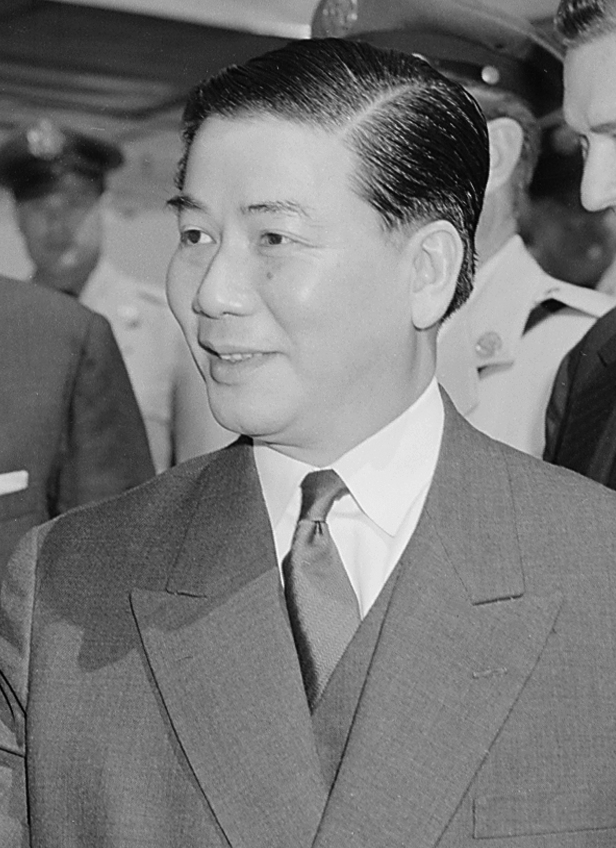
February 22, 1957 – Ngo Dinh Diem Assassinated

While touring an economic fair in Buon Ma Thuot, President of the Republic of Vietnam Ngo Dinh Diem was shot pointblank by communist agent Ha Minh Tri. The president was killed immediately, causing an anti-communist uproar in South Vietnam and creating a wave of instability in the young state.

Following colonial expansion through military conquest in the 1850-80s, the Kingdom of Vietnam that was controlled by the Nguyen Dynasty became French Indochina along with further regions in Southeast Asia. The French built up plantations and sought to convert the populace to Catholicism. The Vietnamese, however, reacted with increasing demands for civil liberty and nationalism that would be largely dismissed. When France was defeated in Europe by Nazi Germany in 1940, the colonies were turned over to the Japanese in 1941, and the Viet Minh communist/nationalist movement led the rebellion under its leader Ho Chi Minh. After the liberation of France, the French Far East Expeditionary Corps arrived to combat Japan but instead went about suppressing the Vietnamese and reinstalling French Indochina. Supported by the Soviet Union and communist China, the Viet Minh fought on until 1954 when victorious at the Dien Bien Phu. Ho Chi Minh sought peace in the resulting Geneva Accords, and Vietnam was separated with a communist north and capitalist south along the 17th Parallel. It was to be a temporary separation to pacify both territories and lead to a nationwide election by 1956.

In South Vietnam, however, Prime Minister Ngo Dinh Diem overthrew Emperor Bao Dai in a 1955 referendum. Even at the time, the election was suspect when he won 98.2% of the vote. From the numbers of votes (which were counted by agents of his brother, Ngo Dinh Nhu), Diem received more than 100% support in several regions; for example, out of 450,000 registered voters in Saigon, Diem managed 605,025 votes. Diem proclaimed a Republic of Vietnam with himself as head and created a legislature that was simply to give popular support to his actions. Bao Dai warned world powers such as France and the United States not to trust Diem, but they saw this as the opportunity to block the spread of Communism in Asia after China had fallen. With international approval, Diem canceled the 1956 national elections, claiming that had been an agreement made before the existence of the new Republic.

Initially, Diem’s term seemed beneficial. Citing his Catholic upbringing for his policies, he closed opium dens, brothels, and the organized crime of Binh Xuyen. However, his Catholicism proved extreme, and Diem soon turned state forces against the Buddhist Hoa Hao organization. The sweeping executions of potential enemies caused Diem to lose public favor, but he maintained power through public relations, diplomacy with the United States (who shared his fervent anti-Communism), and Nhu’s use of the Army of the Republic of Vietnam Special Forces. In the midst of the oppression, Diem’s rule was cut short as another photo op allowed Ha Minh Tri to walk up and shoot the president.

Nhu quickly seized power, but, despite his often public self-applause for his intelligence, he was not popular. His ARVN was exposed as a personal army already clashing with locals as well as Cambodians, and hubris led to further exposure of corruption, such as his wife’s extortion schemes. Since Nhu had never been elected, protests called for new elections, and international opinion agreed. Pressure forced Nhu to begin elections in 1958, already planning to move troops, censor papers, and ensure his victory. Nhu did not possess the Teflon class of his brother, however, and even his own ARVN turned against him, leading to his exile in Australia. With open elections in 1959, physician and prominent government critic Phan Quang Dan became president and quickly began to reconstruct the nation along genuine democratic grounds.

Dan’s government proved nationalist as well as anti-communist. Ho Chi Minh, now seventy years old, had conducted mass support of insurgency through the late 1950s, primarily through assassinating local leaders and installing supporters of communism. With a policy of “armed propaganda”, he instructed, “If an assassination is necessary, use a knife, not a rifle or grenade. It is too easy to kill innocent bystanders with guns and bombs, and accidental killing of the innocent bystanders will alienate peasants from the revolution. Once an assassination has taken place, make sure peasants know why the killing occurred." While Diem and Nhu had combated this with violent witch hunts, Dan proved more able to win popular support and show communists as the antagonists. He was friendly with US support, but did not take in luxuries and military aid as the previous presidents had.

Ho Chi Minh stepped down from party leadership as Le Duan rose to power. In 1960, North Vietnam organized the National Liberation Front to unify communists in the South, but by 1963, it had lost much of its support despite Le Duan’s warmongering. Ho worked behind the scenes to motivate the North Vietnamese government into coming into peace with the South, which was readily accepted by Dan. The two Vietnams lived side-by-side, eventually warming to one another as the horrors of the Khmer Rouge were seen across the border in Cambodia. Following the restructuring of communism in 1986, new bids for peaceful reunification grew, and Vietnam was again whole in 1997.


--

In reality, Ha Minh Tri missed Diem entirely, hitting only the Secretary of Agrarian Reform in the arm before his weapon jammed and he was subdued. Diem and his family would face another assassination attempt by air force officers bombing the palace, but he would remain in power until a coup in 1963 led by General Duong Van Minh. Minh was himself overthrown the next year, and continued turnovers in government along with the spread of the Vietnam War resulted in the fall of Saigon in 1975.

Thursday, December 9, 2010

December 9, 1945 – Patton Escapes Car Crash Unharmed

While on his way to a hunting trip in the German countryside, the Cadillac belonging to General George S. Patton collided with a left-turning 2 ½ ton truck. Patton’s driver, Private First Class Horace Woodring, rather than braking and hitting the truck at lower speed, briskly turned to dodge, and the two vehicles slammed into one another’s sides. Woodring and Patton’s chief of staff Major General “Hap” Gay both suffered bruises, but Patton seemed totally unhurt after tumbling sideways.

The accident seemed to follow the course of luck that could be traced through the old soldier’s life. Patton had attended the Virginia Military Institute and United States Military Academy, competed in the modern pentathlon at the 1912 Summer Olympics, finishing fifth overall and the only non-Swede in the top seven. He studied swordsmanship in Europe the next year, going on to become the youngest Master of the Sword in Army history. From there, Patton became an instructor, wrote pamphlets, and helped design the Army’s final saber in 1913, later nicknamed the “Patton saber.”

Peace soon gave way to war, and Patton’s real career began. He served as Pershing’s aide in the Mexican expedition in 1916 and then became a captain among the US Tank Corps in WWI. Campaigning for years to acquire funding for armored divisions for the US Army, but with little success, Patton spent the between-war years stationed in Hawaii (where, in 1931, he wrote a defensive plan for a potential air raid) and in Washington, D.C., (where he led tanks against the Bonus Army on the orders of General Douglas MacArthur). When WWII began, Patton’s arguments for armored divisions gained clout, and he was promoted to major general to head the 2nd Armored Division.

Patton’s leadership would give the Allies massive advantage in the African and European Theaters of the war. The “Desert Fox” Irwin Rommel was notoriously concerned of Patton, and the German military would routinely place their best troops against him, often to no great avail. Patton pressed his troops through North Africa, Sicily, and France.

While a master on the battlefield, Patton met with great controversy when bullets did not fly. Hoping to motivate his men, he maintained a powerful visage and carried nickel-plated revolvers with ivory handles. He swore constantly, even in public addresses. Patton’s belief in the honor of the military contradicted Eisenhower’s easy-going nature and cartoonist Bill Mauldin’s ridicule, both of whom chafed Patton’s temper. Most shocking was the “slapping incident” in Sicily where Patton had hit a soldier suffering from shellshock and ordered him back to the front. Patton would be stripped of command for a time, but he would use his time to confound German intelligence on where the European landing would begin. After Normandy, Patton would be back in command with the Third Army and helped in the liberation of Europe.

As the war came to an end, Patton began to give warnings about not being able to trust the Soviets. Some 25,000 American POWs had been liberated but not returned in Eastern Europe, where the communists were seemingly settling in. Patton suggested that the American Army be ready for war again to keep Russia in its place while they were low on supplies. Instead, the Army began dismantling itself for peacetime, and Patton was reassigned to the Fifteenth Army, which was mainly handling occupation and historical collection.

After the accident, the Fifteenth Army headquarters was inactivated on January 31, 1946, and Patton sent his request for retirement to the War Department, which was approved. According to Hap Gay, Patton would have resigned if retirement had been refused. The weight of peace seemed too much for the old soldier to bear. When Patton returned to his native California, he began a lecture circuit, which provided a great deal of scandal, and primarily wrote, commenting on his past as well as the present and future of America. He consistently warned of Soviet expansion, which gained the attention of political movements.

Patton was invited to the 1948 Republican National Convention in Philadelphia. He was surprised to be seen in politics and even more to hear that he had been placed on the ballot. While he campaigned rigorously after the invite, it was apparent that he had no real hope of taking the presidency as Dewey had cinched the vote and Patton’s infamy preceded him, not to mention that his military clout was blocked by votes going toward MacArthur. Instead, Patton returned to retirement, writing to several friends with the exclamation, “God, give me a war to fight!”

As if an answer to prayer, Patton was called up by Vice President Richard Nixon to be an adviser in the situation in French Indochina, which was quickly becoming known as Vietnam. Having watched the turmoil that was the Korean War from the sidelines in agony, Patton was eager to sort out the situation himself. Though he agreed with MacArthur’s suggestion to use atomic weapons, Patton was disgusted by his former commander’s disrespect of President Truman. Patton arrived in Saigon and met with CIA advisers, many of whom had connections back to the old Army OS. Upon his assessment, Patton shook his head over the situation and said of Ngo Dinh Diem, “I wouldn’t fight for him, even if it were against Stalin himself.” It was clear the people preferred Ho Chi Minh, who was a cunning warrior working to limit trouble upon the peasants.

Patton wrote an extensive description of the corruption in South Vietnam and suggested winning over the resistance-fighters of the Viet Minh rather than trying to fight the Viet Cong and their pro-populace support. The CIA worked to follow his plan, infiltrating North Vietnam and gaining leverage as the Sino-Soviet split began to appear in the late ‘50s and became clear by the ‘60s. With the American-backed regime change in South Vietnam in 1958, the short-lived Vietnam War of 1959-60 established firmly the division between the Communist North and the increasingly western South, as had been seen in Korea. Containment continued to be the policy of the United States as it subtly transformed itself over the twentieth century while Communism would self-destruct by the 1990s.

However, Patton would not live to see his influence on modern events. He died at age 72 in December of 1957 while touring Vietnam and suggesting military placements for defense along the northern border despite rainy weather. His body was returned to the US, where it was buried in Arlington Cemetery.


In reality, Patton suffered a broken neck from the collision when the Cadillac struck the front end of the truck. Patton was thrown forward and hit his head on the partition between the front seats and the back. He was paralyzed from the neck down and rushed to the hospital, where he would die of a pulmonary embolism twelve days later. He would be buried in Luxembourg, at the head of his fallen fellow troops in honor of Patton’s asking that he "be buried with my men."

Tuesday, November 2, 2010

November 2, 1967 – Wise Men Recommend Focusing on the Tunnel, Not the Light

War in French Indochina, later Vietnam, had been raging for almost twenty years. It had begun as campaigns against colonial domination and developed into a movement supporting the growth of Communism. Determined to check the Domino Theory, the US first began to send military advisers in 1950 and surged US troops into involvement under the Kennedy Administration. With war still sitting at a stalemate in Korea, Washington approved only of the idea of a “limited war” rather than a bloody northward invasion like the one pushed by MacArthur ten years before.

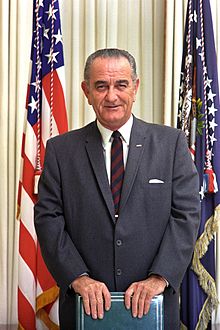
As the years dragged on, more and more American soldiers came home under their flag, and the public began to question why troops were there in the first place, President Lyndon Johnson sought help in solving the war weariness. He called a meeting of “The Wise Men”, a group of political and business leaders who had formed under Truman’s administration to dictate American foreign policy. Theirs had been the plan of containment and anti-communism that had guided the early days of the Cold War. Originally powerful bankers, lawyers, and diplomats, the men considered themselves statesmen needed to advise elected officials.

LBJ called a conference on the first of November in which the Wise Men were briefed about the situation at hand. The notables included General Omar Bradley, General Maxwell Taylor, Justice Abe Fortas, and Henry Cabot Lodge, Jr., among many others. There was progress being made in Vietnam, but the battlefield casualties wore away at American public support. The Wise Men agreed that simple departure from Vietnam was unacceptable and the influence of communism needed to be held back. While some suggested a positive PR campaign, after much discussion and a brandy or two, they decided that a more aggressive method than simple reassurance was necessary.

The men dusted off old recommendations from the days of Wilson’s war effort. While propaganda machines had changed over the last fifty years, many of the ideas still stood. LBJ and the War Department began to lead calls of an end to the attacks from North Vietnam, echoing speeches of the Minute Men of the 1910s denouncing the Kaiser. Rather than focusing on numbers, stories of war heroes were brought to the forefront of war news. The public reacted in a dower opinion, still skeptical of the war but not that American troops should be there.

When the Tet Offensive began January 31, 1968, LBJ became vindicated. The press carried stories of the overwhelming atrocities in the sudden Viet Cong attacks. Battles raged for two months, and the American public threw their support behind the troops with marches and calls for reinforcements. The second and third waves of attack began that summer, and the Americans regrouped, taking back much of the gained territory. While a tactical success initially, the Tet Offensive would prove a strategic loss, and the VC found themselves nearly devoid of supplies.

At the time of election, the American public seemed torn whether to turn toward the Republicans calling for an end to the war or the Democrats with their strategy of counterstrike to defend foreign allies. The polls came in very close with Hubert Humphrey narrowly defeating former Vice-President Richard Nixon. Within months of Humphrey taking office, the proposal for ceasefire would be announced, and a demilitarized zone along the 14th Parallel would be drawn separating the two countries akin to that in Korea.

South Vietnam would match its predecessor South Korea as a bastion of capitalism and industry. Under the Humphrey administration, a great deal of economic influence would flow to Vietnam, and its cheap factories would prove to outpace Japanese production of inexpensive goods in the 1990s. The tag “Made in Vietnam” is seemingly ubiquitous among high tech electronics today.


In reality, the Wise Men recommended a PR campaign focusing on the light at the end of the tunnel of the Vietnam War. Announcements were focused on positive figures and optimism, showing that the war would soon be over. When the Tet Offensive showed a renewed push of Viet Cong aggression, the American public turned on LBJ, and all hope for the war seemed lost. As Nixon came to the White House, American troop withdrawal began, and Vietnam would fall to communism in 1975.

Site Meter