Friday, December 12, 2014

December 2, 1859 – John Brown's War Ends


The largest outbreak of violence over the issue of slavery in the United States erupted in 1859 as abolition-extremist John Brown seized the Federal arsenal at Harpers Ferry, Virginia. Inside the arsenal were 100,000 government firearms, enough for the largest army the continent had ever seen. Brown's agents rushed as much of the weapons as possible to nearby farms, creating enough chaos that wagonloads of munitions went in disparate directions and turned the region into a war zone.

The raid was not the first of John Brown's ends-justify-the-means actions, though it would be his crowning achievement. Born to a Connecticut Puritan family, Brown became an industrious entrepreneur in Ohio before the economic crash following the Panic of 1837 wiped out his businesses. He moved his family, scourged by illness, to Springfield, Massachusetts, where he was touched by the abolition movement and eagerly became a part of the Underground Railroad. When his last bid toward business in the wool industry collapsed, he became enraptured in the cause of abolition, founding the League of the Gileadites to defend, by any means necessary, fleeing slaves from legal capture under laws such as the Fugitive Slave Act. As the Kansas territory opened and Border Ruffians (pro-slavery forces) gathered there to ensure it would not be voted free, Brown rushed to fight, murdering five ruffians at Pottawatomie in 1856, the bloodiest massacre of Bleeding Kansas, and losing a son to the feud.

When calm settled in Kansas, Brown left for the North on a crusade to raise funds for all-out war. He gave lectures to crowds that included writers Henry David Thoreau, Ralph Waldo Emerson, and Bronson Alcott. As word grew, Brown met with wealthy abolitionists, some of whom dispatched weapons to his cause such as 200 breech-loading carbines and 950 pikes. Mercenary Hugh Forbes signed on as well as two dozen volunteers. Harriet Tubman offered to serve but was unable due to illness, while Frederick Douglass refused to join what he correctly thought to be a suicide mission. In fact, this outright violence "would array the whole country against us."

Brown ventured forth nonetheless. His first action was to kidnap George Washington's great-grandnephew Lewis Washington and, more importantly to the cause, seize relics of liberation that were in his possession: a sword given to Washington by Frederick the Great and pistols gifted by Lafayette. They proceeded to cut telegraph wires and capture a passing train, where they killed the black baggage-clerk who tried to stop them. Brown was about to let the train go to spread the word of the uprising when one of his men asked, "Shouldn't we spread our own word?" Brown agreed, the train was disabled, and the men marched on the unsuspecting armory.

Northern Virginia and western Maryland were turned into a warzone. Runners dispatched arms to slave populations scouted out the summer before. Some of the slaves seized the opportunity to fight back, others refused to fight, and many fled and hid to escape the coming violence. Local militia immediately began to counterattack, but Brown proved far more organized and successfully held the arsenal, even sending out more weapons. State and federal officials did not hear about the raid until everyone else did, through panicked or excited telegrams.

As the United States government hurried to assemble a force to march on Brown's holdout, Brown himself received reinforcements as word spread among slaves and abolitionists from the North raced to join. Finally, after days of turmoil, President Buchanan called together Marines and put them under command of cavalry Colonel Robert E. Lee, who had time to dress in his uniform before marching. As they approached the arsenal, Brown's forces retreated, setting fire to everything that hadn't already been emptied.

The small military force was joined by more and more soldiers, and an overall quelling of the uprising was organized by General Winfield Scott. His work was slowed by constant guerilla warfare Brown had learned in Kansas, although he was ultimately betrayed by the surrender by Henry Forbes, who exonerated himself by pointing to a letter he had sent to Secretary of War John Buchanan Floyd. Theories rose up that Floyd, a Virginian, could have prevented the whole thing, making public opinion on the matter one of government failure with Floyd becoming the fall guy, creating the colloquial term "his name is Floyd" for anyone who fails miserably.

Brown was shot during a standoff in the Appalachian Mountains on December 2, and, though there were some actions after, that was considered the end of the rebellion. It became the top matter in the election of 1860, when Senator Stephen Douglas was able to blame the sitting administration, including Vice-President John C. Breckinridge, and rally Deep Southern votes to win the Democratic nomination and then the presidency with Virginian Robert M. T. Hunter, whose home had been in the area of the turmoil, as his vice-president.

While the nation was united against violent uprising in any form, the Abolition Movement virtually collapsed. People did not want to associate with Brown and many abandoned the cause. A dedicated few carried on, finally winning an end to slavery through economic incentive by federal and private grants liberating slaves, which planters used to invest in new farming methods and later factories. Through the Southern Industrial Revolution, the South's tradition as nation's strongest economic region surged.


--

In reality, John Brown let the train go on, expecting word of mouth to be all that was required to start his slave rebellion. Instead, word went straight to the authorities, and little, if anything, was mentioned to the slaves. Militia (many of them railroad workers who had been warned by the train) besieged the arsenal. Lee led the Marines in an assault that killed many of Brown's men and captured him. Upon his execution as a traitor to the United States, he became a martyr to the cause of abolition, written about with glorifying words by men like Thoreau and Alexandre Dumas.

Tuesday, December 9, 2014

April 22, 1539 - Treaty of Zaragoza Wins the Philippines for Portugal


The discovery of a western hemisphere by Christopher Columbus sparked a land-grab by Spain in islands and mainland territory. Its Iberian neighbor Portugal also had a huge expeditionary force that had been cultivated for years through rulers such as Henry the Navigator pushing south and eastward around Africa's Cape of Good Hope toward India. Now that Portugal, too, looked to claim western land since it had been granted the right to any claim south of the Canary Islands by papal bull. Further papal bulls tried to sort the issue out, but at last the two were satisfied only with the 1494 Treaty of Tordesillas that granted the east (most importantly, India and its spices) to Portugal and anything 100 leagues west of the Canaries to Spain.
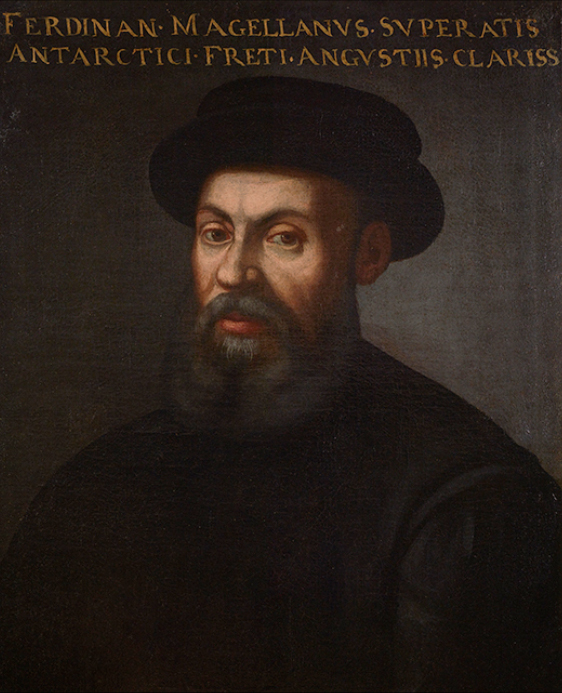
Initially, the agreement worked well. Even in 1500 when Portuguese explorers found the tip of Brazil to be within the western reaches of their territory, the Spanish did not balk. Problems, however, began to arise as Magellan's voyage circumnavigated the Earth in 1519-1522. The Portuguese Empire had discovered and conquered the Indonesian Molucca islands in 1521, filled with exotic spices like nutmeg and cloves. Its great potential wealth caused Spain to announce that the Moluccas lay within western Spanish territory, a point they defended by Magellan's claim of the Philippines to the northwest of the islands. Since neither party had discussed where the east-west lines crossed, no one had a clear answer.
The overlap debate turned violent when Spanish king Charles V sent an expedition to found a fort in the Moluccas. Short rounds of fighting broke out between the Spanish and Portuguese there, and Charles V and John III determined to find the proper anti-meridian that would be the legitimate halfway point of the line created at Tordesillas. The best cartographers in each court made recommendations, and a treaty was proposed at the Spanish city of Zaragoza granting Asia to Portugal and the Pacific to Spain with the East Indies divided east of the Moluccas.

As the Portuguese reviewed the treaty, an aide happened to mention there was no formal relinquishment of the Philippines. Rather than take it as an understanding that could cause problems later, the Portuguese now demanded the islands. Despite his potential for a strong argument thanks to Magellan's claim, Charles V granted Portugal the islands. He was eager for Portuguese support (especially in gold) as he fought his wars in Italy with Francis I of France. The Portuguese demands turned out to be largely moot as Portugal set up a few trading posts but scarcely colonized the islands.
When Portugal's influence waned, particularly upon its royal union with Spain, a new era of imperialism sprang up as the Dutch began exploiting their previously sociable relations to seize much of Portugal's former Pacific Empire. While the Dutch lost out in North America to the British and Portugal held its claims in Brazil, the Pacific islands, including the Philippines, became a fast chain under Dutch rule. Plantations proved profitable, but without a large population, the Dutch primarily held political control with locals carrying on their own lives.

In 1940, after the Second Sino-Japanese War had ended with Japanese dominance in China, the United States led an oil embargo as part of sanctions against Japanese imperialism. Britain and the Dutch followed, and Japan took the embargo as an act of war, swooping in to seize the Dutch East Indies and its rich oil supply. The Philippines were turned into a fortress, intended to be the buffer with the coming war with the United States. When that war finally did come with the US’s declaration in 1943, fighting in the Pacific was brutal as the US and Britain worked to cut Japan off from its fuel. After waves of atomic blasts, one even on Philippines’s largest island, Japan was defeated.

As the world rebuilt itself from WWII, the Philippines became a battleground in the Cold War. After breaking away from the rest of the Dutch East Indies during the Dutch's attempts to maintain colonial power, the independence movement on the northern island chain proved too strong. Western-or-Soviet-backed coups were a constant threat for decades. Today, the nation is hopeful for international investment, although many areas are unstable as separatist movements continue.


-----
In reality, the Treaty of Zaragoza resolved the territory debate in the East Indies and clarified spheres of influence. While the Spanish had technically given up the right to the Philippines, the Portuguese had no issue with later Spanish settlement there since the islands were not suited for their spice trade. It would be won by the United States in 1898 and serve as front lines in the Pacific Theater in World War II.

Tuesday, October 14, 2014

Guest Post: 16th January, 1979 - The Second Pillar Collapses


On this day Mohammad Reza Pahlavi the Shah of Iran fled Iran with his family and relocated to Egypt. Political unrest had transformed the country into a revolution and shortly thereafter, the monarchy was formally abolished, and Iran was declared an Islamic republic led by Ayatollah Khomeini.

Having so recently saved Vietnam from Communism, it was a disastrous turn of events for Richard Nixon during what should have been his "victory lap" third term. His Government had been fully committed to the "Twin Pillar" cold-war strategy of supporting Saudi Arabia and Iran in order to control oil supplies in the Middle East. And during his first year as Eisenhower's Vice President, the Iranian oil industry was briefly nationalized under the democratically elected Prime Minister Mohammad Mosaddegh before a US-backed coup d'état deposed Mosaddegh and brought back foreign oil firms.

As a result of this long standing personal entanglement the downward spiral of crisis continued to escalate across the whole region drawing Nixon into the picture as a Satanic bogeyman. Because the Arab masses were enraged that the Shah, a hated autocrat, had arrived in their country with an entourage, acting as if he was still Head of State in Exile and hoping that the US Government would restore him to power after a brief interruption to 2,500 years of continuous monarchy since the founding of the Persian Empire by Cyrus the Great.

With the Egyptian Government quickly losing control of events, Nixon readily agreed to provide sanctuary for the Shah at the American Embassy in Cairo whilst he could arrange some form of extraction. But this secret movement was betrayed, and protesters assembled outside the Embassy Gates, shouting revolutionary slogans. The Iranian Revolutionary Government demanded the return of the Shah to Iran to stand trial for his crimes. When Nixon refused the Embassy was overrun by militants and the whole Temple began to topple.

Tuesday, September 30, 2014

April 21, 1914 – Americans Rebuffed at Veracruz


When Francisco Madero began a coup against Porfiro Diaz in 1910, it set off a reaction that spun Mexican government out of control. Madero was assassinated in another coup in 1913 led by General Victoriano Huerta, and the chaos invited numerous others to join with their own violent bids for rule. The United States of America's southern neighbor became destabilized, threatening American interests there. Attempting to stymie the spread of violence, the United States placed a weapons embargo upon Mexico enforced by US warships. This action proved only to aggravate the situation as nine American sailors (who did not speak Spanish) that went ashore in Huerta-held, Constitutionalist-besieged Tampico were arrested by Mexican soldiers (who did not speak English) thinking it was a raid. The fiasco ended US-Mexican diplomacy.

Word of a German arms shipment to Mexico on the SS Ypiranga came to President Woodrow Wilson, who had already asked Congress for authorization to enforce his policy but was now required to act quickly. He gave the order to seize the shipment’s destination, Veracruz, which would stop any chance of delivery. US Marines and Bluejackets from the USS Prairie came ashore and marched unopposed, though they had gathered a crowd of curious spectators.

Around noon, fighting began in the town with a stand at the rail yard, which was the signal for an uprising from around the town that had been organized by Commodore Manuel Azueta. When he had heard of General Victoriano Maass preparing a retreat of the Mexican forces in the face of American Marines, Azueta broke military form to relieve Maass of command and arrest him. The quiet as the Americans had come ashore was a feint, and they found themselves suddenly assaulted by Mexican irregulars armed with Mausers as well as bands of Mexican soldiers leading a general charge.

American Rear Admiral Frank Fletcher organized a relief force and sent it to shore, but the constant Mexican small arms fire made any headway impossible. Finally he resorted to heavy bombardment, covering the retreat of marines and sailors. The bombardment continued until that night, when more American ships and marines from Panama arrived, where the canal project was nearing completion. At dawn, the Americans again attempted to establish a beachhead and were again driven back as the ruined buildings proved even better cover for the defending Mexican forces than empty urban streets. Mexicans celebrated despite a heavy loss of life, including Commodore Azueta’s son Jose, who famously gave a rallying cry while defending the Escuela Naval Militar alongside more than one hundred cadets, “If an American enters my house, I will either kill him or me!”  In the end, the American fleet merely established a blockade, turning the Ypiranga back, and left the city with its wrecked harbor.

The military fiasco quickly became a political one. Latin American countries balked at what they considered an overbearing United States, especially Argentina, Brazil, and Columbia, the “ABC Powers.” A conference was held in Bogota that not only gave a collective voice to the many countries south of the United States but also began to resolve the Mexican Revolution by recognizing Carranza and his Constitutionalists. The Roosevelt Corollary to the Monroe Doctrine that had encouraged American intervention was declared to be as distrusted as European intrusion. Americans were chased out of many Latin American countries and came to refugee centers in San Diego and New Orleans to start new lives.

Americans were humiliated at their battlefield loss and quickly blamed Wilson, who lost much of his support in Congress. Secretary of the Navy Josephus Daniels attempted to save face by emphasizing the bravery of the soldiers and ordering fifty-six Medals of Honor for the battle (half as many as was presented in the entire Spanish-American War). Marine Major Smedley Butler did not believe he had earned his medal and attempted to refuse it; Daniels returned with an order that he wear it at all public events.

Wilson narrowly lost the 1916 presidential election with voters instead turning to Republican Charles Hughes, who promised to bolster the military preparedness of America. The US Navy worked to defend American lives at sea, and the Army was put into practice chasing Pancho Villa after his raids of the Southwest. With so much nervousness from being weak at home and facing a unified front from the ABC Powers, Hughes discouraged Congress toward war after the release of the Zimmerman Telegraph, which served to expand the gulf that had been built up between the United States and the rest of the Western Hemisphere.

After the end of World War I, the United States turned toward European and Pacific markets and avoided expanding trade with Latin American countries outside of Panama. Issues with Japan became increasingly problematic as it expanded into China, where America had established markets. When war broke out in Europe in 1939, it was an opportunity for the United States to use its extensive military, which had continued to expand since 1916, in a decisive early strike against the Japanese naval forces at Okinawa.


--

In reality, the Mexican army did not participate in the Battle of Veracruz, which was quickly ended in American favor. The ABC Powers hosted the Niagara Falls Peace Conference, easing the diplomatic tension and persuading the United States to return the port that November. The occupation of Veracruz would be one of many in the “Banana Wars” before the Good Neighbor policy was adopted in 1934.

Monday, August 18, 2014

Guest Post: Communism Kicked out of the Classroom

Eugene Genovese is fired by Rutgers University from Today in Alternate History

September 26, 2012: On this day anti-American academic dissident Eugene Dominic Genovese died in political exile in Montreal, Canada, at the age of eighty-two. Born in Brooklyn, New York he was raised in a working-class ethnic Italian family. Genovese earned his Bachelor of Arts from Brooklyn College in 1953 and his Master of Arts in 1955 and a Ph.D. in history in 1959, both from Columbia University.

Six years later, while teaching at a Rutgers University "teach-in" protest, he stated, "Those of you who know me know that I am a Marxist and a Socialist. Therefore, unlike most of my distinguished colleagues here this morning, I do not fear or regret the impending Viet Cong victory in Vietnam. I welcome it." His was an explosively controversial comment that was widely reported and generated a backlash of criticism. Politicians questioned Genovese's judgment and sensitivity to the responsibility inherent in being a Rutgers professor. But no state laws or university regulations had been broken, and Genovese was supported by fellow faculty members on grounds of academic freedom. 

The dispute was taken to another level of intensity when former Vice President Richard Nixon came out and called for his dismissal. He was supporting Wayne Dumont, a gubernatorial candidate that was challenging Governor Richard J. Hughes, and he decided to use Genovese's statement as a campaign issue. When Rutgers reluctantly fired Genovese, events began to unravel that would affect not only his career but those of Dumont, Hughes and of course Nixon.

Author's Note: In reality, Rutgers President Mason Gross refused to re-examine the university's position, and Dumont lost to Governor Hughes. President Gross' defence of academic freedom was honoured by the American Association of University Professors, who presented him and Rutgers with its Alexander Meiklejohn Award in 1966. Genovese moved to Canada and taught at Sir George Williams University in Montreal (1967-69). In 1968, Genovese signed the "Writers and Editors War Tax Protest" pledge, vowing to refuse tax payments in protest against the Vietnam War.

We suggest in this ATL he was never able to return to the United States because in OTL he died in Atlanta George as a preeminent historian of the American south. Also to note although active in the Communist youth movement he was expelled "for having zigged when [he] was supposed to zag." He later abandoned the Left and Marxism, and embraced traditionalist conservatism.

Sources - 

 Addendum from Prof. Jeff Provine: With politics proving its control over the classroom, colleges ended as havens for revolutionary thought. Campus practices and even curriculum became subject to oversight driven by tax-dollar-allocation from the Department of Education. Nixon won the 1968 election that fall and, though he ended the war in Vietnam, presided over the mass-arrest at Kent State in 1970 that led to the expulsion of dozens of students for "unlawful assembly" with control exerted not through the government (which would violate the First Amendment) but through bullied administrators.

Friday, July 11, 2014

April 20, 1303 – Sapienza University Leads to Industrial Revolution


After the rediscovery of the Code of Justinian in 1070 established new admiration for law rather than “might makes right,” Europeans began a new focus on studying law, philosophy, and theology to prove who was in the right. The first was founded in Bologna, Italy, where international students hired scholars to teach them how to be protected by (and from) city law. Guilds and kings began their own universities in Italy, France, and England, collections of like-minded individuals where the brightest minds were collected to train and teach. In 1303, concerned that intellectuals were gaining an upper-hand on theology, Pope Boniface VIII founded a university of his own, Sapienza – Università di Roma, the University of Rome for Wisdom. Just before its release, the papal bull was edited to read “for the good of all men,” perhaps in an effort to ensure universal church authority, a point he had battled over with Phillip IV of France and led the king to march on Rome.

In 1431, Pope Eugene IV reorganized and revitalized the university, dividing it into schools for Law, Medicine, Philosophy, and Theology. Upon a review of Boniface’s words, Eugene decided to add a fifth school of Builders that would handle practical matters that affected commoners, primarily improving agriculture. It was a controversial action considered banal by many scholars, but faculty was readily available from the military engineers in the Venetian Wars (1416-1573). The calculating wits that produced war engines were applauded as they approached civilian issues of flood control, land reclamation, and hydropower.

As the school’s reputation improved, it attracted a young Leonardo da Vinci, who would become its first legendary faculty member. Da Vinci, who had apprenticed as an artist, had been disgraced by libel and became determined to found a new life in Rome. He initially applied to the school of medicine to teach from his knowledge of anatomy, but his sense of innovation (such as writing backwards to avoid ink-stains from his left-handedness) brought him to the Builders. Students followed his teaching in earnest, putting thousands of man-hours into inventions that da Vinci himself could have only drawn in his journals. Vincians experimented with submarines in the Tiber, flew parachutes, and drove spring-driven automated carts.

The legacy of da Vinci was largely considered to be charming toys until the attempted sack of Rome in 1527.  Charles V, the Spaniard Holy Roman Emperor, defeated France in battle in Italy but had run out of funds to pay his soldiers. They mutinied and demanded to march on Rome, where Pope Clement VII had previously given his support to France. Only five hundred Swiss Guard stood against the onslaught of some 20,000 mercenaries. The pope called for militia, and “like Archimedes at Syracuse,” the students and faculty of Sapienza brought out engines of war that had only been tested in games: experimental cannons, rotating scythes, collapsible towers, and flame-throwers. Legends stated that legions of automaton warriors marched, but it was just one, which was quickly defeated, although it did leave behind a stunning psychological effect.

Students were able to drive off Charles’ troops and save the city. All of Europe marveled at the applications of science, and other universities swiftly adopted their own schools of engineering. Outside of war, engineers found themselves employed in Sapienza’s original direction of improving the land for mankind in road-building, irrigation, and invention. The implementation of the printing press spread ideas far and wide, especially after the water-powered automated press began delivering thousands of pages each hour. As minds tackled electricity, steam, and chemistry, an industrial revolution swept over Europe. Papal Italy was at the forefront, becoming a thinktank that again won fame in war through technological superiority when armored wagons demolished Gustavus Adolphus’s Swedish invasion of Pomerania in 1630.

The expansion of technology also brought dangerous levels of new knowledge to the public, such as Pisan Galileo Galilei’s theory of a heliocentric Solar System. While the Catholic Church had affirmed its position with the Counter-Reformation on mass-printed pamphlets and manufactured goods, the scientific discovery had a great deal of theological backlash. Scholars at Sapienza studied Galileo’s theory, tested it, and recommended to the pope that it be upheld. With a public relations machine already in place, theologians quickly assembled doctrine to better explain the significance in the delicate mechanics of Creation.

Gradually, the power of kings in Catholic lands gave way to the political, religious, and economic power of the Pope and its many banking and industrial interests. Steam-powered ships from Portuguese and Spanish fleets created a global empire, and Protestants in Northern Europe routinely made alliances to carve out colonies of their own. Catholic colonies sometimes attempted to gain independence from their mother countries like the Protestants, but the risk of excommunication proved too great for nations at large to rebel against the Church’s commonwealth, which came to dominate South America, half of North America, Africa, and much of Asia.


--

In reality, the Sapienza – Università di Roma was founded primarily for the study of theology, and Pope Eugene IV focused on the four schools pertinent to the times. While universities in Italy focused on theology and medicine, universities in Northern Europe turned to arts and sciences, and it was common even in the Late Middle Ages for faculty and students to travel between the two for conferences. Today Sapienza is one of the largest universities in Europe, having over one hundred thousand students, and is listed in the top 3% of learning institutions in the world.

Site Meter