The Anglo-French portion of the Six Years' War had dragged on through mixed results. Early on, the French had the upper hand with a string of victories in North America, but the leadership of Secretary of State William Pitt, Senior, resulted in a masterful use of British resources to turn the tide of the war. Then came the Annus Pestis (Cursed Year) of 1759. The French settlers and their Indian allies ignited a guerilla war in the Ohio Country that frustrated British hopes of taking Quebec. In India, Madras fell to French forces, though the battle would prove Pyrrhic for the victors. On the European Continent, French troops formed a siege of Minden, taking large swaths of German land west of the Weser River. At sea, the British gained great hope after the attack on Le Havre with a two-day bombardment that destroyed many of the barges the French were assembling for an amphibious invasion of Britain and again a small victory came at the Battle of Lagos, where British ships destroyed two ships-of-the-line from the French fleet and scattered the rest. However, the Battle of Quiberon Bay would give France another chance to challenge Britain for control of the high seas.
The battle began after a storm had driven most of the British blockade keeping the remaining troop transports at bay in France. French Marshal de Conflans hurried to merge his fleet with other squadrons collected from the West Indies and remainders from battles in the Mediterranean. He was spotted by British squadron commander Robert Buff and decided to give pursuit, but Buff split his smaller fleet into two groups heading north and south. In what was is seen as the most fortuitous move of the war, Conflans decided to keep his fleet together while in pursuit of the southerly British ships, resulting in organization that would be key to victory in the hard-won battle. The bulk of the English fleet appeared under Edward Hawke from the west, and the two converged in a titanic battle. A shift in the wind nearly disorganized Conflans, but the French managed to keep their composure and defeat the English inside the bay. Hawke died in the battle and only a handful of ships-of-the-line managed to escape, enabling the French to capture some ten more and wreck others.
It would be the final straw of the Annus Pestis. The French hurried to rebuild their fleet and launch their invasion of Britain as soon as weather permitted. Meanwhile, England became frantic.
Though William Pitt campaigned for a strong militia defense, drawing in the French force and then cutting off their supplies with a renewed navy to capture the army while it starved, the rest of Parliament would be swayed by the fearful public opinion. That Christmas, the English sued for peace, and the Treaty of Paris in 1760 took England out of the war. France made great colonial demands, retaking the lost Guadeloupe in the West Indies, expanding French territory in North America, and carving out rights to a French South India from the Carnatic and Mysore regions to the Indian Ocean France continued on in Europe, pressing troops into Hanover and forcing Prussia into a stalemate with Russia and Sweden. In the east, the war would end in 1761 with Prussia's growth being checked amid the other Baltic Powers.
The next twenty-five years would be a renewed Golden Age for France, raking in great wealth from its new colonies. Britain, meanwhile, came upon problematic times as it struggled to recover, establishing a taxation system that sent its American colonies into rebellion, which was much aided by the French. The resulting United States of America would soon have the first of many border wars with the French in Ohio, Louisiana, and along the St. Lawrence River, gradually pushing the French and their Indian allies west and northward.
The American experiment in self-rule spawned a wave of Enlightenment revolutions through Europe, and France would be among the first to lose its autocracy with the revival of the Estates-General and the establishment of the National Assembly to placate and aid those suffering from poor harvests. The renewed France would again injure Britain by aiding the Irish Rebellion of 1798, which would make famous Colonel Arthur Wesley as a great hero of Ireland as he managed to forge a self-rule for Ireland while maintaining some connection with England.
With a weakened Britain, other European powers took up their chances to increase their colonial strengths with Portugal in southern Africa, the Dutch in the South Pacific with New Holland, and the French in South Asia, West Africa, the Great Lakes, and in numerous islands wherever their navy could reach.
--
In reality, the Battle of Quiberon Bay was be the last great British victory in 1759, which came to be known as the Annus Mirabilis (Year of Miracles). They had driven the French nearly out of Canada, captured Guadeloupe, held Madras in India, and aided their German allies in victories on the Continent. Perhaps most significant were the victories at sea, particularly Quiberon Bay, where Britain would establish itself as unquestioned master of the seas for the next 150 years.
Showing events on this day in years past that shaped history... just, not our history.
Tuesday, August 30, 2011
November 20, 1759 – Battle of Quiberon Bay Ravages Royal Navy
Labels:
alternate history,
quiberon bay,
seven years war
Sunday, August 28, 2011
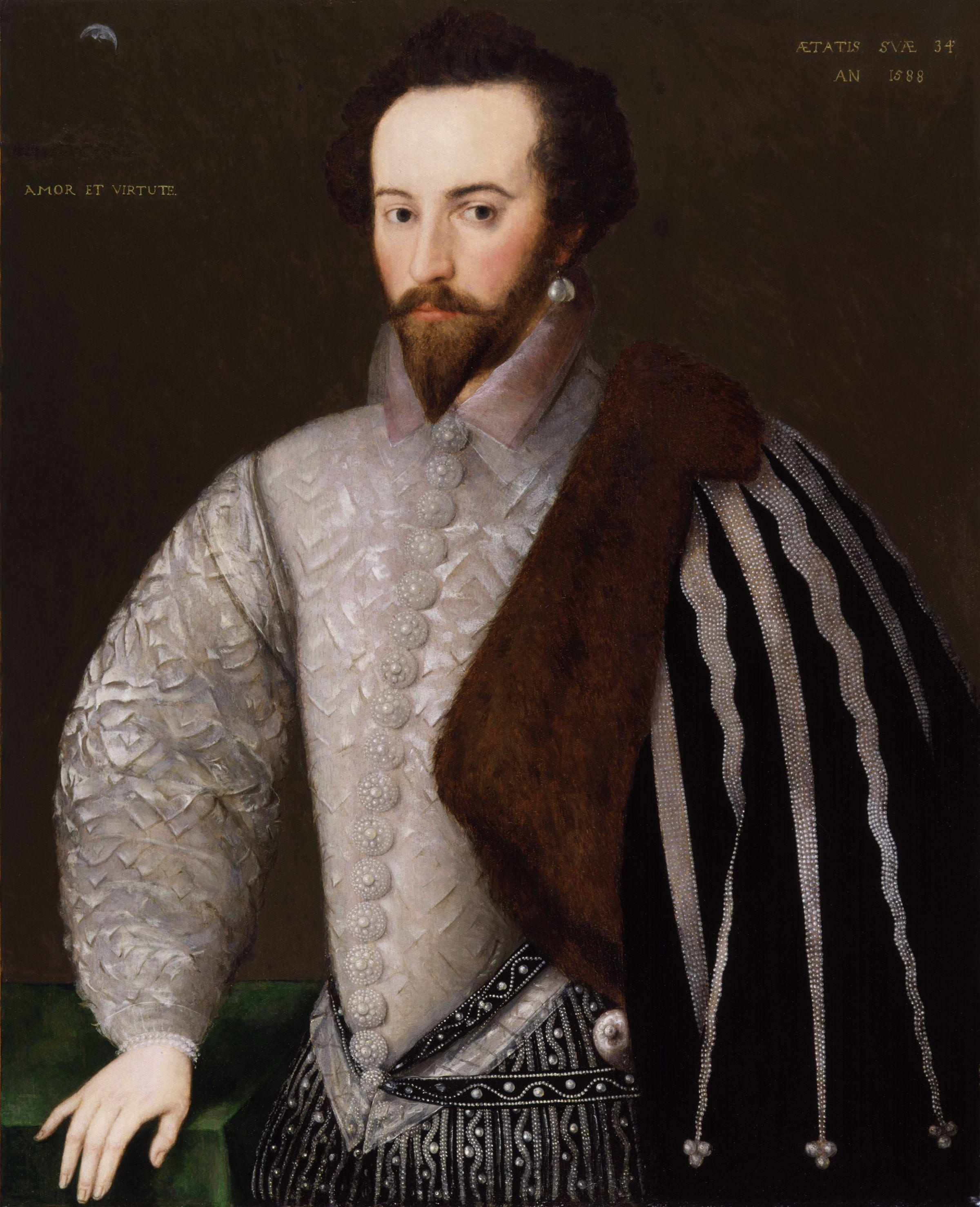
November 17, 1603 – Sir Walter Raleigh Acquitted
Upon the death of Queen Elizabeth in 1603, many Catholics saw the time of transition when Scottish James I took the English throne as the chance to overthrow the Protestant government. England had officially separated from Rome in 1534 under Henry VIII, who repeatedly fought to keep his position as head of the Church of England. The wars continued, primarily with Spain, through the reign of his daughter Elizabeth, though she would take a fairly neutral stance on Catholicism compared to Henry. The Virgin Queen had no issue, and the crown passed to her relative James VI of Scotland, who was not uniformly welcomed to the throne.
In the midst of the uneasiness, many Catholics thought that a single push would overthrow the Protestant rule of the country, and conspiracies were born. Most famous would be the Gunpowder Plot in 1605 with its close-call to the destruction of Parliament, but there would also be Bye Plot (in which Catholic priests hoped to kidnap James I to force the repeal of anti-Catholic laws) and the Main Plot both in 1603. Funded by Spain and led by men such as Henry Brooke, his brother Sir George (who would be executed after trial in the Bye Plot), and military man Thomas Grey, the plot involved raising up an army to storm London and place James’s cousin Arabella on the throne. Henry Brooke, the Lord Cobham, was in contact with the court of Spain and would collect money for the plot by travelling circuitously from London to Brussels to Spain and then back to London via Jersey, where Sir Walter Raleigh was governor. As the conspiracy came to trial, Raleigh would be dragged into it.
Raleigh was familiar with scandal. He had secretly married one of the Queen's ladies-in-waiting, Elizabeth Throckmorton, without permission in 1591, and the couple was imprisoned in the Tower of London. Shortly thereafter, however, Raleigh was released as he was one of the leading Englishmen with knowledge of the New World and worked to divide the spoils of the captured Spanish Madre de Dios. His fortunes would bounce back, just as they had after his failed experiment with Roanoke Colony. In 1593, he was made a burgess and later elected to Parliament (sitting for three counties in 1603). The next year, he came upon the story of “El Dorado”, a golden city at the headwaters of the Caroní River, a tributary of the Orinoco, and traveled to explore the northern coast of South America. Upon his return, Raleigh wrote The Discovery of Guiana and made exciting, if exaggerated, claims about his voyage. He returned to favor with exploits in battles with Spain and was named Governor of Jersey, from which he would be recalled in 1603 under suspicion of conspiracy and treason.
Cobham had given a sworn confession involving Raleigh, attempting to name names as his brother George Brooke had done turning Cobham in during the Bye trials. Raleigh denounced the evidence as “hearsay”, which was outright inadmissible in common law, though it could be heard in this civil law case of treason. General Attorney Edward Coke, who was new to his position and gaining great fame as he prosecuted numerous treasonous conspirators, refused to allow Cobham to testify in person as Cobham was described by contemporaries to say “one thing at one time, and another thing in another, and could be relied upon in nothing." Coke used personal attacks such as "notorious traitor", "vile viper" and "damnable atheist" in lieu of actual evidence, and finally Raleigh was able to point out that Coke was acting simply out of desperation in his duty to prosecute by order of the king. James I recognized this, and the charges were dismissed.
Raleigh returned to his positions and completing his improvements of the Jersey defenses before pressing on with his aspirations of discovering El Dorado. He gathered investors and equipment for not just an expedition, but a colony at the delta of the Orinoco to supply further expeditions up river. Raleigh’s bravado worked to his advantage in keeping the Spanish farther west and establishing an effective new Jamestown. The colony would later be governed by his son Wat after Raleigh disappeared into the jungle on one of his many expeditions and never returned. Orinoco proved a key military position between coastal Spanish Venezuela and the Dutch colonies forming to the east, many of which would be conquered in the later Anglo-Dutch wars.
Orinoco proved a fairly profitable, if non-noteworthy, plantation colony for the British Empire in the next several centuries. By the early 1900s, its vast oil fields became a valuable commodity, and since then Orinoco has been one of the richest corners of the Commonwealth, looked upon with envy by other former colonies and routinely doing well in sporting matches from its state-of-the-art national stadium, El Dorado.
--
In reality, Raleigh was found guilty of treason, though King James would suspend his execution and hold him in the Tower of London until 1616, when he would be released to lead an expedition in search of El Dorado. During the exploration of Venezuela, an attack on a Spanish outpost would go wrong, his son Wat being shot and the attack being labeled an illegal act of war. To appease the Spanish, Raleigh’s sentence of beheading was reinstated in 1618. It was said that “justice of England has never been so degraded and injured as by the condemnation of the honourable Sir Walter Raleigh."
In the midst of the uneasiness, many Catholics thought that a single push would overthrow the Protestant rule of the country, and conspiracies were born. Most famous would be the Gunpowder Plot in 1605 with its close-call to the destruction of Parliament, but there would also be Bye Plot (in which Catholic priests hoped to kidnap James I to force the repeal of anti-Catholic laws) and the Main Plot both in 1603. Funded by Spain and led by men such as Henry Brooke, his brother Sir George (who would be executed after trial in the Bye Plot), and military man Thomas Grey, the plot involved raising up an army to storm London and place James’s cousin Arabella on the throne. Henry Brooke, the Lord Cobham, was in contact with the court of Spain and would collect money for the plot by travelling circuitously from London to Brussels to Spain and then back to London via Jersey, where Sir Walter Raleigh was governor. As the conspiracy came to trial, Raleigh would be dragged into it.
Raleigh was familiar with scandal. He had secretly married one of the Queen's ladies-in-waiting, Elizabeth Throckmorton, without permission in 1591, and the couple was imprisoned in the Tower of London. Shortly thereafter, however, Raleigh was released as he was one of the leading Englishmen with knowledge of the New World and worked to divide the spoils of the captured Spanish Madre de Dios. His fortunes would bounce back, just as they had after his failed experiment with Roanoke Colony. In 1593, he was made a burgess and later elected to Parliament (sitting for three counties in 1603). The next year, he came upon the story of “El Dorado”, a golden city at the headwaters of the Caroní River, a tributary of the Orinoco, and traveled to explore the northern coast of South America. Upon his return, Raleigh wrote The Discovery of Guiana and made exciting, if exaggerated, claims about his voyage. He returned to favor with exploits in battles with Spain and was named Governor of Jersey, from which he would be recalled in 1603 under suspicion of conspiracy and treason.
Cobham had given a sworn confession involving Raleigh, attempting to name names as his brother George Brooke had done turning Cobham in during the Bye trials. Raleigh denounced the evidence as “hearsay”, which was outright inadmissible in common law, though it could be heard in this civil law case of treason. General Attorney Edward Coke, who was new to his position and gaining great fame as he prosecuted numerous treasonous conspirators, refused to allow Cobham to testify in person as Cobham was described by contemporaries to say “one thing at one time, and another thing in another, and could be relied upon in nothing." Coke used personal attacks such as "notorious traitor", "vile viper" and "damnable atheist" in lieu of actual evidence, and finally Raleigh was able to point out that Coke was acting simply out of desperation in his duty to prosecute by order of the king. James I recognized this, and the charges were dismissed.
Raleigh returned to his positions and completing his improvements of the Jersey defenses before pressing on with his aspirations of discovering El Dorado. He gathered investors and equipment for not just an expedition, but a colony at the delta of the Orinoco to supply further expeditions up river. Raleigh’s bravado worked to his advantage in keeping the Spanish farther west and establishing an effective new Jamestown. The colony would later be governed by his son Wat after Raleigh disappeared into the jungle on one of his many expeditions and never returned. Orinoco proved a key military position between coastal Spanish Venezuela and the Dutch colonies forming to the east, many of which would be conquered in the later Anglo-Dutch wars.
Orinoco proved a fairly profitable, if non-noteworthy, plantation colony for the British Empire in the next several centuries. By the early 1900s, its vast oil fields became a valuable commodity, and since then Orinoco has been one of the richest corners of the Commonwealth, looked upon with envy by other former colonies and routinely doing well in sporting matches from its state-of-the-art national stadium, El Dorado.
--
In reality, Raleigh was found guilty of treason, though King James would suspend his execution and hold him in the Tower of London until 1616, when he would be released to lead an expedition in search of El Dorado. During the exploration of Venezuela, an attack on a Spanish outpost would go wrong, his son Wat being shot and the attack being labeled an illegal act of war. To appease the Spanish, Raleigh’s sentence of beheading was reinstated in 1618. It was said that “justice of England has never been so degraded and injured as by the condemnation of the honourable Sir Walter Raleigh."
Labels:
alternate history,
el dorado,
walter raleigh
Saturday, August 27, 2011
November 16, 636 – Sassanid Victory at al-Qādisiyyah halts Muslim Advance
Beginning in the 600s, the Middle East was a theater of war for three of history’s greatest empires. Two of them, the Byzantine and the Sassanid Empires, had battled for centuries and were descendants of empires that had stood even longer ago, Rome and Parthia, respectively. A new empire began to form, however, during the life of the Prophet Muhammad. As more and more converts joined his faith, the power of Islam grew out of the western part of Arabia and expanded quickly. When the Byzantines and Sassanids noticed this, they set aside their own differences and began an alliance for mutual protection.
Byzantium had begun its significance when the Roman emperor Constantine moved his capital there to promote stability in 330. Doing so strengthened the wealthy eastern frontier, but it also ultimately broke the Roman Empire apart with the West falling to the German hordes in 476. The Byzantines still stood, but toward the beginning of 600, the Sassanid Empire stormed Syria, Egypt, and Anatolia in vengeance of the Byzantine general assassinating and usurping the emperor Maurice, who had married a Sassanid princess. The next emperor, Heraclius, defeated the Sassanids at Nineveh in 627 and received back the captured territory and loot, including the True Cross.
The Sassanid Empire faced its own turmoil. Khosrau II was assassinated by his son Kavadh II in 629, who died in a matter of months, leading to a string of usurpations. Seven-year-old Ardashir III reigned before being killed by General Farrokhan, who died in battle and was succeeded by Purandokht, daughter of Khosrau II. She would rule for a short time, repairing much of the damage done by the past years’ intrigue before being replaced by her sister Azarmidokht, who would in turn be replaced by the nobleman Hormizd VI. Finally, Purandokht’s son and Khosrau’s grandson Yazdgerd III came of age and stabilized the Sassanid throne, supported by his general Rostam Farrokhzād.
Meanwhile, Muslim power continued to grow. Upon the death of the Prophet in 632, a council met and determined that Abu Bakr would be caliph. He set upon a series of wars uniting the Arabs of Arabia and then moving northward to add those in Syria and Palestine. With a new force the Middle East to counteract the tentative balance between Byzantium and Persia, wars quickly began with the caliphate invasion of Iraq, and the Muslim power was affirmed with the defeat of an army Sassanids, Byzantines, and Christian Arabs in 633. Sassanids finally stopped the Muslim advance in 634, and Sassanids and Byzantines made a formal alliance in 635. Knowing of the alliance, the Muslim forces decided to deal with their enemies one at a time, wiping out the Byzantine army at Yarmouk near the Sea of Galilee in August of 636 at the cost of abandoning Iraq to a massive Sassanid force of some 200,000 in camp. The Muslims camped at Qādisiyyah with 30,000 and waited as peace talks dragged on.
That November, the talks gave way to actual battle. The two sides had attempted to bend the other’s will with the Muslims sending an emissary to convert Yazdgerd III while the Persians sent a Muslim ambassador home as a servant carrying a basket of dirt on his head (though the Muslim response was, “Congratulations! The enemy has voluntarily surrendered its territory to us”). Caliph Umar ordered the talks to end, which caused Sassanid General Rostam to prepare for battle despite his reservations. Although the Sassanid army was much larger, the vast majority of the force was conscripted spear infantry that Procopius of Caesarea described as "a crowd of pitiable peasants who come into battle for no other purpose than to dig through walls and to despoil the slain and in general to serve the [real] soldiers.”
In the night, Rostam decided to use the infantry, what might have been his weakness, as a diversion. He dammed up the canal and moved over his entire army to face the Muslim force the next morning. Following secret orders, the infantry led the attack as a whole after the opening onslaught of the arrows, but were swiftly beaten back by the better trained Muslims. They feigned retreat, and the Muslims pursued. When they reached the canal, however, the infantry turned about and were ordered to hold position while the archers pounded the Muslims, who then began their own retreat. In the chaos (the battle would be known to Islam as Yaum-ul-Armah, "The Day of Disorder"), Rostam released his war elephants, backed by his heavy cavalry, which swept the Muslim cavalry from the field. The organized retreat turned to a rout with the unnerving elephants stomping, and the Muslim army was destroyed.
Yazdgerd III would manage to seal the victory with a treaty that would end his alliance with the now extremely weakened Byzantine Empire. The Zagros Mountains were strongly defended against further Muslim invasion, though the rich lands of Mesopotamia would routinely change hands between them, like Anatolia, which would be stripped from the Byzantines, who became a relic city-state with a naval empire. The Muslim caliphates, meanwhile, would turn westward, conquering across North Africa and into Europe, where Christians would begin counterattacks such as the Crusades with Persian allies.
While the political boundaries settled for the time, the wildly different religions of the Arab and Persian peoples would keep up a constant sense of distrust. Although conquered by the Mongols and later European colonialists, Persia would remain the center of Zoroastrianism, one of the world’s largest religions.
--
In reality, the Battle of al-Qādisiyyah lasted four days. Fighting was bloody but inconclusive until the fourth day, when Rostam’s war elephants were driven from the battle for good. Rostam was killed in the battle, and his army disintegrated without a leader, giving a great victory to the Muslims, who would soon conquer Persia and add it to the Rashidun Caliphate. After centuries of religious persecution, only a handful of Zoroastrians remain, and Iran is the seat of Shia Islam.
Byzantium had begun its significance when the Roman emperor Constantine moved his capital there to promote stability in 330. Doing so strengthened the wealthy eastern frontier, but it also ultimately broke the Roman Empire apart with the West falling to the German hordes in 476. The Byzantines still stood, but toward the beginning of 600, the Sassanid Empire stormed Syria, Egypt, and Anatolia in vengeance of the Byzantine general assassinating and usurping the emperor Maurice, who had married a Sassanid princess. The next emperor, Heraclius, defeated the Sassanids at Nineveh in 627 and received back the captured territory and loot, including the True Cross.
The Sassanid Empire faced its own turmoil. Khosrau II was assassinated by his son Kavadh II in 629, who died in a matter of months, leading to a string of usurpations. Seven-year-old Ardashir III reigned before being killed by General Farrokhan, who died in battle and was succeeded by Purandokht, daughter of Khosrau II. She would rule for a short time, repairing much of the damage done by the past years’ intrigue before being replaced by her sister Azarmidokht, who would in turn be replaced by the nobleman Hormizd VI. Finally, Purandokht’s son and Khosrau’s grandson Yazdgerd III came of age and stabilized the Sassanid throne, supported by his general Rostam Farrokhzād.
Meanwhile, Muslim power continued to grow. Upon the death of the Prophet in 632, a council met and determined that Abu Bakr would be caliph. He set upon a series of wars uniting the Arabs of Arabia and then moving northward to add those in Syria and Palestine. With a new force the Middle East to counteract the tentative balance between Byzantium and Persia, wars quickly began with the caliphate invasion of Iraq, and the Muslim power was affirmed with the defeat of an army Sassanids, Byzantines, and Christian Arabs in 633. Sassanids finally stopped the Muslim advance in 634, and Sassanids and Byzantines made a formal alliance in 635. Knowing of the alliance, the Muslim forces decided to deal with their enemies one at a time, wiping out the Byzantine army at Yarmouk near the Sea of Galilee in August of 636 at the cost of abandoning Iraq to a massive Sassanid force of some 200,000 in camp. The Muslims camped at Qādisiyyah with 30,000 and waited as peace talks dragged on.
That November, the talks gave way to actual battle. The two sides had attempted to bend the other’s will with the Muslims sending an emissary to convert Yazdgerd III while the Persians sent a Muslim ambassador home as a servant carrying a basket of dirt on his head (though the Muslim response was, “Congratulations! The enemy has voluntarily surrendered its territory to us”). Caliph Umar ordered the talks to end, which caused Sassanid General Rostam to prepare for battle despite his reservations. Although the Sassanid army was much larger, the vast majority of the force was conscripted spear infantry that Procopius of Caesarea described as "a crowd of pitiable peasants who come into battle for no other purpose than to dig through walls and to despoil the slain and in general to serve the [real] soldiers.”
In the night, Rostam decided to use the infantry, what might have been his weakness, as a diversion. He dammed up the canal and moved over his entire army to face the Muslim force the next morning. Following secret orders, the infantry led the attack as a whole after the opening onslaught of the arrows, but were swiftly beaten back by the better trained Muslims. They feigned retreat, and the Muslims pursued. When they reached the canal, however, the infantry turned about and were ordered to hold position while the archers pounded the Muslims, who then began their own retreat. In the chaos (the battle would be known to Islam as Yaum-ul-Armah, "The Day of Disorder"), Rostam released his war elephants, backed by his heavy cavalry, which swept the Muslim cavalry from the field. The organized retreat turned to a rout with the unnerving elephants stomping, and the Muslim army was destroyed.
Yazdgerd III would manage to seal the victory with a treaty that would end his alliance with the now extremely weakened Byzantine Empire. The Zagros Mountains were strongly defended against further Muslim invasion, though the rich lands of Mesopotamia would routinely change hands between them, like Anatolia, which would be stripped from the Byzantines, who became a relic city-state with a naval empire. The Muslim caliphates, meanwhile, would turn westward, conquering across North Africa and into Europe, where Christians would begin counterattacks such as the Crusades with Persian allies.
While the political boundaries settled for the time, the wildly different religions of the Arab and Persian peoples would keep up a constant sense of distrust. Although conquered by the Mongols and later European colonialists, Persia would remain the center of Zoroastrianism, one of the world’s largest religions.
--
In reality, the Battle of al-Qādisiyyah lasted four days. Fighting was bloody but inconclusive until the fourth day, when Rostam’s war elephants were driven from the battle for good. Rostam was killed in the battle, and his army disintegrated without a leader, giving a great victory to the Muslims, who would soon conquer Persia and add it to the Rashidun Caliphate. After centuries of religious persecution, only a handful of Zoroastrians remain, and Iran is the seat of Shia Islam.
Labels:
alternate history,
islam,
Qādisiyyah,
zoroastrianism
November 15, 1957 – Khrushchev Offers to Share Technology
In a move that many who knew him considered shockingly uncharacteristic (and believed to have been caused by advisers warning against words antagonizing opponents as had caused massive uprising in Hungary), Russian First Secretary of the Communist Party Nikita Khrushchev said during an interview with an American reporter that he would be willing to share missile technology with the United States, who clearly did not have the same ICBM capabilities as the Soviets. "If she had, she would have launched her own Sputnik," Khrushchev noted, recalling the Russian success of being the first people to put an artificial satellite into orbit some six weeks before on October 4. Later in the interview, given as part of the commemoration of the fortieth anniversary of the October Revolution, he discussed East-West relations and noted that neither side wanted war, but that the Soviets would win if one began.
The interview came just days after the Soviets had hurriedly launched Sputnik 2, which brought the first living creature into orbit, a dog named Laika. She proved that living creatures could survive weightlessness and opened the door for human scientific exploration of space. It also came after the humbling Gaither Report was leaked to the press. Assembled by the Security Resources Panel of the President's Science Advisory Committee, the report showed that the United States was far behind the Soviets on missile technology. After a decade of not working toward that end, the US had as its only defense the system of bomb shelters that were hardly effective if a large-scale war erupted.
The American populace continued to reel from the shocking news of Soviet superiority. Only a decade ago, the USA had been unquestionably the most powerful nation in the world with the A-bomb born out of the Manhattan Project. At the end of the war in 1945, Operation Paperclip sent OSS agents throughout Germany picking up Nazi scientists such as Werner von Braun and capturing what technology they could. Many of these scientists came to work for the Americans (some even illegally imprisoned at places such as P.O. Box 1142), and an inter-continental ballistic missile project was begun in 1946 by Consolidated-Vultee with its MX-774. The program was shut down a couple of years later as conservative feelings overtook post-war America, and it would not be until after the shocking launch of Sputnik that the Americans would reawaken.
Embarrassed and shocked by the Russians, Project Vanguard was quickly put into place by the Eisenhower administration to lift the Explorer Program, picking up proposals from the US Navy and Army that had been shelved due to lack of interest and funding. With the disastrous launch attempt of the Vanguard TV3 on December 6, 1957, where the three-stage rocket rose four feet before losing thrust, collapsing, and exploding, American public turned back to Khrushchev's offer. Many took it as if he were an older brother offering help with homework, while others thought he was twisting the diplomatic knife with a pandering, impossible offer. The world was in the midst of the International Geophysical Year sharing science on geomagnetism, oceanography, etc, and leaders internationally began to criticize the Americans for not taking up Khrushchev's offer to take up an American satellite on a Russian rocket. Much of the hooplah was settled with the launch of Explorer 1 on January 31, 1958, and then rocketry settled to a calmer scientific route with military espionage riding closely, secretly behind.
International relations improved somewhat between the USA and USSR, later resulting in the Nuclear Limitation Treaty in 1962 avoiding a massive stockpile of weapons beyond the point of Mutually Assured Destruction. Despite Khrushchev's constant assurances that communism would bury capitalism and colonialism, the Soviet Union would eventually fall in 1992, but not until after the success of the Buran shuttle system, launched in 1988 on the anniversary of Khrushchev's speech that began a time of peaceful coexistence in orbital space above the simmering Cold War. With an international space station being pieced together by Russian rockets with American engineered segments, long term space habitation is gradually being explored. Scientists hope to eventually put a man on the moon, where probes and flyby satellites have already taken a great deal of data, but cost and lack of public incentive have kept humans home.
--
In reality, Khruschev challenged America with, "Let's have a peaceful rocket contest just like a rifle-shooting match, and they'll see for themselves." The words would help begin the Space Race in which the Americans would work to catch up with and surpass the Soviets, culminating with the American Moon landing on July 20, 1969. Due to cost and recent catastrophic N1 rocket failures, Khrushchev determined that the Soviets would not make further plans to attempt a manned moon landing, and even the Russian shuttle program, which emulated the Americans from a decade before, would never launch more than an unmanned test mission.
The interview came just days after the Soviets had hurriedly launched Sputnik 2, which brought the first living creature into orbit, a dog named Laika. She proved that living creatures could survive weightlessness and opened the door for human scientific exploration of space. It also came after the humbling Gaither Report was leaked to the press. Assembled by the Security Resources Panel of the President's Science Advisory Committee, the report showed that the United States was far behind the Soviets on missile technology. After a decade of not working toward that end, the US had as its only defense the system of bomb shelters that were hardly effective if a large-scale war erupted.
The American populace continued to reel from the shocking news of Soviet superiority. Only a decade ago, the USA had been unquestionably the most powerful nation in the world with the A-bomb born out of the Manhattan Project. At the end of the war in 1945, Operation Paperclip sent OSS agents throughout Germany picking up Nazi scientists such as Werner von Braun and capturing what technology they could. Many of these scientists came to work for the Americans (some even illegally imprisoned at places such as P.O. Box 1142), and an inter-continental ballistic missile project was begun in 1946 by Consolidated-Vultee with its MX-774. The program was shut down a couple of years later as conservative feelings overtook post-war America, and it would not be until after the shocking launch of Sputnik that the Americans would reawaken.
Embarrassed and shocked by the Russians, Project Vanguard was quickly put into place by the Eisenhower administration to lift the Explorer Program, picking up proposals from the US Navy and Army that had been shelved due to lack of interest and funding. With the disastrous launch attempt of the Vanguard TV3 on December 6, 1957, where the three-stage rocket rose four feet before losing thrust, collapsing, and exploding, American public turned back to Khrushchev's offer. Many took it as if he were an older brother offering help with homework, while others thought he was twisting the diplomatic knife with a pandering, impossible offer. The world was in the midst of the International Geophysical Year sharing science on geomagnetism, oceanography, etc, and leaders internationally began to criticize the Americans for not taking up Khrushchev's offer to take up an American satellite on a Russian rocket. Much of the hooplah was settled with the launch of Explorer 1 on January 31, 1958, and then rocketry settled to a calmer scientific route with military espionage riding closely, secretly behind.
International relations improved somewhat between the USA and USSR, later resulting in the Nuclear Limitation Treaty in 1962 avoiding a massive stockpile of weapons beyond the point of Mutually Assured Destruction. Despite Khrushchev's constant assurances that communism would bury capitalism and colonialism, the Soviet Union would eventually fall in 1992, but not until after the success of the Buran shuttle system, launched in 1988 on the anniversary of Khrushchev's speech that began a time of peaceful coexistence in orbital space above the simmering Cold War. With an international space station being pieced together by Russian rockets with American engineered segments, long term space habitation is gradually being explored. Scientists hope to eventually put a man on the moon, where probes and flyby satellites have already taken a great deal of data, but cost and lack of public incentive have kept humans home.
--
In reality, Khruschev challenged America with, "Let's have a peaceful rocket contest just like a rifle-shooting match, and they'll see for themselves." The words would help begin the Space Race in which the Americans would work to catch up with and surpass the Soviets, culminating with the American Moon landing on July 20, 1969. Due to cost and recent catastrophic N1 rocket failures, Khrushchev determined that the Soviets would not make further plans to attempt a manned moon landing, and even the Russian shuttle program, which emulated the Americans from a decade before, would never launch more than an unmanned test mission.
Thursday, August 25, 2011
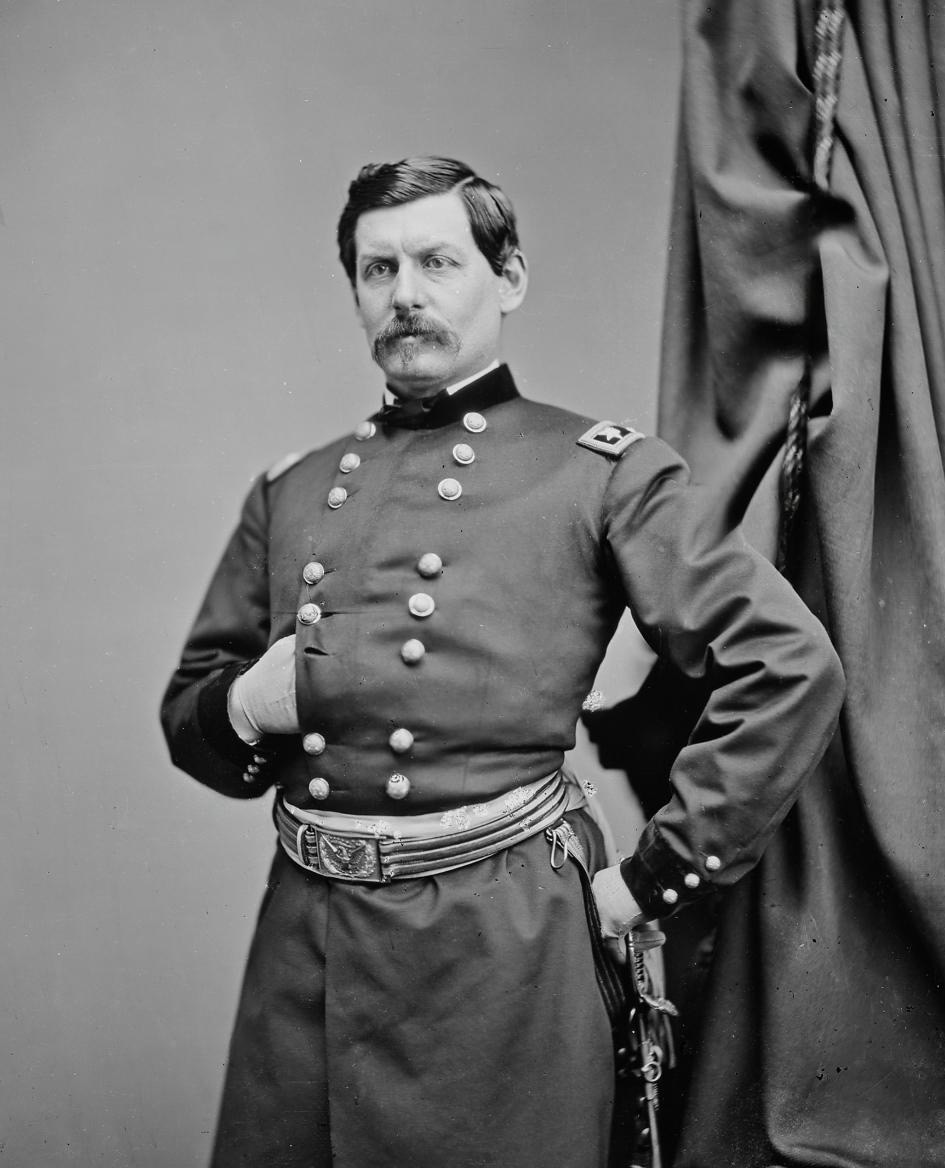
November 13, 1861 – Lincoln Dismisses McClellan after Insult
After not even two weeks of being General-in-Chief of the Union Armies, General George B. McClellan was dismissed from his position after repeated faux pas. President Abraham Lincoln, Secretary of State William H. Seward, and presidential secretary John Hay came by McClellan's house for a strategy meeting. The general was out, so the men waited. An hour later, McClellan returned but did not acknowledge them, and, after another half hour, his servant finally told the president that McClellan had gone on to bed. Lincoln was initially very calm, as he would typically be despite the trials of his presidency, and at first determined "better at this time not to be making points of etiquette and personal dignity." When word slipped that McClellan had privately referred to Lincoln as a "baboon" and "gorilla" and Seward as an "incompetent little puppy," Lincoln's uncustomary temper rose, and he fired his general-in-chief, demoting McClellan simply to commander of the Army of the Potomac.
Lincoln, however, put himself into dire straits. His military was hardly ready, but the populace was unsure whether a war to keep the Union united would be worth it, and he needed victories to keep the people in ready. General Winfield Scott, who had served with the US Army since before the War of 1812, had retired October 31 due to "health reasons" of being seventy-five years old. Other commanders might have been available, but Lincoln needed someone he was certain would be brash and wield the available army to the fullness of its effect. He recalled meeting Colonel William Tecumseh Sherman, one of the most effective commanders at the Battle of Bull Run that June. Lincoln had been so impressed that he promoted Sherman to brigadier general of volunteers.
Sherman, however, was unnerved by the war. The defeat by Confederates had caused him to question the abilities of Union soldiers as well as his own competency as a commander, despite his bravery even after taking grazing bullet wounds to his shoulder and knee. He had been assigned to Robert Anderson in the Department of the Cumberland and that October had replaced Anderson due to ill health. Sherman had been promised by Lincoln not to be given such authority so suddenly, and it began to wear on him. He was increasingly paranoid of Confederate resources and sent constant requests for more supplies from Washington. After a review by Secretary of War Simon Cameron, the press turned against him, noting his pessimism and what would be later described by psychology as a "nervous breakdown." He was relieved of command and sent to St. Louis, where he would receive his summons to Washington by Lincoln as a new general-in-chief to concoct the strategy for defeating the South.
Sherman arrived in Washington and immediately pleaded with Lincoln (directly as well as through his brother, Senator John Sherman) that he was unfit for command. Lincoln recalled his reservations about McClellan's ability to be both general-in-chief while still operating as an army commander, to which McClellan assured him, "I can do it." The president was tired of generals who questioned his decisions as commander-in-chief, and Lincoln wrote Sherman a direct order to take command. Sherman committed suicide December 23, 1861, under the pressure.
It would be a severe strike against Lincoln's administration and public opinion about the war. Further, Lincoln was once again stuck without a commander. Frémont had proven overly aggressive in Missouri that November, turning Lincoln to the third most senior general in the Army, Henry Halleck, who had just replaced Frémont in Missouri. Halleck soon arrived in Washington and proved an able administrator, though Lincoln would be frustrated over his lack of action in the next years, referring to Halleck as "little more than a first rate clerk." The Union struggled to make any progress in the East, but the Western theater with its eager General Ulysses S. Grant returned numerous victories. Winfield Scott's "Anaconda Plan" eventually began to choke out the South, who suffered Pyrrhic losses in its invasion of Pennsylvania under Lee, and Grant was made the new general-in-chief in 1864 with Halleck being "kicked upstairs" to Chief of Staff.
Grant put forward Lincoln's plan of total war to break down Southern infrastructure and keep potential reinforcements pinned. The taking of Atlanta by General George Henry Thomas on October 2, 1864, came just in time to guarantee Lincoln's second election, and Thomas would lead the careful and slow demolition of Southern communication, transport, and industry. However, shortly after the end of the war with Lee's surrender in June of 1865, the superficial damage would be easily repaired. Lincoln's assassination came as a harsh blow to the South, but Thomas's gentlemanly use of Army resources to enable Southern rebuilding did much to aid feelings in Reconstruction after the notions of him being a "traitor" to his native Virginia faded.
Andrew Johnson battled through the rest of Lincoln's term, and in 1868 Grant would win the presidency. While dealing mainly with the issues of the South, he would also be notably genial toward Native Americans. His use of treaties restricting buffalo hunts came too late to preserve the food supply entirely, but he would continue his overall attitude toward Natives as "harmless" and "peaceful" until "put upon by the whites" and prevent as many armed altercations as he could.
--
In reality, Lincoln allowed McClellan to continue as general-in-chief until the failure of the Peninsular Campaign. Sherman would be given leave not long after the Cincinnati Commercial referred to him as "insane" on December 11, 1861. He soon return recuperated, taking up service under Grant, whom he would aid in victories such as that at Chattanooga. When Grant became general-in-chief, he gave Sherman command to take Atlanta and approved the later March to the Sea, which saw scorched earth tactics of utterly laying waste to the South from Atlanta to Savannah. After the war, Sherman would be put in charge of the Military Division of the Missouri, where he would write to Grant that "hostile savages like Sitting Bull and his band of outlaw Sioux ... must feel the superior power of the Government" and "we must act with vindictive earnestness against the Sioux, even to their extermination, men, women and children."
Lincoln, however, put himself into dire straits. His military was hardly ready, but the populace was unsure whether a war to keep the Union united would be worth it, and he needed victories to keep the people in ready. General Winfield Scott, who had served with the US Army since before the War of 1812, had retired October 31 due to "health reasons" of being seventy-five years old. Other commanders might have been available, but Lincoln needed someone he was certain would be brash and wield the available army to the fullness of its effect. He recalled meeting Colonel William Tecumseh Sherman, one of the most effective commanders at the Battle of Bull Run that June. Lincoln had been so impressed that he promoted Sherman to brigadier general of volunteers.
Sherman, however, was unnerved by the war. The defeat by Confederates had caused him to question the abilities of Union soldiers as well as his own competency as a commander, despite his bravery even after taking grazing bullet wounds to his shoulder and knee. He had been assigned to Robert Anderson in the Department of the Cumberland and that October had replaced Anderson due to ill health. Sherman had been promised by Lincoln not to be given such authority so suddenly, and it began to wear on him. He was increasingly paranoid of Confederate resources and sent constant requests for more supplies from Washington. After a review by Secretary of War Simon Cameron, the press turned against him, noting his pessimism and what would be later described by psychology as a "nervous breakdown." He was relieved of command and sent to St. Louis, where he would receive his summons to Washington by Lincoln as a new general-in-chief to concoct the strategy for defeating the South.
Sherman arrived in Washington and immediately pleaded with Lincoln (directly as well as through his brother, Senator John Sherman) that he was unfit for command. Lincoln recalled his reservations about McClellan's ability to be both general-in-chief while still operating as an army commander, to which McClellan assured him, "I can do it." The president was tired of generals who questioned his decisions as commander-in-chief, and Lincoln wrote Sherman a direct order to take command. Sherman committed suicide December 23, 1861, under the pressure.
It would be a severe strike against Lincoln's administration and public opinion about the war. Further, Lincoln was once again stuck without a commander. Frémont had proven overly aggressive in Missouri that November, turning Lincoln to the third most senior general in the Army, Henry Halleck, who had just replaced Frémont in Missouri. Halleck soon arrived in Washington and proved an able administrator, though Lincoln would be frustrated over his lack of action in the next years, referring to Halleck as "little more than a first rate clerk." The Union struggled to make any progress in the East, but the Western theater with its eager General Ulysses S. Grant returned numerous victories. Winfield Scott's "Anaconda Plan" eventually began to choke out the South, who suffered Pyrrhic losses in its invasion of Pennsylvania under Lee, and Grant was made the new general-in-chief in 1864 with Halleck being "kicked upstairs" to Chief of Staff.
Grant put forward Lincoln's plan of total war to break down Southern infrastructure and keep potential reinforcements pinned. The taking of Atlanta by General George Henry Thomas on October 2, 1864, came just in time to guarantee Lincoln's second election, and Thomas would lead the careful and slow demolition of Southern communication, transport, and industry. However, shortly after the end of the war with Lee's surrender in June of 1865, the superficial damage would be easily repaired. Lincoln's assassination came as a harsh blow to the South, but Thomas's gentlemanly use of Army resources to enable Southern rebuilding did much to aid feelings in Reconstruction after the notions of him being a "traitor" to his native Virginia faded.
Andrew Johnson battled through the rest of Lincoln's term, and in 1868 Grant would win the presidency. While dealing mainly with the issues of the South, he would also be notably genial toward Native Americans. His use of treaties restricting buffalo hunts came too late to preserve the food supply entirely, but he would continue his overall attitude toward Natives as "harmless" and "peaceful" until "put upon by the whites" and prevent as many armed altercations as he could.
--
In reality, Lincoln allowed McClellan to continue as general-in-chief until the failure of the Peninsular Campaign. Sherman would be given leave not long after the Cincinnati Commercial referred to him as "insane" on December 11, 1861. He soon return recuperated, taking up service under Grant, whom he would aid in victories such as that at Chattanooga. When Grant became general-in-chief, he gave Sherman command to take Atlanta and approved the later March to the Sea, which saw scorched earth tactics of utterly laying waste to the South from Atlanta to Savannah. After the war, Sherman would be put in charge of the Military Division of the Missouri, where he would write to Grant that "hostile savages like Sitting Bull and his band of outlaw Sioux ... must feel the superior power of the Government" and "we must act with vindictive earnestness against the Sioux, even to their extermination, men, women and children."
Labels:
alternate history,
civil war,
sherman
Tuesday, August 23, 2011
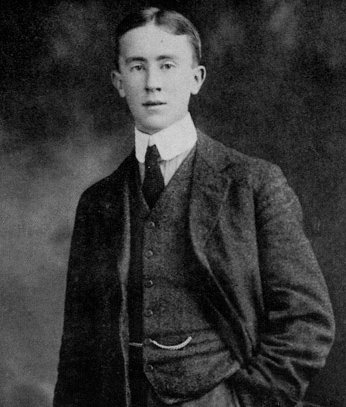
November 9, 1916 – JRR Tolkien Hallucinates in the Trenches
In the midst of trench fever, John Ronald Reuel Tolkien, signals officer with the Lancashire Fusiliers, began hallucinations that would forever change him. He was meant to have been invalided the day before, but he chose to stay behind to let another, sicker soldier take his place. Still in the miserable conditions of the trenches, Tolkien relapsed the next day into a high fever, crippling muscle soreness in his legs, and stabbing pain in his eyes. Others went to fetch a medic while he remained propped in the dark of a supply tent, near an unused machine gun. He had listened to the thunderous blasts of machine gun fire often in training in Staffordshire and later in combat during the Somme offensive.
This time, however, the noise was only in his mind, which translated the mechanical pattering into a language. He thought he could just about translate the words, a series of taps as if a living telegraph key, reassuring him that the gun would fight on just as a fellow soldier would. When medics arrived to take him away from the front, he told them, “The gun. It shall fight on.”
Tolkien returned to England and to his wife, Edith, whom he had married three years before after five years of waiting due to his guardian's refusal they see one another before Tolkien was 21. He would spend the rest of the war alternately in hospitals or on light guard duty since he was too ill with recurrent fever to participate other than stints in camps on the home front, but honor kept him in the service until the end of the war. While recovering, Tolkien would begin writing fanciful stories, mixing the worlds of myth he had always studied with his new ideas of animated machines. He devoured science romances of Jules Verne and the like, but the use of machines as tools carried too little personification. Instead, Tolkien created machines that were as human as men, with personalities and special skills, just as the dwarves or elf creatures in Northern European myth. One of his first stories, "Fall of Gondolin" told of a city made of machines, each working its duty to create a glorious world, and its betrayal and destruction by the armies of an industrial behemoth monster called Morgoth ("Black Foe of the World" in Klindirin, a clicking language he invented for his machines).
Tolkien was not the only fiction-writer fascinated with intelligent machines. Just after the turn of the century, Frank L. Baum wrote about Tik-tok, a living clockwork being. The idea was taken further in 1921 by the Czech playwright Karel Capek in his play R.U.R. (Rossum’s Universal Robots), first coining the term “robot” for a humanlike automaton built to do work. Films would soon have their own robots with Fritz Lang’s Metropolis in 1927 giving a robot indistinguishable from the human Maria. In all of these, the machines were written to emulate humans, but Tolkien’s stories went further, creating a world complete with history, language, and culture with different races of machines, not metal emulations of humanity. His studies of myth, particularly Beowulf, turned him to a sense of social tribalism and competition over resources. In 1936, Tolkien published The Robbit about a portly, quiet machine chosen by a magical Tinkerer to join a quest to liberate a coal mine from Smaug, an ancient predatory machine. This and the following Bearing trilogy would inspire the next generation of science fiction writers such as Isaac Asimov and Arthur C. Clarke.
While he would continue to write during his free time, Tolkien's professional life kept him busy. He worked for the Oxford English Dictionary, became the youngest professor at the University of Leeds, and finally settled at Oxford first at Pembroke College and then Merton, becoming chair of English Language and Literature. Tolkien often ate with fellow writers in a club nicknamed “The Inklings”, including C.S. Lewis, the unquestioned Father of Modern Fantasy with his Wardrobe tales. In World War II, Tolkien served his country again as a code-breaker (though was notoriously vocal about his anti-war sentiments) and worked alongside men such as Alan Turing, who would be inspired by Tolkien’s ideas on machine communication. While Tolkien never officially worked on computer development projects, he and Turing kept close correspondence, even through Turing’s indecency debacle in the early ‘50s. Shortly before Tolkien’s death in 1973, Turing’s Beren system came online, creating the first vocal command interface and allowing man and machine to talk just as Tolkien dreamed. Mankind would far surpass Arthur C. Clarke’s description of a “HAL 9000” by its fictional birth date in 1997 for his 2001: A Space Odyssey.
--
In reality, Tolkien was invalided to England on November 8, 1916. He wrote extensively in the style of ancient myth, giving new life to the High Fantasy genre that supplied depth and poetry to literature that was often considered nothing but pulp adventure.
This time, however, the noise was only in his mind, which translated the mechanical pattering into a language. He thought he could just about translate the words, a series of taps as if a living telegraph key, reassuring him that the gun would fight on just as a fellow soldier would. When medics arrived to take him away from the front, he told them, “The gun. It shall fight on.”
Tolkien returned to England and to his wife, Edith, whom he had married three years before after five years of waiting due to his guardian's refusal they see one another before Tolkien was 21. He would spend the rest of the war alternately in hospitals or on light guard duty since he was too ill with recurrent fever to participate other than stints in camps on the home front, but honor kept him in the service until the end of the war. While recovering, Tolkien would begin writing fanciful stories, mixing the worlds of myth he had always studied with his new ideas of animated machines. He devoured science romances of Jules Verne and the like, but the use of machines as tools carried too little personification. Instead, Tolkien created machines that were as human as men, with personalities and special skills, just as the dwarves or elf creatures in Northern European myth. One of his first stories, "Fall of Gondolin" told of a city made of machines, each working its duty to create a glorious world, and its betrayal and destruction by the armies of an industrial behemoth monster called Morgoth ("Black Foe of the World" in Klindirin, a clicking language he invented for his machines).
Tolkien was not the only fiction-writer fascinated with intelligent machines. Just after the turn of the century, Frank L. Baum wrote about Tik-tok, a living clockwork being. The idea was taken further in 1921 by the Czech playwright Karel Capek in his play R.U.R. (Rossum’s Universal Robots), first coining the term “robot” for a humanlike automaton built to do work. Films would soon have their own robots with Fritz Lang’s Metropolis in 1927 giving a robot indistinguishable from the human Maria. In all of these, the machines were written to emulate humans, but Tolkien’s stories went further, creating a world complete with history, language, and culture with different races of machines, not metal emulations of humanity. His studies of myth, particularly Beowulf, turned him to a sense of social tribalism and competition over resources. In 1936, Tolkien published The Robbit about a portly, quiet machine chosen by a magical Tinkerer to join a quest to liberate a coal mine from Smaug, an ancient predatory machine. This and the following Bearing trilogy would inspire the next generation of science fiction writers such as Isaac Asimov and Arthur C. Clarke.
While he would continue to write during his free time, Tolkien's professional life kept him busy. He worked for the Oxford English Dictionary, became the youngest professor at the University of Leeds, and finally settled at Oxford first at Pembroke College and then Merton, becoming chair of English Language and Literature. Tolkien often ate with fellow writers in a club nicknamed “The Inklings”, including C.S. Lewis, the unquestioned Father of Modern Fantasy with his Wardrobe tales. In World War II, Tolkien served his country again as a code-breaker (though was notoriously vocal about his anti-war sentiments) and worked alongside men such as Alan Turing, who would be inspired by Tolkien’s ideas on machine communication. While Tolkien never officially worked on computer development projects, he and Turing kept close correspondence, even through Turing’s indecency debacle in the early ‘50s. Shortly before Tolkien’s death in 1973, Turing’s Beren system came online, creating the first vocal command interface and allowing man and machine to talk just as Tolkien dreamed. Mankind would far surpass Arthur C. Clarke’s description of a “HAL 9000” by its fictional birth date in 1997 for his 2001: A Space Odyssey.
--
In reality, Tolkien was invalided to England on November 8, 1916. He wrote extensively in the style of ancient myth, giving new life to the High Fantasy genre that supplied depth and poetry to literature that was often considered nothing but pulp adventure.
Labels:
alternate history,
artificial intelligence,
tolkien,
turing
Sunday, August 21, 2011
November 8, 1942 – Operation Sledgehammer Begins
In the beginning of the darkest hours of the Second World War, the ill-fated 1942 invasion of the European mainland began on a sunny, mild day. The week prior to the landing had been one of changeable weather, and Allied Command had been nervous about weather upsetting the Channel waters. On the 5th, an inch of rain fell in London, which made ground commanders nervous about the ability to move tanks and trucks while pilots hoped air fields and visibility would be clear. On the 7th, as if Mother Nature were welcoming the invasion, temperatures climbed into the 50s (12+ C) and dried the soaking land. In the early hours of the 8th, Supreme Commander Allied (Expeditionary) Force Dwight Eisenhower gave the go-ahead for the invasion.
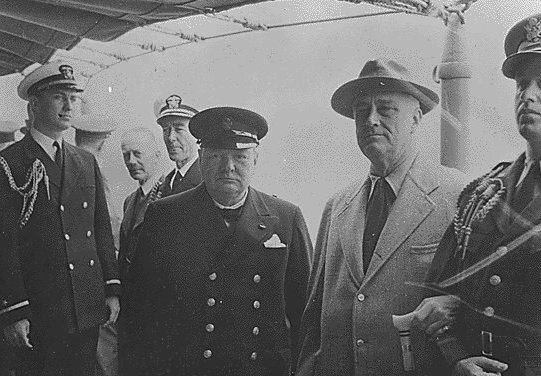
The operation had very nearly not happened. As late as the Second Claridge Conference in July of 1942, Prime Minister Churchill was firmly against the idea of an assault on the heavily defended northern shore of France. He recommended instead that the Allies attack through North Africa, striking at the “weak underbelly of Europe” to take on Hitler’s weaker allies in Vichy France and Italy rather than the Third Reich itself. His main argument against a massive assault was that Britain simply did not have the resources necessary in supplies, transports, and aircraft.
Against him was US President Franklin Delano Roosevelt. The Japanese attack at Pearl Harbor had thrust America into the war, but many felt that resources should be spent seeking revenge on Japan in the Pacific theater rather than Roosevelt’s call to destroy Hitler, the instigator of the war. With Americans fully invested in Europe, FDR would further hush naysayers who said we were fighting the wrong enemy. In March of 1942, FDR wrote Churchill that he was “becoming more and more interested in the establishment of a new front this summer on the European continent, certainly for air and raids... And even though losses will doubtless be great, such losses will be compensated by at least equal German losses and by compelling the Germans to divert large forces of all kinds from the Russian front.”
The Russians were thusly extremely interested in a second front in Europe. If Hitler were caught in a pincer movement, or even distracted by air raids such as FDR suggested, the bloody Eastern Front would take great relief. Soviet Foreign Minister Vyacheslav Molotov visited the UK and insisted on aid as soon as possible. He was rebuffed in London, but his visit to Washington proved much more supportive. Eventually, however, diplomatic squabbling settled on the side of the US and Soviets, and Churchill begrudgingly readied his country for another great fight after surviving the Battle of Britain in 1940 and terrible Blitz in ‘41. He was at least able to postpone the invasion until the late autumn, using the disastrous Dieppe Raid on August 19 as an example of the vicious resistance the Allies would face.
Allied Command determined that the only possible method of success would be air superiority. For months, air resources were readied on fields in England and even as far away as Scotland while convoys such as SL 125 worked to divert German attention toward the false notion of an African attack. The attack began with bombers with diving torpedoes attempting to clear a path in the mines for landing craft while naval bombardment provided cover and pounded the soon-to-be-captured port of Cherbourg. The landing would be difficult and the resulting fight even worse with urban warfare racking up numerous Allied losses. Thanks to “brute American will”, however, the beachhead would be established.
Any plans for a push that winter, however, were cut short when Erwin Rommel was brought back from North Africa, where he had begun a drive to take Egypt, but was cut short by British General Montgomery’s counterattack. Rommel took up the Panzer divisions that had waited in Europe for just this moment and attacked the Allied port, narrowly kept at bay with massive casualties by American General George Patton. Through the bitterly cold winter of ’42-’43, the Allies and Axis would throw more and more resources into the fray, creating a warzone not seen in France since the bloodbaths of World War I.
The next spring, Operation Roundup pumped more divisions and the Allies finally made a few miles of progress into France. News of never-ending battles beleaguered the war-weary nations with Americans growing firmer on the idea that they had yet again stumbled into Europe’s mess. In Britain, which was continually under German air assault in hopes of breaking up Allied supply lines, Churchill was blamed as speeches recalled his responsibility for Gallipoli. A vote of no confidence was carried, and Churchill fell from office despite his historical innocence. Likewise, FDR would be narrowly defeated in 1944 despite the European theater coming to a close. Hitler himself became increasingly frantic, causing many of his ministers and commanders to distance themselves. Mussolini as well as Admiral Francois Darlan of Vichy attempted to work with the Allies, and both would find themselves murdered by the end of the war.
Modern commentators often mention that the real winners of the Anglo-American and German Second Battle of France were the Soviets. Much relieved from German pressure and even victorious at the Battle of Stalingrad with the capture of the German 6th Army, Stalin surged in a counterattack across Eastern Europe and brought the ultimate defeat to Germany by taking Berlin in late 1944. Capturing numerous German scientists and technologies, it would be only a matter of a few years before Moscow began producing its own supersonic V-2 rockets.
--
In reality, Operation Sledgehammer was shelved as infeasible. Initially planned for early fall of 1942, the plan would have brought only nine potential Allied divisions against some thirty German, realistically ending with the Allies being driven back into the sea. Instead, Churchill’s ideal of Operation Torch sent Allied troops through North Africa and then into France and Italy and finally Germany.
The operation had very nearly not happened. As late as the Second Claridge Conference in July of 1942, Prime Minister Churchill was firmly against the idea of an assault on the heavily defended northern shore of France. He recommended instead that the Allies attack through North Africa, striking at the “weak underbelly of Europe” to take on Hitler’s weaker allies in Vichy France and Italy rather than the Third Reich itself. His main argument against a massive assault was that Britain simply did not have the resources necessary in supplies, transports, and aircraft.
Against him was US President Franklin Delano Roosevelt. The Japanese attack at Pearl Harbor had thrust America into the war, but many felt that resources should be spent seeking revenge on Japan in the Pacific theater rather than Roosevelt’s call to destroy Hitler, the instigator of the war. With Americans fully invested in Europe, FDR would further hush naysayers who said we were fighting the wrong enemy. In March of 1942, FDR wrote Churchill that he was “becoming more and more interested in the establishment of a new front this summer on the European continent, certainly for air and raids... And even though losses will doubtless be great, such losses will be compensated by at least equal German losses and by compelling the Germans to divert large forces of all kinds from the Russian front.”
The Russians were thusly extremely interested in a second front in Europe. If Hitler were caught in a pincer movement, or even distracted by air raids such as FDR suggested, the bloody Eastern Front would take great relief. Soviet Foreign Minister Vyacheslav Molotov visited the UK and insisted on aid as soon as possible. He was rebuffed in London, but his visit to Washington proved much more supportive. Eventually, however, diplomatic squabbling settled on the side of the US and Soviets, and Churchill begrudgingly readied his country for another great fight after surviving the Battle of Britain in 1940 and terrible Blitz in ‘41. He was at least able to postpone the invasion until the late autumn, using the disastrous Dieppe Raid on August 19 as an example of the vicious resistance the Allies would face.
Allied Command determined that the only possible method of success would be air superiority. For months, air resources were readied on fields in England and even as far away as Scotland while convoys such as SL 125 worked to divert German attention toward the false notion of an African attack. The attack began with bombers with diving torpedoes attempting to clear a path in the mines for landing craft while naval bombardment provided cover and pounded the soon-to-be-captured port of Cherbourg. The landing would be difficult and the resulting fight even worse with urban warfare racking up numerous Allied losses. Thanks to “brute American will”, however, the beachhead would be established.
Any plans for a push that winter, however, were cut short when Erwin Rommel was brought back from North Africa, where he had begun a drive to take Egypt, but was cut short by British General Montgomery’s counterattack. Rommel took up the Panzer divisions that had waited in Europe for just this moment and attacked the Allied port, narrowly kept at bay with massive casualties by American General George Patton. Through the bitterly cold winter of ’42-’43, the Allies and Axis would throw more and more resources into the fray, creating a warzone not seen in France since the bloodbaths of World War I.
The next spring, Operation Roundup pumped more divisions and the Allies finally made a few miles of progress into France. News of never-ending battles beleaguered the war-weary nations with Americans growing firmer on the idea that they had yet again stumbled into Europe’s mess. In Britain, which was continually under German air assault in hopes of breaking up Allied supply lines, Churchill was blamed as speeches recalled his responsibility for Gallipoli. A vote of no confidence was carried, and Churchill fell from office despite his historical innocence. Likewise, FDR would be narrowly defeated in 1944 despite the European theater coming to a close. Hitler himself became increasingly frantic, causing many of his ministers and commanders to distance themselves. Mussolini as well as Admiral Francois Darlan of Vichy attempted to work with the Allies, and both would find themselves murdered by the end of the war.
Modern commentators often mention that the real winners of the Anglo-American and German Second Battle of France were the Soviets. Much relieved from German pressure and even victorious at the Battle of Stalingrad with the capture of the German 6th Army, Stalin surged in a counterattack across Eastern Europe and brought the ultimate defeat to Germany by taking Berlin in late 1944. Capturing numerous German scientists and technologies, it would be only a matter of a few years before Moscow began producing its own supersonic V-2 rockets.
--
In reality, Operation Sledgehammer was shelved as infeasible. Initially planned for early fall of 1942, the plan would have brought only nine potential Allied divisions against some thirty German, realistically ending with the Allies being driven back into the sea. Instead, Churchill’s ideal of Operation Torch sent Allied troops through North Africa and then into France and Italy and finally Germany.
Subscribe to:
Posts (Atom)