"Alas, how
terrible is wisdom when it brings no profit to the man that's wise!"
wrote the Greek philosopher Sophocles. And surely there was no greater
truism of European history that explained how the suicidal despair of a
powerless Austrian Crown Prince could so profoundly affect the lives of
hundreds of millions. Like the ill-fated heir to the throne these
imperial citizens also lived in miserable subjugation under the yolk of
his despotic father Franz Josef, destined to repeat the error of another
stupid old man called Frederick Hohenzollern who had lost his Kingdom
in Prussia after his rebellious son's flight from Mannheim.
For
most of the following century and half the Royal House of
Hapsburg-Lorraine had ruled a vast tract of land from the Baltic to the
Aegean. Of course the interregnum was itself highly significant because
the Napoleonic era had not only ended the Holy Roman Empire but it had
unleashed the unstoppable rise of nationalism. Perhaps if the
Hohenzollerns had survived then Otto Bismarck might even have become
more than just a political thought-leader lost in his aryan dreams of a
German anschluss. But then again if Napoleon had never been, perhaps
Rudolf Franz Karl Joseph would have eventually become the Holy Roman
Emperor.
Which is to say of course that every dog has its day and
almost inevitably a Hohenzollern-style family tragedy would depose the
Hapsburgs too. Ironically despite the enormous size of their demesne
the bitter personal conflict between his conservative father and the
liberal heir to the throne reached a boiling point of no return over a
small area of land - the purchase of the Mayerling hunting lodge
two years earlier. Then in late 1888, the thirty year-old crown prince
met the seventeen year-old Baroness Marie Vetsera, known by the more
fashionable Anglophile name Mary, and began an affair with her.
According to official reports their deaths were a result of Franz
Joseph's demand that the couple end the relationship: the Crown Prince,
as part of a suicide pact, first shot his mistress in the head and then
himself. Rudolf was officially declared to have been in a state of
"mental unbalance" in order to enable Christian burial in the Imperial
Crypt of the Capuchin Church in Vienna.
Ultimately the "shot
heard from around the world" was the opening salvo of a general conflict
between the Great Powers. And inside that struggle for the mastery of
Europe burnt the German aspiration to dominate. After the Great War the
Austro-Hungarian Empire would be broken up, and the three German states
would gain independence with Hanover competing with Prussia for
political influence in Mecklenburg, but failing. And it wouldn't be
until 1945 when the Bavarian Fuhrer Adolf Hitler would manage to fulfill
his dream of a united German-speaking people from the Rhine to the
Danube and Baltic.
From Today in Alternate History
Saturday, January 31, 2015

Saturday, January 24, 2015
April 26, 1336 - Petrarch Leads the March up Mount Ventoux
In what is considered by many academic circles as the origin
of the modern Humanist movement, Francesco Petrarca led a group of peasants to
the summit of Mount Ventoux in Provence, France. He was inspired by an old
timer who said that he had climbed the mountain in his youth fifty years
before. Petrarch, reminded of the great achievements of the ancients,
determined to revisit such a humble glory and reawaken a spirit of the people
to act. He rallied locals into joining him even over the warning of the old
timer and instilled in them a sense of accomplishment rarely felt by
subsistence farmer peasants. In later letters, he often recounted being asked,
“Why do you do this?” He responded, “Because we can.”
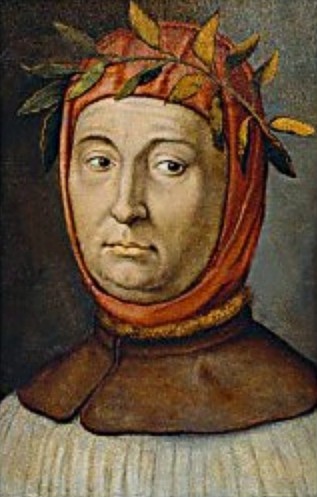
Petrarch, just thirty-two at the time of his ascent, was
born in Arezzo, Italy. His father, SerPetracco, was a clerk in the growing
Florentine middle class and friends with poet Dante Alighieri. When the city’s
politics turned away from their “White Guelphs” faction, SerPetracco left the
city to join the papal staff in its move to Avignon. There SerPetracco ensured that
his sons Francesco and Gherardo followed his footsteps. Young Petrarch was
reluctant in his studies and yearned to dedicate his time to reading the great
literature of the ancient Romans, especially the devout St. Augustine of Hippo.
Nevertheless, as a dedicated Catholic, he obeyed his father’s wishes.
A pivotal moment in Petrarch’s life came after his father’s
death in 1326. A legal battle broke out over the inheritance back in Florence,
and his guardians attempted to manipulate the court to snatch up property that
was rightfully Petrarch’s. Rather than hold to idealism, Petrarch dedicated
himself to the battle and eventually won through his passionate appeals and
strict foundation of reason. Following the victory, Petrarch found work as a
clerk himself in the papal offices, often traveling as an ambassador and using
his free time to write his many letters.
In the same years that Petrarch completed his studies,
1323-1324, the Church had its own issues with property. The growing power of
the Franciscans had revitalized the idea of the “Poverty of Christ and the
Apostles,” which, extrapolated to that time, brought many to believe that the
Church should not own anything. Through papal bulls that split the Franciscans
and eliminated its rogue factions, the Church defended its right and responsibility
to hold property, even though Christ himself spoke, “Foxes have holes, and
birds of the air have nests, but the Son of Man has nowhere to lay his head.”
Petrarch agreed with this temporal nature of the Church (perhaps since his own
job depended upon it), but it led to another problem: wealth-seeking through indulgences.
For centuries in the Church, the concept of an “indulgence”
had existed as a recorded way to make penance for sins. Many of the actions of
penance included prayers, fasting, pilgrimages, or paying alms. Gradually, the
paying of alms turned into a system of fines, which became a way not only for
the wealthy to write a simple check to get away with moral crimes, but also for
corrupt members of the Church to draw money from congregations nervous about
their afterlives in Purgatory. With enormous amounts of money changing hands, counterfeiting
and con-men posing as traveling priests offering absolution were widespread.
Disappointed in the weighty hierarchy of his work and in the
human populace as a whole, both those selling fraudulent indulgences and those
duped by them, Petrarch continued dreaming of the ancients and their glorious
deeds. The failure of the Crusades and the lack of literary work brought him to
consider the past millennium a “dark age,” and he aimed to bring a new light.
Upon his march up Mt.Ventoux, he paused to read from St. Augustine’s Confessions, “…Men go about to wonder at
the heights of the mountains, and the mighty waves of the sea, and the wide
sweep of rivers, and the circuit of the ocean, and the revolution of the stars,
but themselves they consider not.” Then he dismissed the peasants, encouraging
them to learn to read and go to confession seeking real penance rather than
paying indulgences.
Petrarch continued to write. Through his letters, he became
famous in Italy and France, earning patronages that he used to encourage
universities and education, particularly of Latin literature to inspire the
people to work toward great deeds that would benefit their own name.
Considering oneself as well as the Church, made Petrarch a controversial
figure. Nevertheless, with his legal work promoting Church interest in
maintaining its property, he earned a position within the inner echelons and
extensively furthered St. Augustine’s writings as well as mundane ethical
discussions from writers like Cicero.
In 1392, eighteen years after Petrarch’s death, Boniface
IXended the tradition of indulgences for the afterlife, returning to the old
standard of making them only for temporal penance, a policy which Petrarch had
championed his many days. While that may have emptied some church coffers, many
applauded it as an action of reform that strengthened the Church and its
significance in human morality even as the world around it came to new
strengths of science and technology.
--
In reality, Petrarch lost his court case in his youth along
with his inherited property, which forever gave him a foul taste for law.
During his day job with the Church, he wrote extensively and gained fame with
his epic poem Africa about the Roman
general Scorpio’s invasion in the Punic Wars. Its prominence caused him to be
the first poet laureate in Europe in one thousand years. He climbed Mt. Ventoux
out of aesthetic value, which is sometimes considered the first action of the
Renaissance and birth of Humanism.
Saturday, January 10, 2015
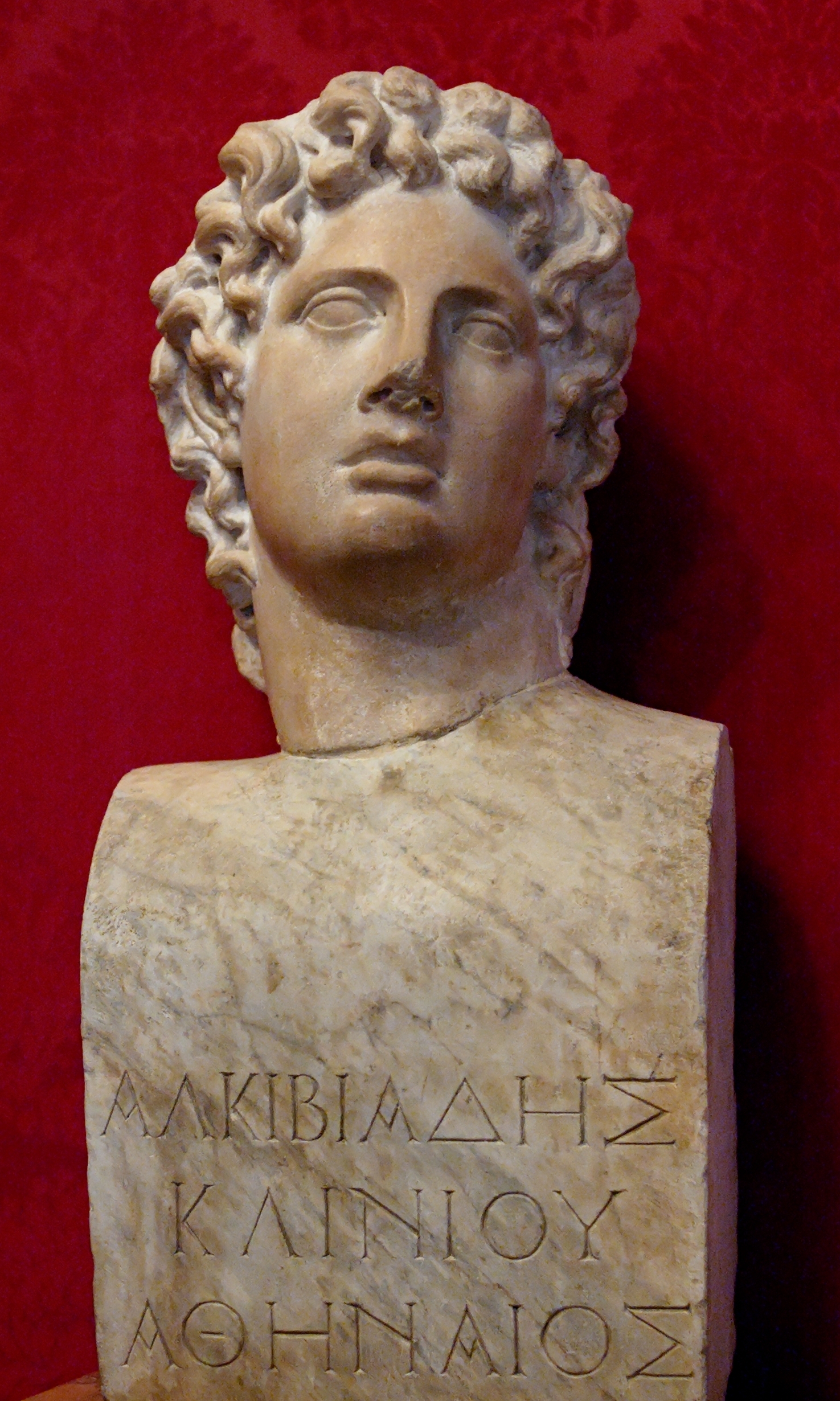
April 25, 404 BC – Athens Defeats Sparta
After more than a quarter century of warfare with their
ancient rival Sparta, the whole of Greece became unified under Athenian
leadership. The two city-states had often been at odds while carrying a
begrudging respect for one another, particularly in their battles against
Persian invasion. At Marathon in 490 BC, Athens defeated a Persian landing
force in a downhill charge that annihilated the Persians before the Spartans
could arrive. Ten years later, at Thermopylae, the Spartan Leonidas led an epic
defense that stalled the Persian army while the Athenian general Themistocles
destroyed the Persian fleet at Salamis. Further allied victories against Persia
drove the empire back to Asia Minor.
The city-states grew in power, and their rivalry turned to
all-out warfare. They traded victories and defeats until both sides were
exhausted in 421 BC. Sparta and its allies had powerful land-based armies,
conquering Attica, the region around Athens, time and again. Each siege lasted only
a few weeks, however, as the Spartan army had to return to keep the helot slave population in check. Athens,
meanwhile, maintained a vast empire of islands through its democratically
supported navy. A peace treaty was
proposed and signed by Spartan general-kings and Athenian politicians, led by
the strategos (elected general)
Nicias. Both sides vowed to uphold it for fifty years. It took less than seven
years for the war to resume when Athens’s ally in faraway Sicily, Segesta,
called for military aid against Syracusan attack.
The young Athenian leader Alcibiades championed the campaign
to support them. Syracuse was the most powerful of the Greek colonies on
Sicily, a land rich with grain and trade. If they conquered it, the Athenians
could bring many other cities into their Delian League, perhaps enough to
overwhelm Sparta. He had supporters such as enthusiastic Lamachus, but others
opposed starting a new war, especially Nicias, who had prompted peace years
before. In an energetic speech, Nicias outlined the vast resources Athens would
have to expend to even attempt a conquest of wealthy, powerful Sicily. The
speech backfired, invigorating the assembly into voting to send those soldiers
and ships with hopes of seizing rich new colonies. Nicias himself was voted to
be among the commanders, along with Alcibiades and Lamachus.
Just before the fleet sailed, hermai all over the city were desecrated. Marker stones dedicated
to Hermes, god of luck and travel, were venerated in Athens as they not only
had religious significance but also established boundaries, gave directions,
and served as meeting places. Alcibiades and his cronies were blamed, primarily
by Nicias and others who opposed the brash young Athenian. Alcibiades requested
a trial to prove his innocence, but the request was denied.
Rather than wait and be recalled once his opponents who
stayed behind to have the ear of the assembly, Alcibiades threw himself into
his own trial. For hours, he debated with himself, waiting for his accusers to
appear. His theatrics did gather a crowd, and eventually a quorum determined
that he was innocent. His embarrassed political foes dropped the issue.
Upon arriving in Sicily, Alcibiades led the army, balancing
Nicias’s conservatism with Lamachus’s eagerness to attack Syracuse head-on. The
first battle in 415 BC proved a new stalemate as the Athenian infantry put the
Syracusans to retreat, but the massive Syracusan cavalry kept the Athenians
from pursuit. That winter, the Athenians completed a wall to siege the city,
making cavalry ineffective, and Syracuse surrendered. Using the victory to his
advantage, Alcibiades rapidly moved from city to city gaining allegiance from their
Greek leaders, first in Sicily and then in southern Italy.
Within a few years of campaigning and diplomacy, the
Athenian Empire had nearly doubled in size. Sparta’s position as leader of the
oligarchies of Greece waned, and more city-states followed the Athenian model
of populace-rule. Alcibiades masterminded a new war with Sparta, baiting them
into an attack that was painted as imperialistic to the other Greeks. After the
defeat and forced installation of democracy into Sparta, the first great threat
to Athens came from the north as expansionistic Macedonians marched. Using the
full weight of its empire, such as effective Sicilian cavalry, Athens countered
the Macedonian assault and turned it into a client state.
In the coming century, Athens would face other incursions
from growing powers. Romans from central Italy threatened allies in the south,
requiring counterattacks again and again. Athens also faced rivalry in Sicily
from growing Carthaginian influence, which prompted the outright conquest of
the once-Phoenician colony. Persia continued its rule in the east, regularly
fighting over cities in western Asia Minor with large Greek populations and
losing Egypt after a rebellion with Athenian support. For centuries, Athens
served as a political and intellectual capital of the world, attracting
geniuses such as Archimedes and Hiro. Ultimately decadence caused the
democratic Athenians to collapse, leaving a power vacuum in the Mediterranean
that would last until Hunnish invasion.
--
In reality, Sparta won the Peloponnesian War. Alcibiades left
without having a trial and was recalled immediately upon arrival. He fled out
from under arrest and made his way to Sparta, where he served as a military
adviser recommending reinforcement of Syracuse. The Athenian expedition to
Sicily proved to be ruinous, devastating Athenian manpower and money just as
Nicias had feared and ultimately leading to Spartan superiority in Greece.
Alcibiades later returned to Athens, then to Persia, then back to Athens, and
finally was slain in Thrace surrounded by mistresses. Spartan domination of
Greece rapidly declined over the next decades, ended in conquest by Macedonian
king Philip II, father of Alexander the Great.
Monday, January 5, 2015
April 24, 1629 – Oliver Cromwell Boards the Lyon
The
day before his thirtieth birthday, Oliver Cromwell, a minor gentleman
from Huntingdonshire, departed Gravesend for the New World. Born into
the lower end of landed gentry northeast of London, Oliver was the
only surviving son, a middle child of ten born to his parents. His
inheritance granted him a toehold into the upper class, and in 1620
he married Elizabeth Bourchier, the daughter of a wealthy leather
merchant, Sir James Bourchier, who owned great swaths of Essex. The
two began a happy, if hard working, life together blessed with many
children.

Alongside
his religious growth, Cromwell entered local politics. He immediately
began clashing with others over the formation of a new charter for
Huntingdon and proved himself an eager contender. When elections were
called for a parliament in 1628, his opponents managed to spread
rumors that bumped him from the support of Montagu, the Earl of
Sandwich.
Discouraged
about his prospects at home, Cromwell thought back to a book he had
read at Cambridge, Captain John Smith’s A Description of New
England published in 1616. “Here every man may be master and
owner of his owne labour and land… If he have nothing but his
hands, he may… by industries quickly grow rich.” Cromwell admired
the thought of gain through his own work and Providence without
hindrance of backbiters, so he determined to join those among his
father-in-law’s partners colonizing the New World.
Cromwell
voyaged with the Higginson Fleet that arrived that July in Salem, on
the north side of the newly chartered Massachusetts Bay Colony. His
wife Elizabeth, six months pregnant, stayed behind with their three
sons and daughter, Bridget, to settle affairs. When the ships
returned to England, they carried a letter from Cromwell calling her
to join him as quickly as possible, which they did on the Winthrop
Fleet the following year. Cromwell had found his calling as a
settler, and he held Salem (named for an early peaceful transition
between governments) to be a paradise on Earth. Over the coming
decades, Cromwell’s farm prospered, two more children were added to
the family, and he became a leader among the congregation.
When
the General Court of the colony called for organization of a militia
for common defense in 1637, Cromwell’s name instantly became known
throughout Massachusetts. He led his troops with strict discipline,
intelligence, and the bravado of a man certain God is on his side.
While the Civil War tore their homeland apart, Cromwell was eager to
welcome veterans to his well-defended paradise. Through his
connections with the merchants, Cromwell encouraged a mutual defense
with other colonies on the western Atlantic in Virginia and Bermuda
to ensure safety even as factions soaked up resources in England.
The
test of Cromwell’s commonwealth came in 1651 when Parliament
decreed that only English ships could trade legally in English ports.
Dutch ships anywhere near English waters suddenly became prey for
privateers, and tensions turned to war after English and Dutch fleets
exchanged cannon-fire over a perceived slight of the Dutch not
tipping one’s flags in salute.
With
Nieuw Nederland situated between Massachusetts Bay and Virginia,
Cromwell determined to make a precautionary attack. Aided by Swedish
allies from the Delaware River, Cromwell’s troops, nicknamed the
New Marine Army, used novel and daring sea, shore, and land tactics
to conquer the Dutch North American colony. They then moved south,
conquering St. Marin and he Antilles in the Caribbean and threatening
Surinam.
War
ended with the Dutch in 1654, just as it began anew against the
Spanish. Cromwell continued to spread English authority in the
Caribbean, faltering initially at the Siege of Santo Domingo in 1655
before pressing on and carving an English hold onto the island of
Hispanola. He died while on campaign in 1658. According to legend, he
became a prophet in his last hours and gave detailed descriptions of
heaven. Some historians hold that this was due to the yellow fever
that took his life. The location of his grave remains a mystery.
Cromwell’s
legacy is a mixed one. Descendants of Puritans applaud his religious
convictions, and military historians are fascinated by many of his
actions. On the other hand, rumors stated that his conquests of
Catholic colonies were brutal, even genocidal. While the actual
numbers and treatment of those defeated are often under debate,
Cromwell established English control on those islands, which lasted
for centuries to come.
--
In
reality, Cromwell did not leave England. He became a member of
Parliament in 1628 under the patronage of the more powerful
Montagues, the Earls of Sandwich. As a cavalry commander, he quickly
rose through the ranks to lead the whole of the Parliamentarian
forces to victory. With the establishment of the republican
Commonwealth of England, Cromwell was named Lord Protector and ruled
without question until his death, after which his body was exhumed
and executed for treason.
Friday, January 2, 2015
Guest Post: October 15, 1918 - Corporal Hitler's War Ends, Another Begins
A fascinating unfolding of alternate affairs explored at Today in Alternate History.
The German Empire's last ditch gambit to win the Great War was known variously as the Spring Offensive, or Kaiserschlacht ("Kaiser's Battle") and Ludendorff Offensive. This confusion of names was something of a foreshadowing of days to come when a new struggle would define the apex of the Imperial Power structure.
At the time, little of that was in mind. On the front lines, the 2nd Bavarian Infantry Regiment was attacked with mustard gas attack on the 15th of October 1918. Among the injured was the highly opinionated and equally vocal Austrian corporal, Adolf Hitler. A loudmouth that had argued constantly about politics with his fellow men, Hitler was temporarily blinded and even lost his voice while was hospitalized in Pasewalk. For the first time, he was unable to do anything but listen and it was there among the traumatized general soldiery there that he first heard the earliest whisperings of victory and what that meant. Germany was evolving.
After his recovery and having no other opportunities for making a living, Hitler returned to Munich. The political violence surging through the city shocked him, especially as many of the perpetrators were angry unbalanced men such as himself, veterans who had been shrugged off now that the war was done. Even with his political awareness, Hitler had little opportunities as an impoverished thirty-year-old immigrant who had not graduated and still bore a chip on his shoulder for being rejected by Vienna's Academy of Fine Arts. He had known homelessness, and once more a vagabond, Hitler did what he had done before to find identity and self-worth: he turned toward the imperial army.
Hitler reported to his Company Commander Karl Mayr who - deeply impressed by Hitler's fervent nationalism and other radical ideas - rather surprised him with the unexpectedly generous offer of a position in his newly formed Education and Propaganda Department. Wrapped up in the flag, he took refuge in the burning patriotism of the emigre, more Germanic than than the Germans themselves even though he wasn't even a German Citizen. Mayr spoke of the Bolshevist threat in Munich, Hitler more than anyone could understand the causes of popular outrage among the masses. His work in propaganda was a conduit for a personal wrath by a man fearing betrayal of his new fatherland.
Soon enough Hitler was to discover that the Bolshevists were merely pawns in a dangerous double-game under the shadow of the Imperial Eagle. In the desperate days of the war, the Imperial Royal Family had been forced to cede a great deal of power to Commander-in-Chief Hindenburg and his all-powerful Quartermaster General Eric von Ludendorff that had formed a de facto military dictatorship. With the war done, the emperor was attempting to wrest back his authority. Certain elements of the Army were seeking a permanent realignment of forces that would create a constitutional monarchy.
The spectre of the Hohenzollerns being massacred by Bolshevists like the Romanov had been a driving force of much of Hitler's propaganda work, yet even through his blind nationalism, Hitler could see that was simply a bogus lie being spread by military intelligence itself. He had been duped, and once he had served his purpose to ensure the German populace would maintain war-time nerves, he was thrown into Landsberg Prison. It was there - this time among the criminal underclass - that the full extent of his political awakening would finally occur. He began his infamous diary Mein Kampf ("My Struggles") by making reference to Mayr's deception with the opening words "Not the potter, but the potter's clay."
The German Empire's last ditch gambit to win the Great War was known variously as the Spring Offensive, or Kaiserschlacht ("Kaiser's Battle") and Ludendorff Offensive. This confusion of names was something of a foreshadowing of days to come when a new struggle would define the apex of the Imperial Power structure.
At the time, little of that was in mind. On the front lines, the 2nd Bavarian Infantry Regiment was attacked with mustard gas attack on the 15th of October 1918. Among the injured was the highly opinionated and equally vocal Austrian corporal, Adolf Hitler. A loudmouth that had argued constantly about politics with his fellow men, Hitler was temporarily blinded and even lost his voice while was hospitalized in Pasewalk. For the first time, he was unable to do anything but listen and it was there among the traumatized general soldiery there that he first heard the earliest whisperings of victory and what that meant. Germany was evolving.
After his recovery and having no other opportunities for making a living, Hitler returned to Munich. The political violence surging through the city shocked him, especially as many of the perpetrators were angry unbalanced men such as himself, veterans who had been shrugged off now that the war was done. Even with his political awareness, Hitler had little opportunities as an impoverished thirty-year-old immigrant who had not graduated and still bore a chip on his shoulder for being rejected by Vienna's Academy of Fine Arts. He had known homelessness, and once more a vagabond, Hitler did what he had done before to find identity and self-worth: he turned toward the imperial army.
Hitler reported to his Company Commander Karl Mayr who - deeply impressed by Hitler's fervent nationalism and other radical ideas - rather surprised him with the unexpectedly generous offer of a position in his newly formed Education and Propaganda Department. Wrapped up in the flag, he took refuge in the burning patriotism of the emigre, more Germanic than than the Germans themselves even though he wasn't even a German Citizen. Mayr spoke of the Bolshevist threat in Munich, Hitler more than anyone could understand the causes of popular outrage among the masses. His work in propaganda was a conduit for a personal wrath by a man fearing betrayal of his new fatherland.
Soon enough Hitler was to discover that the Bolshevists were merely pawns in a dangerous double-game under the shadow of the Imperial Eagle. In the desperate days of the war, the Imperial Royal Family had been forced to cede a great deal of power to Commander-in-Chief Hindenburg and his all-powerful Quartermaster General Eric von Ludendorff that had formed a de facto military dictatorship. With the war done, the emperor was attempting to wrest back his authority. Certain elements of the Army were seeking a permanent realignment of forces that would create a constitutional monarchy.
The spectre of the Hohenzollerns being massacred by Bolshevists like the Romanov had been a driving force of much of Hitler's propaganda work, yet even through his blind nationalism, Hitler could see that was simply a bogus lie being spread by military intelligence itself. He had been duped, and once he had served his purpose to ensure the German populace would maintain war-time nerves, he was thrown into Landsberg Prison. It was there - this time among the criminal underclass - that the full extent of his political awakening would finally occur. He began his infamous diary Mein Kampf ("My Struggles") by making reference to Mayr's deception with the opening words "Not the potter, but the potter's clay."
Tuesday, December 16, 2014
April 23, 1014 – Brian Boru Secures High Kingship at Clontarf
In the first millennium, the island of Ireland was
a complex patchwork of rival kingdoms. Among the most powerful were Munster in
the southwest, Leinster in the east, and the lands of the Ui Neill in the
north. Vikings added their own influence to the lot with settlements at
Limerick, Cork, and Dublin, their largest. Even though the Irish kingdoms
constantly attempted to raid and outmaneuver one another with alliances
and counter-alliances, there was a titular High King that held the highest
authority in Ireland. In AD 980, Mael Sechnaill, King of Meath (the most
southerly Ui Neill) maintained a delicate balance as High King, securing his
place by halting the growth of Viking power in the Battle of Tara.

In 1002, the balance shifted when Mael Sechnaill's
kinfolk in the north began to support the growing strength of Brian Boru, king
of Munster. Mael Sechnaill was amicable with Brian Boru, seeing him as an ally
and rival more than an enemy since they had both worked to defeat uprisings in
Leinster under Mael Morda and the Viking ruler of the Kingdom of Dublin,
Sigtrygg Silkbeard. Morda's mother Glormfaith, former wife of Sechnaill, was
mother of Sigtrygg and later became the wife of Brian Boru until their divorce
in the early second millennium.
Although Brian Boru had worked for a decade to
secure his rule, an uprising broke out under Flaithbertach, king of the more
northern Ui Neill who had been first in the line of succession to Sechnaill.
Brian Boru swiftly put down the rebels, but it gave a chance for Morda and
Sigtrygg to rebel themselves; the annals say Glormfaith’s sense of vengeance drove
much of the political energy behind the rebellion. In 1013, Brian Boru and his
allies invaded Leinster while the rebels’ unsuccessful raids took place on
Meath and along the southern coast. That winter, Sigtrygg called up international
support from Vikings at Orkney and Man, collecting a massive force at Dublin.
When spring came and campaign season began, the two
armies met at Clontarf, west of Dublin, at dawn on Good Friday. Brian Boru
prayed while his armies ravaged the landscape and put it to the torch. The
action drew out the Viking-Leinster army, the hardened foreign mercenaries on
the front lines followed by the Dubliners and the Irish. Brian's son
Murchad and his fifteen-year-old grandson Toirdelbach led his Irish armies while
the aged king continued to pray in his tent. His prayers were interrupted when
Brodir, a Viking warrior from the Isle of Mann, attacked.
Yet
Brian Boru proved quick, especially for a septuagenarian, and ran Brodir
through. He determined to march out to the battlefield, which was soaked with
the blood of slain thousands. The Vikings had superior mail armor, but it
proved useless when the Irish drove them into the sea that evening. Brian
Boru’s late charge relieved his son Murchad, who legendarily killed fifty men
with each of his duel-wielded swords. As the battle ended, Brian Boru kept his
grandson from pursuing the Vikings foolhardily into the high tide, where
hundreds drowned.
With
his authority secured, Brian Boru determined that he could continue to rule
only through his son and grandson. He spent his final years tutoring them and
establishing centralized training grounds for national armies. As Murchad and
Toirdelbach came to the Irish kingship, they found fast allies against the
common enemy Vikings with the Normans, who recently conquered England. Soon
after 1100, Irish princess Blathmin married Stephen to become the queen consort
of England, the first of many Irish rulers over the neighboring English.
The
unified Irish were among the first to follow Norman knights to the Crusades. Over
the next decades, the campaigns would ultimately fail despite the combined
forces of Christendom, but the returning crusaders brought spices and
technology that caused a hunger for more trade. Medieval Ireland had built a
sophisticated system of investment and shipwrights to transport their warriors
to the Middle East, and these were turned to an Irish merchant navy.
After
being driven out of the Mediterranean by Italian fleets, the Irish turned south
toward the African coast, battling the growing Portuguese Empire. The few Irish
trading posts there were given up after the discovery of a new world across the
Atlantic, where the Irish kingdom became wealthy through colonies in more
temperate areas, capitalizing on the fur trade. After centuries of wealth,
those colonies, too, would declare their independence, and Ireland would settle
into its famously neutral role with an economy kept separate from the European
Zone.
--
In reality, Brian Boru was killed at Clontarf, as
were his heir Murchad and Murchad's son, Toirdelbach. While the battle secured
Irish authority over the island and severely weakened Viking power, an entire
would-be dynasty over Ireland was wiped out. Mael Schnaill returned to the High
Kingship, which would soon fall again to squabbles and constant upheaval. In
1169, the Normans from England invaded, breaking Irish kingship. It would be
the first of many English waves of conquest over the Ireland, which would not
win its independence until 1922.
Friday, December 12, 2014
December 2, 1859 – John Brown's War Ends
The largest outbreak of violence over the issue of
slavery in the United States erupted in 1859 as abolition-extremist John Brown
seized the Federal arsenal at Harpers Ferry, Virginia. Inside the arsenal
were 100,000 government firearms, enough for the largest army the continent had
ever seen. Brown's agents rushed as much of the weapons as possible to nearby
farms, creating enough chaos that wagonloads of munitions went in disparate
directions and turned the region into a war zone.

When calm settled in Kansas, Brown left for the
North on a crusade to raise funds for all-out war. He gave lectures to
crowds that included writers Henry David Thoreau, Ralph Waldo Emerson, and
Bronson Alcott. As word grew, Brown met with wealthy abolitionists, some
of whom dispatched weapons to his cause such as 200 breech-loading carbines and
950 pikes. Mercenary Hugh Forbes signed on as well as two dozen
volunteers. Harriet Tubman offered to serve but was unable due
to illness, while Frederick Douglass refused to join what he correctly
thought to be a suicide mission. In fact, this outright violence "would
array the whole country against us."
Brown ventured forth nonetheless. His first action
was to kidnap George Washington's great-grandnephew Lewis Washington and, more
importantly to the cause, seize relics of liberation that were in his
possession: a sword given to Washington by Frederick the Great and pistols
gifted by Lafayette. They proceeded to cut telegraph wires and capture a
passing train, where they killed the black baggage-clerk who tried to stop
them. Brown was about to let the train go to spread the word of the uprising
when one of his men asked, "Shouldn't we spread our
own word?" Brown agreed, the train was disabled, and the men marched
on the unsuspecting armory.
Northern Virginia and western Maryland were
turned into a warzone. Runners dispatched arms to slave populations scouted out
the summer before. Some of the slaves seized the opportunity to fight back,
others refused to fight, and many fled and hid to escape the
coming violence. Local militia immediately began to counterattack, but
Brown proved far more organized and successfully held the arsenal, even sending
out more weapons. State and federal officials did not hear about the raid until
everyone else did, through panicked or excited telegrams.
As the United States government hurried
to assemble a force to march on Brown's holdout, Brown himself
received reinforcements as word spread among slaves and abolitionists from the
North raced to join. Finally, after days of turmoil, President Buchanan called
together Marines and put them under command of cavalry Colonel Robert E.
Lee, who had time to dress in his uniform before marching. As they approached
the arsenal, Brown's forces retreated, setting fire to everything that hadn't
already been emptied.
The small military force was joined by more and
more soldiers, and an overall quelling of the uprising was organized by General
Winfield Scott. His work was slowed by constant guerilla warfare Brown had
learned in Kansas, although he was ultimately betrayed by the surrender by
Henry Forbes, who exonerated himself by pointing to a letter he had sent to
Secretary of War John Buchanan Floyd. Theories rose up that Floyd, a
Virginian, could have prevented the whole thing, making public opinion on
the matter one of government failure with Floyd becoming the fall guy, creating
the colloquial term "his name is Floyd" for anyone who fails
miserably.
Brown was shot during a standoff in the Appalachian
Mountains on December 2, and, though there were some actions after, that was
considered the end of the rebellion. It became the top matter in the election
of 1860, when Senator Stephen Douglas was able to blame the sitting
administration, including Vice-President John C. Breckinridge, and rally
Deep Southern votes to win the Democratic nomination and then the
presidency with Virginian Robert M. T. Hunter, whose home had been in the area
of the turmoil, as his vice-president.
While the nation was united against violent
uprising in any form, the Abolition Movement virtually collapsed. People did
not want to associate with Brown and many abandoned the cause. A dedicated
few carried on, finally winning an end to slavery through economic
incentive by federal and private grants liberating slaves, which planters used
to invest in new farming methods and later factories. Through the Southern
Industrial Revolution, the South's tradition as nation's strongest
economic region surged.
--
In reality, John Brown let the train go on, expecting
word of mouth to be all that was required to start his slave rebellion.
Instead, word went straight to the authorities, and little, if anything, was
mentioned to the slaves. Militia (many of them railroad workers who had been
warned by the train) besieged the arsenal. Lee led the Marines in an
assault that killed many of Brown's men and captured him. Upon his execution as
a traitor to the United States, he became a martyr to the cause of abolition,
written about with glorifying words by men like Thoreau and Alexandre Dumas.
Subscribe to:
Posts (Atom)
