Showing posts with label 1912. Show all posts

Monday, October 18, 2010

October 18, 1912 – Serbia Refuses to Yield in Albania

With the growth of nationalism in the course of the nineteenth century, ancient empires began to split along the seams of peoples that had been stitched together by rule of force for centuries. The Holy Roman Empire had disintegrated, much of it becoming reborn as the German Empire. Italy reunited after some 1500 years since the Romans. Later, in the Balkans, the various peoples of the mountainous peninsula began to erupt against centuries-long Ottoman domination.

Nations like Romania and Serbia had successfully broken away from the Ottomans, while the neighboring empire of the Austrian-Hungarians had pushed administration upon Bosnia-Herzegovina to bring it to a more European rule. Bulgaria stood ready to unite the Bulgars under their Tsar Ferdinand, having set up a state of their own in 1878.

The “Great Powers” of Europe, the dominant empires in the world, scanned the political situation and waiting for opportunities to conduct influence toward their goals. Russia stood ready to expand into a pan-Slavic rule, uniting the Balkans under their sphere and gaining significant ports. Austria-Hungary wanted to keep the balance with the Ottomans, using them as a pendulum to guide Serbian nationalism away from imperial lands. Germany and France both wanted influence in the eastern Mediterranean, the former with the Ottomans as a puppet state and the latter with political control in the Levant.

Modernist thought struck the Ottoman Empire at home with the Young Turk movement pushing a new constitution in 1908. Struggles between Bulgarian/Greek freedom fighters and the Ottoman army in Macedonia had continued since 1904, but now was the time for action. Bulgaria named its tsar, Austria-Hungary officially annexed Bosnia-Herzegovina, and Italy began the path for victory in the Italo-Turkish War in 1911, gaining much of the Ottoman Mediterranean territories.

In 1912, war would spread like plague through Eastern Europe. With the Turks falling to Italian forces, Bulgaria, Serbia, Greece, and Montenegro rose up as the Balkan League. Austria-Hungary was uncomfortable at seeing their counterpart begin to fall and hoped to reign in the battles by declaring an ultimatum against Serbian troops that had pushed south into Albania. The Serbs reportedly “spat” at the ultimatum and continued their liberation and division of Balkan territory among the League.

German Kaiser Wilhelm II had vowed support to Archduke Franz Ferdinand, and, with such imperial clout, the Austrians joined the Balkan War against the League. In response, the Russians excitedly went to war in support of the League they had helped establish. France and Britain both took up neutral positions despite France's longtime alliance with Russia and Britain's not-so-secret unease at any Russian expansion, which had been seen in the Crimean War only decades before.

In the German Imperial War Council of December 8, it was realized that the fitness of the German army was not what the Kaiser had hoped, and victory would not be quick. The Austrians found themselves simply holding fronts against Russia and the Balkan League. While the first two years of war were grim, Germany and Austria arose in 1914 with a huge military push through Poland. Russians pursued scorched earth, but the speed of the German army checked their age-old tactic. Hundreds of thousands of Russians would die as the Germans marched toward Moscow before the Czar called for armistice.

In the south, Austria found itself stretched and finally broken. The empire collapsed into anarchy that even anti-Serbian sentiment could not resolve. At the Treaty of London in 1917, a new eastern Europe was drawn up. Many new nations stood independent: Albania, Austria, Czechoslovakia, Hungary, Poland, Finland, Estonia, Latvia, Belorussia, and Lithuania. Much weakened, Russia erupted into civil war between Communist and Tsarist factions that lasted until foreign Allied troops settled the matter in the favor of the Tsar in 1919, with the new independent nation of Ukraine being founded. The Ottoman Empire, too, would succumb to the rash of revolution through the 1920s that were said to be akin to those of the 1790s and 1840s. Nationalism broke up the empire, which caused the Great Powers to grab influence in the Middle East where they could.

The twentieth century would see effective reform of the imperial system, guaranteeing more social rights, but the overall rule of monarchs balancing one another continued. Some said that the settling of the Eastern Question saved the kings of Europe, but many historians scoff at the idea of a war so vicious that it would cause the end of constitutional monarchy as Europe's inherent political system.


In reality, Serbia acceded to the October 18 ultimatum. Austria-Hungary did not wish to become part of the war due to its own internal struggles, especially after Germany withdrew their boast of military readiness until “mid-1914.” By that time, all of Europe had built up such war machines that the spark of the assassination of the Austrian Archduke ignited the “War to End All Wars.” In the meantime, the Balkan League had settled much of themselves through the First Balkan War against the Ottoman Empire and then the Second against Bulgaria to settle disputes over land.

Saturday, August 7, 2010

August 7, 1912 – Roosevelt Runs Alone

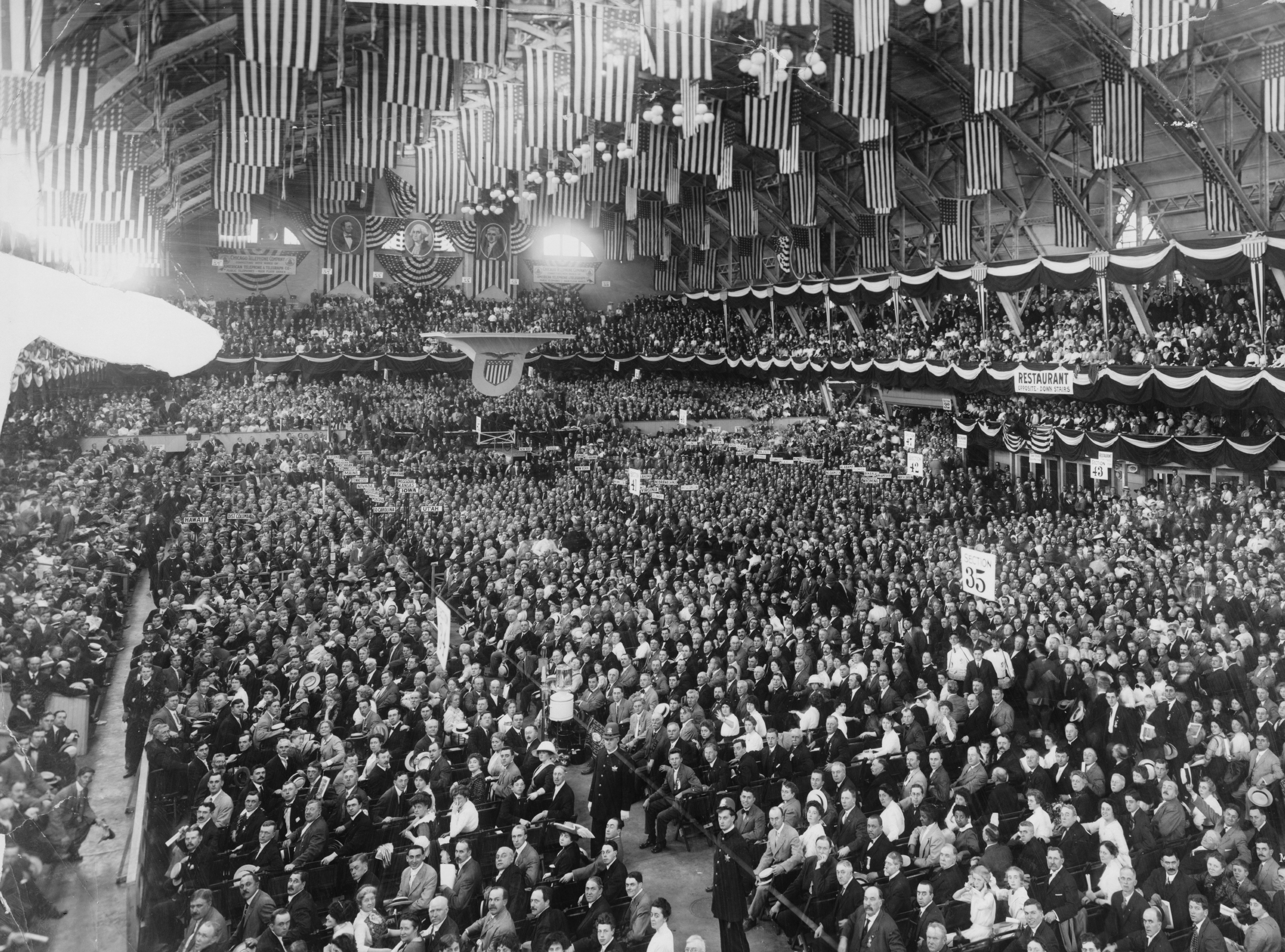
No one is quite certain who made the suggestion, and a dozen or more delegates have claimed it, but a little after midnight during the second day of the Progressive Party 1912 Convention in Chicago, someone said, “TR, why not just run yourself and have the Republicans come crawling back to you?”

He had planned to have Hiram Johnson, Governor of California, as a running mate, but Roosevelt liked the idea. The Republicans had become corrupt and bloated, and so many of the Progressive Party members were former Republicans that they had a chance of overcoming the upper echelons that had gotten comfortable and were now in league with trusts (as Roosevelt often speculated). They had renominated Taft and VP James Sherman over him, causing the Progressives to reconvene with their own party. Roosevelt could think of no sweeter revenge, and no greater victory for the country, than to win back the control of the Republican Party.

Elections in 1912 were bloodthirsty. In October, when it became clear that Taft could not possibly win, the Republican Party began to reevaluate. They knew Progressives were winning on state and local levels, but they felt they still had a stranglehold on the national government. If they lost that to the Democrats, however, then they would have nothing. After many backroom deals, they finally approached Roosevelt about reforming the two parties.

Roosevelt launched into the idea, having plotted for months about his actions. With great enthusiasm from the public, the scene was played publicly like a triumphant family reunion. Sherman stayed with him as VP while Taft was promised the Secretary of State. Although many who disapproved of Roosevelt voted for Wilson's “New Freedom” and limited government, Roosevelt narrowly won the election campaigning on the idea of a “Square Deal” for all.

Back in office as the second president to split his terms (Grover Cleveland having done so some thirty years before), Roosevelt set about punishing trusts with legal force and training up workers to pursue legal and public fights for fairness rather than depending on “socialist” strikes. The first two years ran fluidly, though the public began to grow tepid toward his ideals and thought more of limited government. After nervousness about his interventions in Latin America, voters in the 1914 elections swung support of Congress to Democrats.

Later that year, war broke out in Europe. Roosevelt was eager to become involved, but Congress refused to budge on declarations of war despite potential violations of treaties, such as the use of illegal chlorine gas by the Germans. Going without an army, Roosevelt went as a negotiator to Europe in 1915 to see if he might end the war as he had the Russo-Japanese War. The embroiled nations refused to budge as trench warfare continued. Defeated, Roosevelt returned to campaign for his reelection.

Again, the Republican Convention turned against him. After another threat of making a third party, it was mentioned to him that he couldn't be president if he were going to lead an expeditionary force in the war. Roosevelt then happily withdrew and campaigned with his endless energy for the candidate Charles Hughes. However, Democrat Woodrow Wilson would win on promises of maintaining peace. Despite promises, the peace would be shattered in 1917 with the sinking of the Lusitania, and Roosevelt would approach the White House with plans of leading an expedition to settle the European war. Wilson would decline the former president's offer.

Feeling dually betrayed, Roosevelt decided to raise up a force of volunteers anyway. While cries of treason began to go out, Wilson diplomatically funneled Roosevelt's efforts into the actual military and conscripted Roosevelt into home defense as a public face to Hoover's U.S. Food Administration. Though he would sit out the war, his son Quentin would participate as a pilot and give his life for his country. Roosevelt would never speak of war positively again.

In 1920, the country had tired of Wilson and his dealings in Europe, even to the point of the Senate refusing his League of Nations treaty. Wilson suffered a stroke in 1919, attributed to stress, and the Democrats were in rough shape for the election. The Republicans, meanwhile, readied Roosevelt for an unprecedented fourth term. He swept elections and returned to the White House in 1921. These would prove turbulent years with race issues, Republican dealings like naming Taft as Chief Justice of the Supreme Court, and political scandals such as the Teapot Dome Affair, though business affairs would flow smoothly, and Roosevelt became visibly tired. By the end of his term, he did not seek reelection and let the office fall to his VP Calvin Coolidge.

After a year of rest, Roosevelt decided to put off a trip to the Amazon he had been planning for a long time with the Museum of Natural History in New York. Despite suggestions of his family that he stay home and retire, Roosevelt launched his expedition up the Rio da Duvida (River of Doubt) at age 66. The expedition would never be seen again. Roosevelt would go down as perhaps history's greatest Missing Person.


In reality, Roosevelt would keep his Progressive Party and campaign as strong as a “Bull Moose.” The election would become a fiasco as the Republicans were torn apart, allowing Woodrow Wilson to gain office. Giving up politics for a time, Roosevelt began an expedition to the Amazon in 1913 that would be geographically significant in charting unknown regions, but he would suffer a leg injury as well as malaria. Though he would recover (never completely) and return to the public eye, Roosevelt considered himself to have lost ten years of his life. He would die of a heart attack in his sleep after a long illness of inflammatory rheumatism. It was said that death had to take him in his sleep, otherwise there would have been a fight.

Site Meter