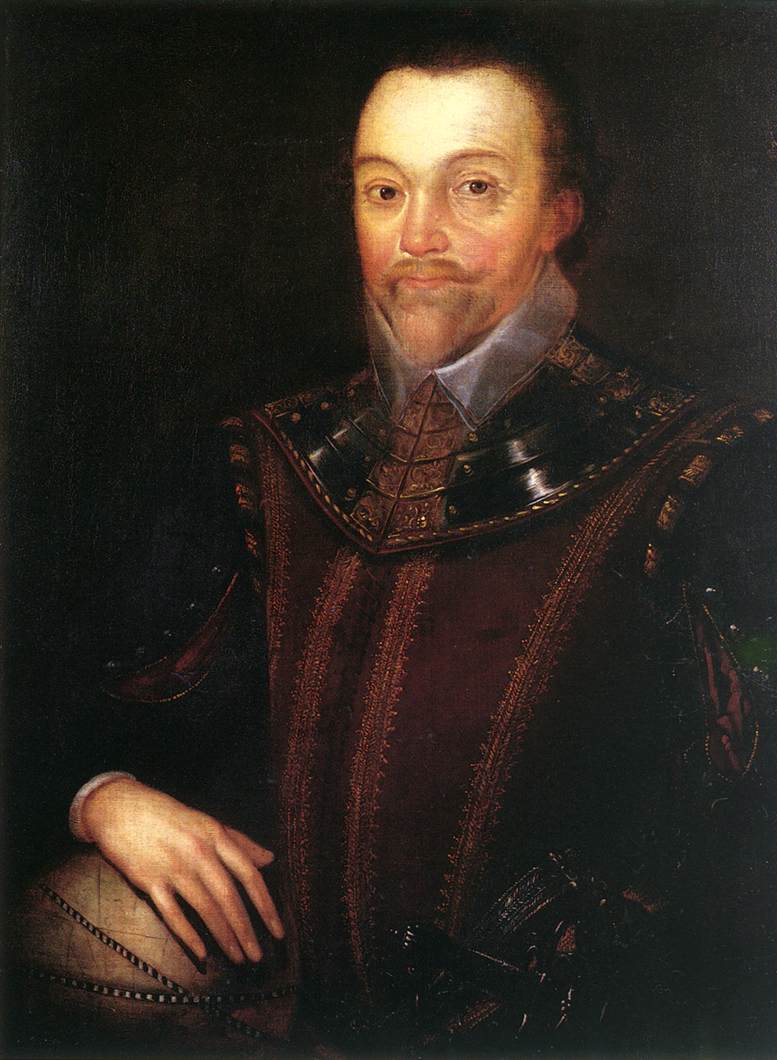
Conquistador Hernando de Soto had been born to a
poverty-stricken area of Spain and left to seek his fortune, which he did in
the New World. He sailed to Panama in
1514 and accompanied Pizarro on the expedition to conquer the Inca in
1532. De Soto, who had proven himself as
an able, cunning, and ruthless commander, returned to Spain in 1534 with vast
wealth from his share of the plunder. He
married and petitioned the king to return to the New World as governor of
Guatemala so he could explore further into the Pacific Ocean, but Charles V
awarded him Cuba instead with an order to colonize Florida to the north. Ponce de Leon had discovered the vast lands
to the north in 1521, but attempts colonize up the coast over the next decade
had all failed due to disease, lack of supplies, and hostile natives.
In 1539, de Soto put together a 600-man expedition
with ample provisions and livestock for an ongoing expedition to discover
gold. He studied the stories of Cabeza de Vaca, one of the four survivors of
the ill-fated Narváez expedition into North America in 1527, which
suffered endless attacks from natives, shipwreck, enslavement, and finally fame
among natives for healing techniques.
Upon their arrival in Florida, the de Soto expedition came upon Juan
Ortiz, who had been dispatched years before to find the lost Narváez and was
captured by locals. De Soto took on
Ortiz as a guide and friend to local Indians, which served the expedition much
more smoothly than the natives Narváez had captured and forced to be guides,
resulting in them leading his men in circles through the roughest territories
possible with ample ground for ambushes.
 After months of exploring up the Florida peninsula,
the expedition wintered in Anhaica, the greatest city of the Apalachee people,
whom Narváez had been falsely told were wealthy with gold. Rumors now said there was gold “toward the
sun’s rising.” They traveled inland
through the spring, northeasterly across a number of rivers and through several
realms of native peoples. Finally among
the Cofitachequi, they met “The Lady of
the Cofitachequi”, their queen. She
treated the well armed men kindly with gifts of pearls, food, and, at last,
gold. Rather than being native gold,
however, the men recognized the items as Spanish, most likely abandoned from
the nearby failed settlement by Lucas Vázquez de Ayllón that lasted only three
months in 1526. Disturbed by the bad
luck with gold, the expedition departed, bringing the Lady with them as an
involuntary escort as they came through the lands of the Joara, what she
considered her western province. There
they found the “Chelaque”, who were described in the later annuals
translated by Londoner Richard Hakluyt, as eating “roots and herbs, which they
seek in the fields, and upon wild beasts, which they kill with their bows and
arrows, and are a very gentle people. All of them go naked and are very
lean.” The civilization was rudimentary
at best, "the poorest country of maize that was seen in Florida." De Soto wanted to go further into the
mountains and rest his horses there, but he determined to rest first using
supplies ransomed for the Lady. During
the month-lost rest, many of his soldiers searched ahead for gold, while at
least one stayed and taught agricultural techniques to the locals.
After months of exploring up the Florida peninsula,
the expedition wintered in Anhaica, the greatest city of the Apalachee people,
whom Narváez had been falsely told were wealthy with gold. Rumors now said there was gold “toward the
sun’s rising.” They traveled inland
through the spring, northeasterly across a number of rivers and through several
realms of native peoples. Finally among
the Cofitachequi, they met “The Lady of
the Cofitachequi”, their queen. She
treated the well armed men kindly with gifts of pearls, food, and, at last,
gold. Rather than being native gold,
however, the men recognized the items as Spanish, most likely abandoned from
the nearby failed settlement by Lucas Vázquez de Ayllón that lasted only three
months in 1526. Disturbed by the bad
luck with gold, the expedition departed, bringing the Lady with them as an
involuntary escort as they came through the lands of the Joara, what she
considered her western province. There
they found the “Chelaque”, who were described in the later annuals
translated by Londoner Richard Hakluyt, as eating “roots and herbs, which they
seek in the fields, and upon wild beasts, which they kill with their bows and
arrows, and are a very gentle people. All of them go naked and are very
lean.” The civilization was rudimentary
at best, "the poorest country of maize that was seen in Florida." De Soto wanted to go further into the
mountains and rest his horses there, but he determined to rest first using
supplies ransomed for the Lady. During
the month-lost rest, many of his soldiers searched ahead for gold, while at
least one stayed and taught agricultural techniques to the locals.
During a plowing session using a horse, which the
natives had never seen before, they struck a large yellow rock. The natives worked to free it and throw it
away, but the conquistador recognized it as a 17-pound gold nugget. De Soto was shocked by the find, as were the
natives, who had never considered the inedible metal worth anything. He immediately built a fort and dispatched
men back to Cuba for reinforcements.
Meanwhile, de Soto and the bulk of his force captured the Lady of the Cofitachequi again and
seized her kingdom. The Spanish built a
settlement at the mouth of the Santee River called Port Carlos (for Charles V)
as well as another farther inland, where mining of the placer deposits of gold
began. Other deposits of gold were discovered
in the region, spurring a gold rush to the area. A short-lived war broke out with King
Tuscaloosa in the west, but the area was quickly depopulated of natives due to
disease from the Columbian Exchange.
De Soto’s gold fields proved to be shallower than
he hoped, but the Spanish presence in Florida was affirmed. Plantations grew up as planters experimented
with what grew best, eventually settling on tobacco as a cash crop. With the seventeenth century, the English
began to block the spread of Spanish influence with colonies in Virginia and
Plymouth, eventually assigning a border along the James River. The French challenged Spanish control over
the Mississippi River and dominated much of Canada until the Seven Years’ War
caused Britain to annex Canada and force France to give the Louisiana to the
Spanish, dividing North America between the Spanish and British Empires.
Due to heavy taxation following the war,
Enlightenment ideals caused many in the American Colonies to call for
resistance and even independence.
However, with a strong Spanish bastion just to the south, the outcry
never spread beyond the Boston Insurrection.
Instead, the American Union would gain marginal self-rule, which would
be successfully tested with the Slavery Abolition Act of 1833. The expansive state of Florida, meanwhile,
would undergo a bloody fifteen year war of independence from Spain.
--
In reality, de Soto passed over the gold fields of
what would be North Carolina and Georgia.
The gold was not discovered in North Carolina until 1799 and Georgia
until 1828. Both discoveries caused gold
rushes, pushing the native Cherokee, believed to be decedents of the Chelaque,
westward.