Tuesday, June 5, 2012

June 5, 1832 – June Revolution Ousts July Monarchy

Political turmoil that had begun with the French Revolution over forty years before continued as France once again rebelled against a ruler, King Louis Philippe.  After experimenting with Republicanism and suffering the Reign of Terror, France had finally become unified behind the Emperor Napoleon.  Napoleon proved too ambitious, however, and the congress of Europe finally defeated him in 1816.  France was restored to a monarchy under Louis XVIII, pushing for a return to absolute rule and even dispatching the expeditionary force known as the “Hundred Thousand Sons of Saint Louis” to put down liberal government in revolutionary Spain in 1823.  The growing bourgeoisie struggled against the return of an unquestionable king, finally leading to the overthrow of Charles X with the July Revolution of 1830 after years of economic trouble in France.  Louis-Philippe, Duke of Orléans and cousin to the king, was instated as a constitutional monarch determined by popular sovereignty.

Not everyone was pleased with the balance of power, however.  Conservatives known as “Legitimists” wanted a return to the House of Bourbon, and they began their own schemes at overthrowing Louis-Philippe, whom they saw as illegitimate to the throne.  An attempt at kidnapping the royal family out of Paris failed, as did a rebellion led by Princess Caroline of Naples and Sicily to install her son and would-be heir to Charles X, Henry V, as king in Marseilles.  The insurrection was put down, and the Legitimists determined not to fight again, rather to argue their side through the press.

Meanwhile, the bourgeoisie had grown to great stature in France, much of which was at the cost of the petit bourgeoisie, “small businessmen” such as shop keepers, restaurateurs, and craftsmen.  In Lyon, the second-largest city in France, there was an uprising of the canut (silk workers) in 1831.  They called for a fixed price on silk goods to stop the drop in wages by those employed by large silk manufacturers and earnings among those who owned their own loom workshops.  Manufacturers determined a fixed price would undermine free enterprise and reminded the local prefect of laws banning guilds and strikes.  Outraged by the dismissal of their demands, the workers rose up in an enforced strike, barricaded the town, and defeated the national guard, many of whom were affiliated with the canut anyway and eagerly joined the cause.  The king and his government, particularly Casimir Perier, President of the Council of Ministers, responded by dispatching a 20,000 man army to put down the insurrection.  The soldiers arrived without bloodshed, and the uprising ended with only a few arrests, all of whom were acquitted.

Republicans in Paris saw the near-success of the workers and determined a sense of camaraderie with them, setting up linked secret societies.  The workers had already been in touch with Catholic royalists, but the republicans had their own network known as The Rights of Man Society.  Since it was illegal to have meetings larger than twenty people, the society was organized into a militaristic system of 20-man groups headed by a president, who met with the next level of twenty, who had their own leaders up a chain of command.  A cholera epidemic with rumors of poisoning by the wealthy spread unrest, and leaders determined to begin an uprising at the funeral of respected General Jean Maximilien Lamarque, who was a benefactor to the poor (hated Casimir Perier had died a month before, also victim to the plague).  A new republic was declared, and rebels quickly seized the city, setting up barricades and arming themselves.  Five thousand national guard backed by twenty-five thousand soldiers marched into Paris to end them.

However, the republicans had learned about the key to the canut’s temporary success: winning over the guard.  Using their societies, the leftists had gotten into contact with likeminded thinkers among the army who supported Lamarque’s philosophy.  As the soldiers entered the city, many of them disbanded and joined the barricades, turning the battle into a stalemate.  The show of weakness from Louis-Philippe inspired cities all over France to join the rebellion, particularly Lyon, whose model for societies based on skilled laborers acted as conduit for revolution.  Without enough soldiers to put out all the fires, Louis-Philippe abdicated, and many of the bourgeoisie found their industrial empires broken up.

The next few years in France proved happy as crops at last gave good harvests and the economy rebounded.  Fixed prices and firm laws on how far businesses could expand forced the benefit to be shared by the widest number of hands.  France seemed to become a model for republican revolutionaries, who began a wave of uprisings demanding economic as well as civil constitutions.  Eventually, however, economies turned downward again in the late 1840s.  Fixed prices meant that many luxury items simply were not purchased rather than being purchased at a lower rate, and shop owners and manufacturers found themselves with warehouses of useless goods.  Black markets and bartering surged across Europe, calling into question the worth of economic intervention.  While laws in royal countries were overturned quickly, France’s republican government debated endlessly.  Finally, in 1848, Henry V was made regent of France by Legitimists working alongside Orleanists, who eagerly awaited the coming-of-age of Louis-Philippe’s ten-year-old grandson, Philippe I, who would rule until 1894 as an outspoken democrat, often chaffing his longtime prime minister, Louis-Napoléon Bonaparte.


--

In reality, the French National Guard and Army surrounded the June Rebellion, crushing it at the Battle of Cloître Saint-Mercy.  The rebellion was witnessed firsthand by a hapless Victor Hugo, who would use it as a basis for his famed novel Les Misérables, idealizing the revolution.

Sunday, June 3, 2012

June 3, 1540 – De Soto Discovers Gold North of Florida


Conquistador Hernando de Soto had been born to a poverty-stricken area of Spain and left to seek his fortune, which he did in the New World.  He sailed to Panama in 1514 and accompanied Pizarro on the expedition to conquer the Inca in 1532.  De Soto, who had proven himself as an able, cunning, and ruthless commander, returned to Spain in 1534 with vast wealth from his share of the plunder.  He married and petitioned the king to return to the New World as governor of Guatemala so he could explore further into the Pacific Ocean, but Charles V awarded him Cuba instead with an order to colonize Florida to the north.  Ponce de Leon had discovered the vast lands to the north in 1521, but attempts colonize up the coast over the next decade had all failed due to disease, lack of supplies, and hostile natives.

In 1539, de Soto put together a 600-man expedition with ample provisions and livestock for an ongoing expedition to discover gold.  He studied the stories of Cabeza de Vaca, one of the four survivors of the ill-fated Narváez expedition into North America in 1527, which suffered endless attacks from natives, shipwreck, enslavement, and finally fame among natives for healing techniques.  Upon their arrival in Florida, the de Soto expedition came upon Juan Ortiz, who had been dispatched years before to find the lost Narváez and was captured by locals.  De Soto took on Ortiz as a guide and friend to local Indians, which served the expedition much more smoothly than the natives Narváez had captured and forced to be guides, resulting in them leading his men in circles through the roughest territories possible with ample ground for ambushes. 

After months of exploring up the Florida peninsula, the expedition wintered in Anhaica, the greatest city of the Apalachee people, whom Narváez had been falsely told were wealthy with gold.  Rumors now said there was gold “toward the sun’s rising.”  They traveled inland through the spring, northeasterly across a number of rivers and through several realms of native peoples.  Finally among the Cofitachequi, they met “The Lady of the Cofitachequi”, their queen.  She treated the well armed men kindly with gifts of pearls, food, and, at last, gold.  Rather than being native gold, however, the men recognized the items as Spanish, most likely abandoned from the nearby failed settlement by Lucas Vázquez de Ayllón that lasted only three months in 1526.  Disturbed by the bad luck with gold, the expedition departed, bringing the Lady with them as an involuntary escort as they came through the lands of the Joara, what she considered her western province.  There they found the “Chelaque”, who were described in the later annuals translated by Londoner Richard Hakluyt, as eating “roots and herbs, which they seek in the fields, and upon wild beasts, which they kill with their bows and arrows, and are a very gentle people. All of them go naked and are very lean.”  The civilization was rudimentary at best, "the poorest country of maize that was seen in Florida."  De Soto wanted to go further into the mountains and rest his horses there, but he determined to rest first using supplies ransomed for the Lady.  During the month-lost rest, many of his soldiers searched ahead for gold, while at least one stayed and taught agricultural techniques to the locals.

During a plowing session using a horse, which the natives had never seen before, they struck a large yellow rock.  The natives worked to free it and throw it away, but the conquistador recognized it as a 17-pound gold nugget.  De Soto was shocked by the find, as were the natives, who had never considered the inedible metal worth anything.  He immediately built a fort and dispatched men back to Cuba for reinforcements.  Meanwhile, de Soto and the bulk of his force captured the Lady of the Cofitachequi again and seized her kingdom.  The Spanish built a settlement at the mouth of the Santee River called Port Carlos (for Charles V) as well as another farther inland, where mining of the placer deposits of gold began.  Other deposits of gold were discovered in the region, spurring a gold rush to the area.  A short-lived war broke out with King Tuscaloosa in the west, but the area was quickly depopulated of natives due to disease from the Columbian Exchange.

De Soto’s gold fields proved to be shallower than he hoped, but the Spanish presence in Florida was affirmed.  Plantations grew up as planters experimented with what grew best, eventually settling on tobacco as a cash crop.  With the seventeenth century, the English began to block the spread of Spanish influence with colonies in Virginia and Plymouth, eventually assigning a border along the James River.  The French challenged Spanish control over the Mississippi River and dominated much of Canada until the Seven Years’ War caused Britain to annex Canada and force France to give the Louisiana to the Spanish, dividing North America between the Spanish and British Empires.

Due to heavy taxation following the war, Enlightenment ideals caused many in the American Colonies to call for resistance and even independence.  However, with a strong Spanish bastion just to the south, the outcry never spread beyond the Boston Insurrection.  Instead, the American Union would gain marginal self-rule, which would be successfully tested with the Slavery Abolition Act of 1833.  The expansive state of Florida, meanwhile, would undergo a bloody fifteen year war of independence from Spain.


--

In reality, de Soto passed over the gold fields of what would be North Carolina and Georgia.  The gold was not discovered in North Carolina until 1799 and Georgia until 1828.  Both discoveries caused gold rushes, pushing the native Cherokee, believed to be decedents of the Chelaque, westward.

Saturday, June 2, 2012

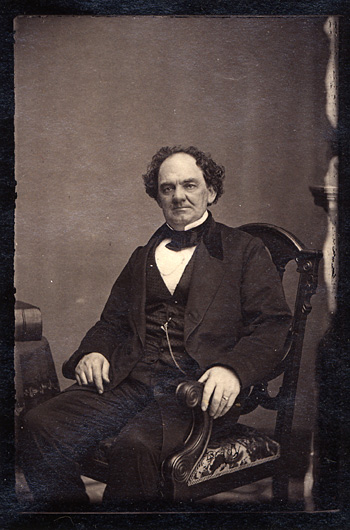
June 2, 1835 – P. T. Barnum Begins Political Career


Phineas Taylor Barnum was born July 5, 1810, in Bethel, Connecticut.  From an early age, he showed skill in bookkeeping and thinking of ways to avoid hard labor.  He was son of Philo Barnum, who ran an inn and store, and grandson of Phineas Taylor, who taught him a lesson about reputation when he gave his namesake a five-acre piece of land known as “Ivy Island.”  The young Barnum was proud to be “the richest child in town,” and his grandfather told everyone he met about the great fortune the boy held, even though P. T. had never seen it.  Finally, at age 12, he ventured with his father’s hired man to see his great landholding, which turned out to be a barren, almost inaccessible lowland bog.  His grandfather’s decade-long practical joke paid off with years of laughter, and Barnum had learned that titles must match the subject matter.

 Barnum grew and opened his own store, book auction, and real estate brokerage, but he profited mainly from state lottery sales as people vied for tickets to win a great prize, often cash.  He became skillful in haggling and making great promises, and he worked to follow through on his promises out of his moral code and understanding of repeat business.  In 1829, Barnum began his own weekly newspaper known as The Herald of Freedom and wrote against Connecticut’s blue laws, which he felt instituted too much control over the population (in addition to biting into his profits as his shop could not be open on Sundays and sales on lotteries were limited).  A feud with staunch Calvinists led to Barnum being convicted of libel through his paper, and he spent two months in jail.  When he was released, he had become locally famous as a great liberal leader.

In 1834, Connecticut’s state legislature banned new lotteries, establishing a punishment of 90-day imprisonment and $300 fine merely for advertising.  Barnum’s shop, which had often profited up to $2000 a day from lottery sales, became reduced, and he considered selling it and going to New York City to start a fresh business.  However, he ultimately decided to give up business and rather work to overthrow what he felt was legalized tyranny of the few.  While most politicians were either lawyers or famous citizens who entered politics after established themselves as war heroes or leading businessmen, young Barnum started with only his personal savings and his knowledge of spinning a deal.  He struggled initially but was able to find minor city government positions and a standing in the Democratic Party, coming into connection with his third cousin William Barnum, whose family controlled the growing industrial power in the Barnum Richardson Company.  P. T. made a name for himself campaigning for approval of the Mexican War on grounds of expansion and national security, but he went beyond approved party speech by adding that he wished it had not come to war, even though it was a boon for Connecticut’s arms manufacturers.

Increasingly, Barnum became fed up with party politics and prejudices of the day.  He quit the Democrats over the Kansas-Nebraska Act of 1854 and joined the Republican Party that formed that year.  While the Republicans were a minority in Connecticut as the Democratic and American (“Know Nothing”) parties held power through much of the 1850s, by the 1859, the Republicans gained great standing, and Barnum was on top.  He had used his skills in showmanship to win over the thoughts of locals and affirm them with skill in debate.  Most notably, Barnum helped stage satirical blackface shows displaying the humanity of slaves as well as productions of Uncle Tom’s Cabin, rewritten to the happy ending of all slaves being freed.  He later spoke out in support of the Thirteenth Amendment, "A human soul, ‘that God has created and Christ died for,’ is not to be trifled with. It may tenant the body of a Chinaman, a Turk, an Arab or a Hottentot – it is still an immortal spirit."

After supporting former Illinois Representative Abraham Lincoln in his presidential bid in 1860, Barnum hoped for a cabinet position as a former Democratic New Englander like Secretary of the Navy Gideon Welles, but positions were granted to men such as Simon Cameron, who served only one year before resigning amid corruption scandals.  Barnum, who had issue enough with politicians making promises they did not keep, was outraged by Cameron, who once said, “An honest politician is one who, when he is bought, will stay bought.”  Using his position in Connecticut, which had become a valuable munitions-producing region for the Union, Barnum began to root out any sign of corruption, opposing the spread of Cameron’s "Pennsylvania idea" of political dominance through bribery and threats of industrial regulation.

After the war in 1867, he ran opposed to his cousin William Barnum for the Fourth Congressional District.  William refused P. T.’s invitation to an open debate in which he wrote, “It is due to the voters of the Fourth Congressional District that they have an early and full opportunity to examine their candidates in regard to these important problems”, and instead used his industrial connections to secure the election.  When Barnum read in the newspaper about allegations of bribery and fraud in the election, he wrote, “I was never, at any time before or afterwards, consulted upon the subject. The movement proved to have originated with neighbors and townsmen of the successful candidate, who claimed to be able to prove that he had paid large sums of money to purchase votes. They also claimed that they had proof that men were brought from an adjoining State to vote, and that in the office of the successful candidate naturalization papers were forged to enable foreigners to vote upon them. But, I repeat, I took no part nor lot in the matter, but concluded that if I had been defeated by fraud, mine was the real success.”  He demanded an investigation into the matter, some of the first precursors of the coming Progressive Movement calling for an end to political corruption.  Using his own resources in investigation and provoking near-riots from the people of Connecticut (akin to those seen in New York City over Tammany Hall a few years later), Barnum had his cousin dismissed from Congress.

Taking his seat as representative in Washington, Barnum was disgusted at the corruption among the Radical Republicans who had overtaken Congress, even working to impeach President Andrew Johnson.  He began a campaign of “debunking” corrupt politicians, speaking at trials, and revealing "the tricks of the trade."  Although all of his attempts at bills were destroyed by party politics, his term made him wildly popular among American citizens, who pressed President U.S. Grant to clean up the corruption of Reconstruction.  Campaign reform laws were passed, numerous leaders taken out of office, and Barnum gained control of the Republican Party and continued as a representative.  Many suggested he run for president himself, but Barnum found he preferred working behind the scene to find good men for the job and even said, “"politics were always distasteful to me.”

Barnum continued as the “Watchman of Washington” until a stroke during a speech disabled him in 1890.  He died one year later, leaving behind a legacy of reform through the Barnum Act of 1878 and being the foremost to fight against what Mark Twain called “The Gilded Age.”  While never a wealthy man himself, Barnum led others in creating endowments for "profitable philanthropy”, summarizing a philosophy that “if by improving and beautifying our nation and adding to the pleasure and prosperity of our neighbors, we can do so at a profit, the incentive to 'good works' will be twice as strong as if it were otherwise."


--

In reality, P. T. Barnum went to New York and searched for business opportunities, which he eventually found as a showman with his first act: octogenarian slave Joice Heath whom he claimed was George Washington’s 160-year-old nurse.  While he came to immense fame and wealth with his traveling acts and museums, he also admitted his early hoaxes and began a campaign of disproving other hoaxers such as spirit-photographers and mediums.  He is falsely credited with the phrase, “There’s a sucker born every minute,” instead saying, “There’s a customer born every minute,” and believing audiences should always receive their money’s worth.

Friday, June 1, 2012

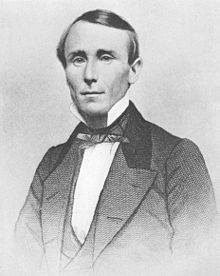
June 1, 1855 – William Walker Switches Funders


Filibusterer William Walker, at the recommendation of his associate, professional confidence man Parker H. French, determined to turn on his supporters and go for the “bigger con” by enticing millionaire shipping magnate Cornelius Vanderbilt into supporting an American presence in Nicaragua.

 Walker was born in Nashville, Tennessee, in 1824.  He graduated from the University of Tennessee at fourteen, spent his teenage years traveling in Europe and studying medicine, and completed his medical degree from the University of Pennsylvania at nineteen.  He turned to law, practicing in Louisiana for a time before moving on to journalism and heading to California.  There, he began his dream of “filibustering”, creating new colonies for the United States out of the Latin American countries, as had been seen with Texas a generation before.  Walker’s first attempt was the Republic of Sonora, conquered from the western part of Mexico in 1853, but he was soon chased out by the Mexican Army.  Back in California, he was arrested for breaking the Neutrality Act of 1794 (designed to halt privateering against France) but was acquitted and hailed as a conquering hero.

Meanwhile, war had broken out in Nicaragua.  The ruling Legitimists held conservatively to power even though the more democratic Liberals had made great leaps in popularity.  The Liberal president, Francisco Castellón, invited Walker to march on the Legitimists with their capital at Granada.  Walker was careful not to break laws this time, signing a contract as a “colonist” and not acting through American power, which he confirmed through notification to the Federal attorney’s office in San Francisco.  Walker and a band of fifty-eight calling themselves the “American Phalanx” sailed from San Francisco through stormy weather, landing at Realejo, Nicaragua, where he was reinforced by hundreds more volunteers, many local and others foreigners who wished for adventure.

To fund the expedition, Walker had been given $20,000 by Charles Morgan and Cornelius Garrison of the Accessory Transit Company, which they had bought out from under legendary businessman Cornelius Vanderbilt while he vacationed in Europe with his family.  Vanderbilt’s company had made tremendous amounts of money by controlling the key trade route to California during the Gold Rush by winning an overland contract with the Nicaraguan government.  In exchange for this money, Walker would find a technicality to tear up the old contract and deliver a new contract to a new company owned by Morgan and Garrison.  When Vanderbilt had heard of Morgan and Garrison’s manipulations of stock and company rule, he sent them a telegram in 1853 reading, “Gentlemen: You have undertaken to cheat me. I won't sue you, for the law is too slow. I'll ruin you. Yours truly, Cornelius Vanderbilt.”

Vanderbilt had crushed enemies before and was currently running the Collins Line shipping business into bankruptcy despite government subsidies.  Walker had been put into contact with Garrison through close friend Edmund Randolph, but French suggested he side with the businessman with deeper pockets.  Upon seizing the Legitimist capital on October 13, Walker sent a telegram to Vanderbilt volunteering a charter for a Nicaraguan Canal, a project Vanderbilt had dreamed of for years since George Law had already achieved a stagecoach route across Panama.  Vanderbilt, who had been planning to demolish American government support for Walker through his influence, instead showed his support to President Franklin Pierce.

Walker, meanwhile, had made significant enemies in Central America.  His diplomatic gestures to the surrounding countries had been successfully construed as preludes to further conquest.  President Juan Rafael Mora of Costa Rica declared war upon Walker and called up allies among Honduras, El Salvador, Guatemala, and disenfranchised conservative Nicaraguans.  Walker dispatched a preemptive invasion of Costa Rica, but was rebuffed and faced counter-invasion.  The Allied Armies of Central America marched on Nicaragua, looking to end Vanderbilt’s hopes of a canal.  The businessman refused to be defeated and funded mercenaries while Walker invited reinforcements from across the American South.  Despite a cholera outbreak, Walker’s soldiers managed to hold Granada under siege until it was relieved and the 4,000-strong Allied army broken.

The war gave excellent pretense for further expansion, allowing Walker to march legally on each Costa Rica, then El Salvador, and finally Honduras.  British Honduras (present-day Belize) was Walker’s next thought of conquest, but Vanderbilt refused to fund such an expedition as it would spark war with Britain, who was already suspicious of such American activities in Central America after the 1850 Clayton-Bulwer Treaty forbade expansion there.  Instead, Walker returned to his presidency in Granada and spearheaded Vanderbilt’s Canal, making extensive use of prisoner labor.  Walker died in 1874 after chronic bouts with malaria.

Upon the failure of the South to secede in the American Civil War, many wealthy Southerners fled to Walker’s Great Granada, although Vanderbilt had encouraged Walker to maintain abolition when he suggested repealing it in 1856 and neutrality in the war, which proved the most money-making beyond the Union blockade.  Vanderbilt became fixated with his canal, and routine visits to the harsh climate in the construction zone led to his death in 1867, one year before his wife.  In the latter nineteenth century, renewed imperialism would make Granada American territory, along with Cuba, San Juan, and numerous Pacific islands.  Armed revolutions plagued the region and drained American military resources until decolonization followed World War II.


--

In reality, Walker maintained his agreements with Morgan and Garrison.  They funded his expedition, and he refused a Nicaraguan canal.  Vanderbilt funded the Allied Armies of Central America and pressured the US Government into denouncing Walker, who could only find supporters among the South after reinstituting slavery.  Walker’s army was defeated in 1857, and he returned to the US.  He came once again to Central America upon the invitation to establish independence for the Bay Islands from Honduras, but was apprehended and killed by firing squad September 12, 1860.  The reinstated Nicaraguan government again turned down Vanderbilt’s idea of a canal, and he turned to building a railroad empire instead.

Site Meter