Friday, June 22, 2012

June 11, 1184 BC – Trojans Discover Achaean Ruse

Ten years of siege and warfare ended suddenly when the Greeks of Achaea left the shores of Troy.  They had arrived under King Agamemnon of Mycenae, the greatest Greek city-state, after Prince Paris of Troy had abducted Queen Helen of Sparta.  Agamemnon, whose family had been cursed with ill-fortune despite its might due to the sins of his ancestor Tantalus, and his brother Menelaus had spent much of their youth in exile in the house of Spartan King Tyndareus, whose daughter Clytemnestra married Agamemnon.  The question of a spouse for Helen, however, caused stir all over Greece as she was the daughter of Zeus by Queen Leda of Sparta, whom he had seduced in the form of a swan.  Her divine beauty drew in dozens of royal suitors from as far away as Crete and Ithaca.  The Ithacan Prince Odysseus brought no gifts but an offering to solve the matter, which had confounded Tyndareus as he was afraid any choice would cause a war.  All the suitors were required to take an oath to defend the winner of Helen’s hand, thus ending any chance of a violent quarrel.  When the oaths were confirmed by the sacrifice of a horse, Tyndareus chose Menelaus, who had not attended and sent his brother Agamemnon in his place, to marry Helen.

Years passed quietly until Paris of Troy arrived after having served as judge in a beauty contest for Hera, Athena, and Aphrodite, choosing the last because of her bribe to award him the most beautiful mortal woman in the world, Helen.  Despite her husband and daughter, Hermione, Helen fell in love with the prince and left.  When the betrayal was discovered, Menelaus and his brother Agamemnon called upon all of the suitors to fulfill their oaths and declare war upon Troy.  Many of the Greeks, now kings, were uneasy about the expedition, but honor forced them to comply.  Odysseus feigned madness for a short while to avoid the war before finally complying.  Even Achilles, who had been hidden by his nymph mother Thetis in the disguise of a young girl, drew up arms when he was discovered by Odysseus.  The Greeks assembled a fleet of a thousand ships and, after offending and finally appeasing the goddess Artemis, launched their long assault against Troy’s strong walls with an estimated 100,000 men.

Battles in outlying cities and islands raged for nine years without achieving more than a siege of Troy.  Infighting grew up, such as Odysseus planting a bribe from King Priam of Troy on Palamedes that resulted in the Greeks stoning Palamedes for treason and later refusing justice to his father Nauplius for the good of the war effort.  Later, a mutiny arose, but it was put down by strong words from Achilles.  Soon after, Achilles himself decided to quit the war when Agamemnon took his concubine, coming back only when his cousin Patroclus was killed by the Trojan crown prince, Hector.  Achilles killed Hector, returned his body to Priam, and was killed by an arrow from Paris after falling in love with a Trojan princess.  Odysseus and Ajax of Salamis bickered over Achilles’ armor, and Ajax, arguably the second-greatest Greek general, killed himself upon losing.  Odysseus recovered the wounded Philoctetes, who used Heracles’ bow to shoot Paris, which caused Helen to switch loyalties out of homesickness.  After his death, the Trojan princes fought over Helen’s hand, and eventually Deiphobus won out, driving his brother Helenus into exile, where he was caught by Odysseus and interrogated for the prophecies needed to be fulfilled to destroy Troy.

After meeting the requirements, Odysseus launched a scheme in which the Greek fleet would retreat as if in defeat.  They left behind a giant horse statue made of wood as a sacrifice to ensure safe travel home and Sinon, who would pretend to be a Greek deserter trick the Trojans into bringing the horse inside the city.  A festival began around the horse, though some Trojans such as Laocoön, priest of Neptune, were suspicious.  He cried out,
“O wretched countrymen! what fury reigns?
What more than madness has possess'd your brains?
Think you the Grecians from your coasts are gone?
And are Ulysses' arts no better known?”

Laocoön threw his spear into the side of the statue, which proved to be hollow as he suggested, and struck someone inside.  Initially, the Trojans (“fated to be blind”) ignored the cries inside as wood settling and turned their attention to Sinon, who painted a picture of immortality for Troy if they brought the horse inside the city walls.  However, as Laocoön prepared to give in to the crowd and sacrifice a bull in thanks, he discovered blood dripping from the spear-wound.  At last the Trojans realized the ruse, and, after defeating sea serpents sent by Athena out of vengeance, brought the horse inside, where they surrounded it with soldiers and burned it.  Inside the horse were the thirty best warriors of the Greeks, including kings Diomedes of Argos, Ajax of Locris, Menelaus of Sparta, Menestheus of Athens, and Odysseus himself.  The resulting massacre wiped out a generation of Greek leadership, leaving only a few to trickle back to their homes in Greece, which turned into civil war as the people sought vengeance on Agamemnon and the survivors.

With order restored, the Trojans began rebuilding their empire with the aid of their allies from the war such as the Amazons of Asia and assuming control of lands conquered en route to Troy by Memnon of Ethiopia, Priam’s stepbrother.  Upon Priam’s death, cunning Deiphobus became king and launched an invasion of Greece that devastated the land and pushed Greek survivors into the western Mediterranean.  The Trojans came into contest with the Phoenicians, conquering their principal city of Tyre with the aid of the Hebrew warrior-king David and sending more refugees toward Dido’s kingdom of Carthage.  In the 800s BC, Trojan imperial power was broken by Assyrians, and the city became a smaller kingdom dominating the Hellespont, often at war with the nearby Greek city-states.  After the overthrow of the Babylonians by the Medes and Persians, Cyrus and Darius invaded Asia Minor, overwhelming Troy and marching on the European nations of Macedon and Scythia.  The Greeks rejoiced at seeing their old enemy Troy finally subservient and gladly established relations with the Persian Empire.  Using Greek support, the Persians were able to solidify their control over the Macedonians and Thracians of the western Black Sea.  Meanwhile, the seafaring Greeks spent centuries fighting with the Carthaginians over domination of the Mediterranean, eventually falling as Carthaginian unity overwhelmed haphazard Greek alliances.  Carthaginians continued expansion northward to the British Isles and southward to Africa until they, too, fell under conquests by Goths, who were in turn conquered by Vikings.  Through it all, the Eternal City of Troy has stood, most lately as the capital of the Great Turkish Empire.


--

In reality, according to Virgil’s Aeneid, Laocoön’s spear did not strike anyone.  The Trojans brought the statue into the city, and Odysseus and his men sneaked out that night to open the gates to the Greek army, which had returned secretly.  Troy fell on a date calculated by Eratosthenes of Cyrene, though much of the fortune gained by the Greeks would be lost as gods continued to curse them.  Trojan survivors led by Aeneas were believed to have contributed to the founding of Rome, while the Greeks became a major world power.  They conquered the Persians through Alexander the Great, resulting in the Hellenization of the Middle East, and were conquered themselves by Rome, who adopted much of their civilization.

Sunday, June 10, 2012

June 9, 721 – Umayyads take Toulouse


Following the defeat of King Roderic of the Visigoths in 712, the Muslim Umayyad Caliphate had poured into Hispania and begun to threaten expansion into Europe.  From the new province of Al-Andalus, the Muslims began preparations to launch conquest of the land to the northeast, Aquitaine.  A former vassal state of under the Franks, Aquitaine was ruled by Duke Odo from its most powerful city, Toulouse.  Al-Samh ibn Malik al-Khawlani amassed an army in Andalus and marched in 721 to besiege Toulouse.  Odo escaped ahead the Muslim army and went into the kingdom of the Franks, asking for help from Charles Martel, the Mayor of the Palace and effective ruler for the Merovingian king Theoderic IV.  Martel chose to wait before offering Frankish military support, which was tied up in war with the Saxons.

Odo returned to Toulouse with what army he could muster.  The city’s walls had remained impregnable, but supplies had run so low that leaders were preparing to surrender.  While seeing Duke Odo flee and managing an easy siege tempted the army to become soft, Al-Samh determined to keep his scouting parties sharp.  They spotted Odo’s army as it approached, and the besieging army raced to change ranks for a battle.  Odo attempted to envelop his enemy, but the Muslims stood, and the Christian army crumbled.  As Odo’s retreat began, the Muslims returned to besiege the city, prompting Toulouse to fall.  Al-Samh installed a guard and took up pursuit of Odo, who led him into Frankish lands after another defeat in Poitiers.  Martel balked and tried to disengage his armies from the Saxons, but the result only weakened his hold on Bavaria.  Al-Samh continued to march until he caught up with Odo, destroying him in the battle of Tours.  Keeping up the military momentum, Al-Samh marched on Orleans, where he met and defeated Charles Martel, and soon took Paris.

Having conquered the Franks, Al-Samh fell to stabilizing his political control.  He allowed the German dependencies greater self-rule while encouraging them to join Islam, which many of the surviving upper class of Western Europe did.  Marginal religious tolerance kept the kingdom from revolting, though Rome lost significant power without the Frankish support.  As Muslim raids intensified in Italy, Pope Gregory II was forced to capitulate to Byzantine Emperor Leo III the Isaurian’s iconoclasm, which had prompted violent revolts.  The Muslims battled the Byzantines for decades over the Italian peninsula before finally adding it to the Caliphate.  After 800, the Byzantines were a limited power in Europe, gradually declining until it fell to the Seljuq Empire of the Sunni Muslims in 1095.

Meanwhile, the Western Muslims faced incursion by the Magyar, who had migrated out of Central Asia, and the Vikings of the North.  Both groups would eventually be converted to Islam, which became the dominant religion in Europe with a minority of Christians and Jews.  Mongol invasions threatened Europe centuries later, but they would eventually be rebuffed, and order restored.  The major east-west trade routes of the world kept major historical focus on sea travel through the Mediterranean and the land route known as the Great Silk Road.  Trade also brought the Black Death in the 1300s, which left to a surplus of tradable goods for the rebuilding of world population.  Islamic merchant ships explored southwest of Asia, coming into contact with Aborigines and Polynesians, who expanded trade knowledge through the Pacific Ocean.

Eventually, explorers reached the New World by island-hopping to the west coast of the New World, coming first into contact with the expansive Incan Empire.  Later exploration across the Atlantic outlined the East Coast, though it would be centuries before explorers had charted the mysterious interior.  Islam spread among the new nations as lands were gradually conquered, empires fell, and new ones arose.  Coal as an energy source made European states particularly powerful until petroleum showed more promise, which restored world economic attention to the Middle East in addition to the religious qibla toward Mecca during salah.


--

In reality, the army under Al-Samh had let down its defenses, and Odo destroyed the Muslim army with an encircling maneuver.  A new army marched on Aquitaine in 732 under Abdul Rahman Al Ghafiqi and proved unstoppable until defeated by Charles Martel between Tours and Poitiers.  Martel had dedicated the years after Toulouse assembling a massive fulltime army, building the foundations for Feudalism as he worked to feed his creation and exercising temporal power as he seized church property to fund it.  His son Pepin overthrew the Merovingian king with the Pope’s approval, and his grandson Charlemagne established a massive empire in Western Europe.

Friday, June 8, 2012

June 8, 1042 – Harthacnut Avoids “Poisoning”

As the Age of Vikings continued in Europe, Cnut the Great carved out a powerful North Sea Empire, ruling over Denmark, Norway, and England, as well as some territory in Sweden, by his death in 1035.  Due to the vast size of his realm, he could not control it directly and instead depended upon a series of councils and princes to rule in his stead.  In Norway, he installed his son Svein as king with his first wife Aelfgifu of Northampton as regent.  Their rule proved oppressive with heavy taxes, and the Norwegians rebelled, replacing him with Magnus the Good, illegitimate son of Olaf, the king Cnut had defeated.

Magnus den godes saga - Magnus og Horda-Knut - H. Egedius.jpgShortly before, Cnut placed Harthacnut, his son by his second wife, Emma of Normandy, on the throne of Denmark to maintain rule there.  Cnut used his brother-in-law Ulf as an advisor, until Ulf proved untrustworthy by giving too much credence to Harthacnut and refusing to deal with attacks until Cnut arrived with aid.  Cnut ordered Ulf executed but forgave his son as being too young to know better.  Just as Svein arrived in Denmark fleeing from Norway in 1035, the half-brothers were notified that Cnut had died, and Harthacnut was now King of England as well as Denmark.  The political climate changed again when Svein died the next year, canceling an invasion to overthrow Magnus.  Instead, Harthacnut made a treaty with Magnus and sailed to claim his right in England.

England had been ruled in his stead by another half-brother, Harold Harefoot, and Harthacnut had been gone to Denmark so long that the English did not much consider him a candidate.  Harthacnut’s mother Emma held Wessex for him before fleeing across the Channel to Bruges, where she produced the propaganda work Enconium Emmae Reginae (“Praise of Queen Emma”) and detailed the horrors Harold had performed, such as killing Alfred, her son by her first husband.  Harthacnut found his mother in Bruges, learned Harold was dying of natural causes, and waited to take the kingdom without force.  He arrived with an army anyway and installed heavy taxes to double England’s flotilla to 32 ships and maintain order in his empire.  The taxes coincided with crop failure and provoked riots among the English poor that Harthacnut put down by force.  Earls did not trust him, especially after Earl Eadwulf of Bernicia was given an oath of protection by Harthacnut but killed by Siward, Earl of Northumbria, who gained his lands while Harthacnut earned the epithet “oath-breaker.”  He was also notorious for his appetite (rumors stated he had the royal tables laid for two lunches and two dinners daily) but noted for his generosity to the Church.

While attending a wedding at Lambeth, Harthacnut collapsed after drinking many toasts to the couple’s good health.  Modern scholars believe he might have had a mild heart attack or stroke due to lifelong illness aggravated by mass consumption of alcohol, but common sense of the age determined it to be poisoning.  Upon his recovery, Harthacnut was suspicious of his half-brother Edward, son to Emma by her first husband Aethelred.  Edward, born in Oxfordshire, had served as co-ruler in England and was much more welcomed by the nobility than newcomer Harthacnut.  Over the protests, Harthacnut banished both Edward and their mother to Normandy.

To ensure his power in England, he married Edith, daughter of Godwin, Earl of Wessex, in 1045.  The couple produced an heir, Harold, in 1047, the same year Magnus of Norway’s uncle Harald Hardrada returned from exile and demanded the throne.  Harald had become a wealthy mercenary in Constantinople, and Magnus’ councilmen recommended offering co-rulership rather than risking civil war.  Harald accepted.  This move, however, called into question Harthacnut’s treaty in which his heir would assume rule of Norway if Magnus had none.  Harthacnut determined to invade Norway in 1055 to secure it as a kingdom for his son.

The invasion proved disastrous, and Harthacnut died after a short illness.  Magnus counter-invaded, chasing Harthacnut’s steward Svein II out of Denmark and then marching on England.  The English rose up against him, and a long campaign finally defeated the Anglo-Saxon resistance.  Having remade Cnut’s North Sea Empire, Magnus and Harald worked to appease the English and solidify their rule, continuing the late Viking influence in Britain for another two centuries.  Militarily, Norway was occupied in conquest of Sweden, Scotland, and Ireland.

The North Sea Empire was a crucial realm of Christendom, nearly balancing the powerful Holy Roman Empire to the south.  They contributed much to the Crusades in Northern Europe and expanded rule to Iceland in 1220.  As the European climate cooled approximately 1300, crops began to decrease, and Norwegian power waned.  The Reformation in Britain broke the North Sea Empire with rebellions fueled by religion and guided by new ideas of liberty.  Constitutional rule, which had long been accepted in England as matter-of-fact with rulers responsible to their advisors, trickled back to Norway and brought about an end to absolute rule there.  As the seventeenth and eighteen centuries went on, a series of republics borrowing much from the Venetian and Dutch models were set up among the North Sea nations.  While often economically significant, the northern republics never matched the historical clout of grand empires like Spain and France.


--

In reality, Harthacnut died at the wedding.  Magnus attempted to claim Harthacnut’s realm, but died suddenly (most likely from accident or illness) while campaigning in Denmark.  England passed to Edward, who became known as “the Confessor” and had no heirs with his wife Edith of Wessex due to his decision for celibacy according to medieval historians.  Upon Edward’s death in 1066, a succession crisis began as the English sponsored Edward’s brother-in-law, Harold Godwinson.  Harald Hardrada invaded to affirm his claim, but Harold defeated him at the Battle of Stamford Bridge.  Shortly thereafter, William the Norman, great-nephew to Emma of Normandy, invaded and slew Harold at the Battle of Hastings, beginning the Norman period of English history.

Thursday, June 7, 2012

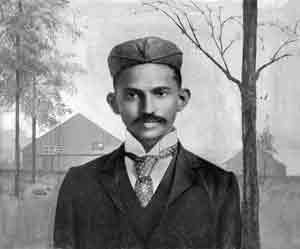
June 7, 1893 – Young Gandhi Jailed in South Africa

 In an influential episode of Indian leader Mohandas Karamchandand Gandhi’s young life, he was removed from the first-class carriage of a train in Pietermaritzburg, South Africa, and jailed after he struck the conductor.  Gandhi was able to plead self-defense after citing roughness on the part of the conductor and stated that he took his rights as a citizen of the British Empire seriously.  He was allowed onto a train the next day, and it was ingrained in his mind that “might makes right,” a lesson he had learned while studying law in London and a far cry from his Jainist upbringing.

Gandhi had been born October 2, 1869, in Porbandar, Bombay Presidency.  His mother, a devout Jain, died in childbirth, as had his father’s three previous wives and was common in the era before modern medicine.  His father, who largely influenced him, was a diwan in Porbandar, holding a high office with little duty, as had Mohandas’s grandfather before him.  After his arranged marriage at age 13, Gandhi was encouraged to study law so that he might one day take over his father’s position, and he traveled to University College London in 1888.  There, he found a very different world from his vegetarian, non-alcoholic upbringing.  He attempted to hold to vegetarianism, but his landlady’s bland food drove him to find dining at pubs.  As he grew accustomed to English culture, such as taking dancing lessons, Gandhi discovered a wealth of advantages being part of the British system.  Upon his return to India, he struggled to establish a barrister practice due to his shyness in court and instead worked more preparing documents.  In 1893, he agreed to a contract with Dada Abdulla & Co. at Colony of Natal in South Africa.

The Indians of wealth in South Africa were largely Muslim, while the Hindus were primarily poor indentured servants.  Gandhi, who had never cared much for religion, saw little difference, especially as both faced terrible discrimination under rule by whites.  On his journeys in South Africa, the incident on the train was one of many points where he determined he could only make “right” by finding enough “might.”  He was struck by a stagecoach driver for not making room for a white passenger; Gandhi recorded the event and later sued the driver and the company, making a name for himself.  Hotels that refused him were added to a list for boycott, later published as he helped found the Natal Indian Congress in 1894 as a body actively protecting Indian rights.  When he was attacked by a mob in 1897, Gandhi individually sued each known attacker, many of them later being placed in jail.  Officials were unnerved by his dedication to the law and to the Empire, using many of their own social weapons against him in addition to acts of non-cooperation.  When Britain declared war on the Zulu in 1906, Gandhi led a volunteer Indian ambulance corps, giving Indians credence into the regular British Army.

In 1915, Gandhi returned to India and brought his reputation with him.  He joined the Indian National Congress and quickly became a leader.  Toward the end of WWI, Gandhi was invited to recruit Indians for the war effort.  Gandhi enthusiastically agreed and wrote in “Appeal for Enlistment,” "To bring about such a state of things we should have the ability to defend ourselves, that is, the ability to bear arms and to use them...If we want to learn the use of arms with the greatest possible despatch, it is our duty to enlist ourselves in the army."  Though the war ended soon afterward, it gave ground for a long term project of working Indian soldiers into becoming a key part of British security.

Gandhi continued working with non-violence when it was obvious that the greater “might” was held by the British whites.  In the Champaran agitation, Gandhi arrived with a team of lawyers that broke down the system of landowners forcing tenant farmers to grow indigo for a fixed price in a weakening market.  He joined the Muslim Khilafat movement in 1919 to protect Islamic religious sites and gained great following as a unified leader of Indians.  At the Jallianwala Bagh massacre in 1919, protests erupted the Rowlatt Act that extended emergency wartime powers and British and were put down violently by Brigadier-General Dyer.  Gandhi, who had been leading the hartal (protest through suspension of business) in Delhi, determined that the time had come to act.  He challenged the colonial government to spread its martial law, which it did, only worsening the unrest.  Weapons smuggled by Indian soldiers, part of which had started the reactionary massacre, were spread, and all India seemed set aflame.

The Indian Revolt raged until 1922, when India was granted dominion status at Gandhi’s urging, similarly to Ireland.  In a new political climate, Gandhi began work to transform India by erasing culture he opposed, such as child marriage, untouchability, and oppression of women.  The renewed liberalism without the drive for independence as had been seen before splintered the Indian movement.  Sectionalism returned, and violence between Muslims, Hindu, and Sikhs rose as Britain stepped out of Indian government.  Following Gandhi’s assassination in 1934, voices began anew for independence, which was granted in 1947.  Civil war broke out as lines were redrawn, the first of four wars among India, Pakistan, Bangladesh, and Punjabi.

Gandhi’s goals of lifting up an oppressed people were accomplished despite bloodshed, which would be seen again with the assassinations and bombings on both sides in the Civil Rights Movement in the United States in the 1950s and ‘60s and in South Africa in the 1980s and ‘90s.


--

In reality, Gandhi’s mother survived childbirth and raised him strongly in the Jain faith.  When he went to London, he promised her to hold onto Jain principles.  Vegetarianism proved difficult, but he was eventually inspired by author Henry Stephens Salt to join the Vegetarian Society, which put him in touch with the Theosophical Society.  Upon Gandhi’s return to India, he would join the Indian National Congress, which had been founded by Theosophical Society members in 1885.  Gandhi continued his work with non-violence and civil disobedience (even canceling protests that turned violent, such as those against the Rowlatt Act), gradually winning over a united population of Muslim and Hindu Indians and beginning the Quit India movement in 1943 that won India’s independence after World War II.  Jawaharlal Nehru referred to Mahatma (“Great Soul” in Sanskrit) Gandhi as “the father of the nation” and “the light… of our lives” in a speech following Gandhi’s assassination on January 30, 1948, by a Hindu extremist.  Gandhi served as an inspiration to many nonviolent resistance leaders such as Martin Luther King, Jr., and Nelson Mandela.

Wednesday, June 6, 2012

June 6, 1942 and 1944 – A Cursed Day for the Allies


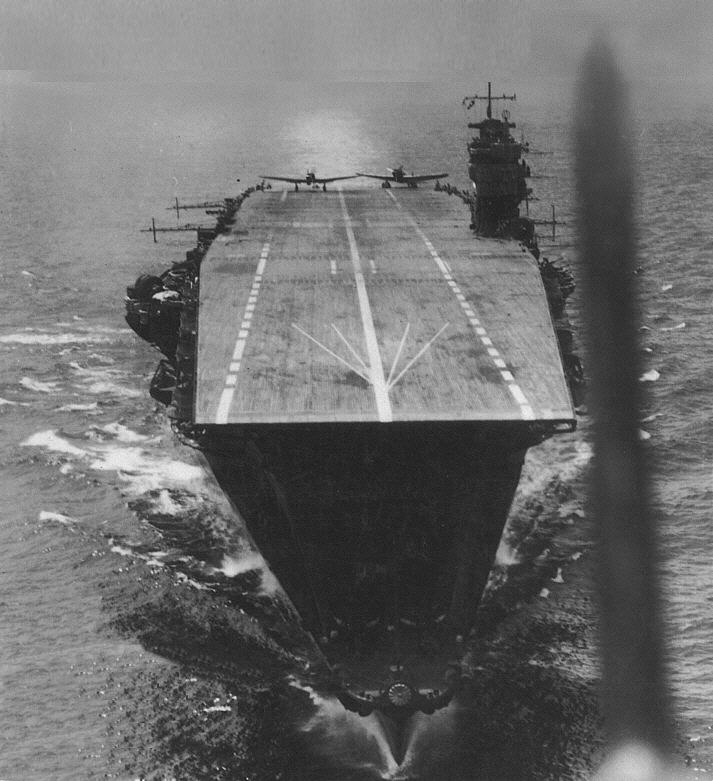
On two occasions two years apart during the Second World War, the sixth of June proved to be a day of disaster.  The first was in the Pacific Theater as the Imperial Japanese Navy looked to take Midway Island and push American control 1,200 miles backward.  Since the war in the Pacific had begun for the Americans with the Japanese raid on Pearl Harbor on December 7, 1941, it had been mostly a calculated retreat.  FDR ordered General Douglas MacArthur to relocate from the Philippines to Australia in February, 1942, prompting the famous “I shall return” speech.  The Japanese swept through the Dutch East Indies until finally being stopped at the Battle of Coral Sea.  While the Allies took heavier losses, they hindered the Japanese enough to stop their invasion of southern New Guinea.

In the next weeks, Yamamoto collected a massive fleet to make an attack on Midway Island, America’s most forward holding in the northern Pacific.  The attack had been expected by command since the 1930s, but there seemed no way to beat Japanese numbers with victory at Coral Sea being granted by superb American flight crews since ships did not even sea one another.  Code-breakers attempted to trick the code for Midway out of the Japanese naval code JN-25 by falsely broadcasting in May that the Midway water distillation plant had broken and requesting supplies.  While Japanese radio-operators were preparing to pass along word that “AF” (Midway) was short of water, command stopped them, having been suspicious over the American carriers seeming to appear exactly in the right place and time at Coral Sea.  Yamamoto, who had spread his fleet widely to avoid detection, decided Americans were already suspicious and reordered his ships into a tighter pack that struck Midway and the few American reinforcements there.  Most of the American Pacific fleet was in Hawaii, with the U.S.S. Lexington carrier under extensive repair.

After the fall of Midway, the Japanese and Americans fought endlessly between Midway and Hawaii, with the Americans finally pushing the Japanese back in November of 1942.  They had allowed the Japanese to dig in at places such as the Eastern Solomons and Guadalcanal, but the full industrial might of America finally outpaced early Japanese advantages.  With the loss of nearly 1000 pilots over the month-long Battle of Hawaii, the Japanese were unable to replace their crews, and the navy became impotent, relying on the army to hold the islands conquered early in the war.  The Second Battle of Midway in 1944 restored it to American hands at the cost of thousands of Marines’ lives.  By December 1945, the Americans had overtaken outlying Japanese bases at Okinawa and Iwo Jima, making routine firebombing of the mainland possible.

June 6 was also the day of the disastrous attempt at an amphibious landing on the north coast of France.  Weather had delayed the attack from June 5, but the Allies made an eager assault at Normandy on the morning of June 6, 1944, without full air support.  While many of the German High Command were absent (Hitler was reported to have slept late that day) or more fearful of attack at Calais, communications broken up by Allied paratroopers ironically inspired reserve commanders to act on their own initiative.  The Allies held the beach for a time, but Panzers under Rommel drove the troops back into the sea by afternoon (thanks to winning out before Hitler in an argument with Field Marshal Gerd von Rundstedt about mobile defense).

Eisenhower and the Allies retreated to prepare for another amphibious invasion, but the “worst channel storm in 40 years” delayed them through June.  Instead, the Allies determined to feint at Calais and made an assault Marseille in the South, for which Churchill had long campaigned.  Italy had been occupied by the Germans after capitulating, slowing advance up the Italian peninsula into a stalemate.  Operation Dragoon created a fresh front through southern France, causing the Germans to move their attention southward.  Shortly afterward, the Allies struck at Brittany, finally establishing a lasting beachhead at Brest.  Meanwhile, on the Eastern Front, Stalin began ferocious counterattacks, pushing westward and catching whole German armies in pincer movements.  By May of 1945, Russians had marched into Bavaria, taking as much ground as possible as the Western forces attempted to catch up for the Battle of Berlin a month later.

The war in Europe ended on May 28 with the Soviets controlling almost the whole of Germany.  Issues immediately began to arise with occupation zones as French demanded an area of Germany.  At Potsdam that July, the quickly fracturing Allies determined that the Soviets could control Germany as long as it followed the Potsdam Agreement and Russia would declare war on Japan to end the Pacific theater.  President Truman’s use of the atomic bomb and the Soviet invasion of Manchuria led to VJ Day on January 14/15.  Again, the Soviets made great leaps in occupation, taking Korea and the northern islands of Japan while the beleaguered American forces worked to disarm southern islands still held by imperial forces.

With so much Soviet influence in the East, Stalin refused to give up Manchuria to the Chinese as a result of the ongoing Chinese Civil War, explaining they needed secure railways to support the occupational forces in Korea.  Both Nationalist and Communist Chinese balked at the invasion and called another truce as they had during Japanese invasion, although each was willing to injure the other whenever possible.  The occupation of Manchuria began the Sino-Soviet War, which dragged on as Western powers watched.  With the development of Russian atomic weapons in 1949, the West finally acted with a NATO ultimatum banning the use of atomic weapons.

NATO-Soviet relations continued to crumble until the death of Stalin in 1956 ignited revolutions beginning in Hungary and spreading throughout Europe.  Already stretched thin with fighting in China and occupation in Central Asia, the stress was enough to break the Soviet Bloc and bring the experiment of Russian Communism crashing down.  War in China continued until NATO influence finally brought Kai-shek’s Nationalists into power, spreading capitalism into other former Soviet nations such as Korea and Xinjiang.


--

In reality, the US had broken the Japanese naval code and was able to appear at Midway with reinforcements, including the Yorktown, which had been repaired round-the-clock in Hawaii over 72 hours at Nimitz’s urging.  German High Command, however, was not as able and delayed counterattacks on D-Day until much too late to reverse Allied advances into Normandy.

Site Meter