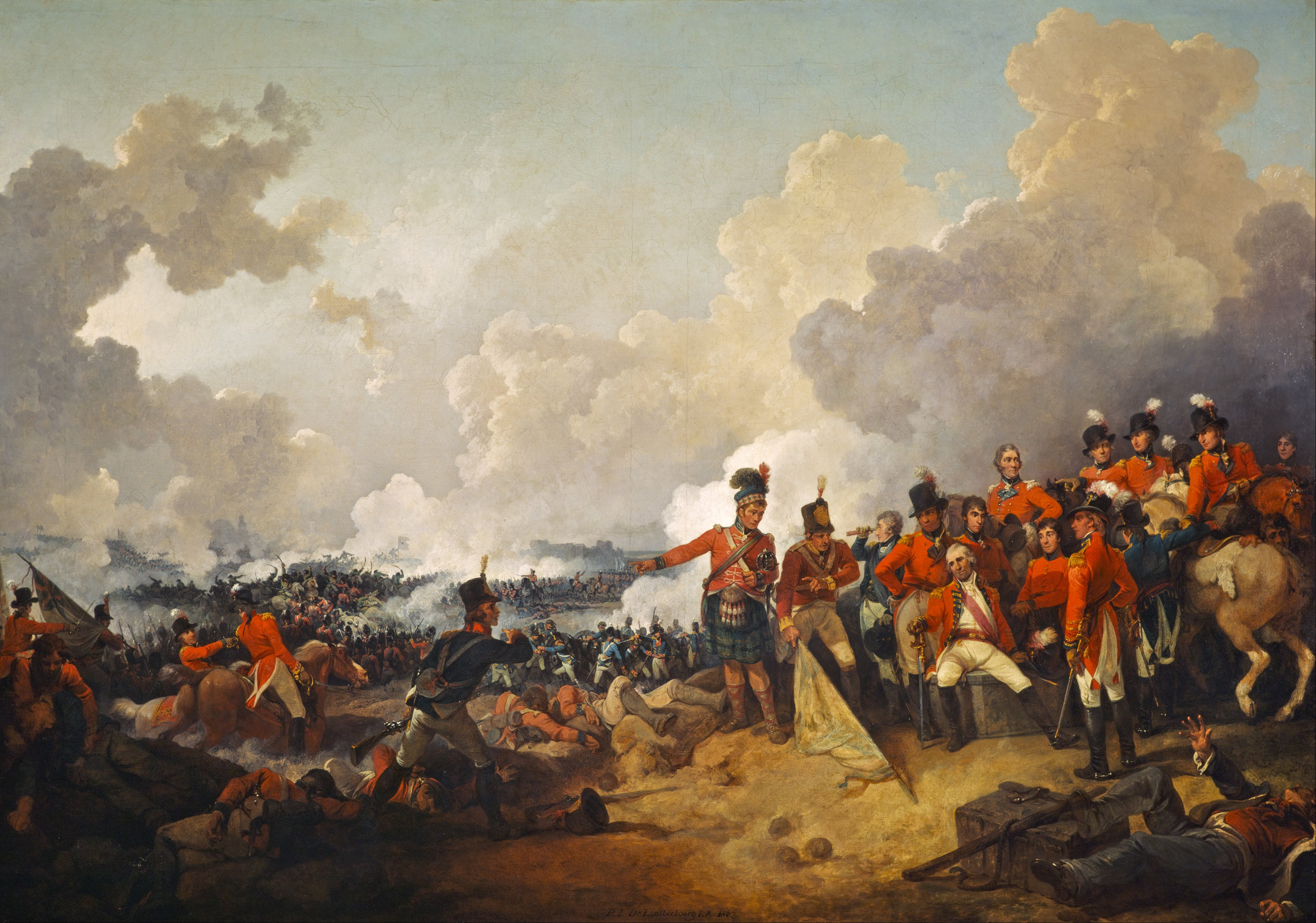
With France under constant bombardment in the Revolutionary Wars as seemingly all of the European Crowns turned against the upstart Republic, General Napoleon Bonaparte launched his Egyptian campaign of 1789 in an effort to put pressure on India and, hopefully, draw Britain out of the war. His fleet sailed south disguising its agenda, conquering Malta and moving rapidly toward its final destination of Alexandria. While the fleet under Admiral François-Paul Brueys d'Aigalliers anchored in Aboukir Bay, Napoleon began his conquest with his land armies. Brueys supported Napoleon with naval bombardments, but by July 27 Napoleon was eager for the admiral to move on to better harbors. He dispatched a courier to Brueys ordering him to move to Corfu in Greece to prepare for campaigns against the Ottomans.
As the fleet left sight of the shore of Egypt, it came upon the British fleet under Admiral Nelson that had been pursuing them throughout the Mediterranean. With little time to maneuver, both admirals threw their fleets against one another. The more daring Nelson split his fleet, hoping to achieve a crossfire, but the moving French managed to stay beside the British ships, trading blows. The battle lasted until after dark, when the English began to move away.
While tactically indecisive itself, the battle would be proclaimed a French victory. Without many harbors to support them, the British fleet would retreat out of the Mediterranean. Worse, the brave Admiral Nelson would be mortally wounded, struck down by French snipers from the rigging. The battered French fleet would regroup with other ships, building up the force that would later destroy the Ottoman navy and establish French dominance over the Mediterranean.
Napoleon, using easy supply trains across Mediterranean waters, conquered Egypt and moved northward through Judea and Syria. In 1800, he marched on Asia Minor, beginning a string of battles that would finally dethrone the Ottoman Sultan and break the empire into small protectorates of France. In 1802, Britain had hopes of establishing a Second Coalition with Austria, but the Austrian emperors, now free to dominate the Balkans, joined with their former enemies, the French.
Meanwhile, Napoleon continued east through Persia. Many began to fear his egotism as he spoke of himself as the new Alexander, but his victories could not be dismissed. Some called for his return to France, but Napoleon felt confident to press to India, just as his militaristic predecessor had done some two thousand years before.
Britain continued the war alone for three years, but as Napoleon conquered the Indus and headed toward lower India, they sued for peace. At the Treaty of Trafalgar in 1805, establishing in writing the French dominance of the Mediterranean that had been maintained by battle for years, the war came to an end. Napoleon seemed ravenous for more conquest, and the government feared he would turn on France itself. Instead, they sent him on a sort of exile to be the military governor of the huge tract Louisiana in North America, newly won back from the Spanish in the Third Treaty of San Ildefonso.
Napoleon would solidify his command in New Orleans and launch expeditions of exploration and settlement into the countryside. Friction would build between the French and the Americans, who, under President Thomas Jefferson, had purchased shipping rights in the Mississippi as a shared border. Finally, in 1812, war would be declared as Indians in Tecumseh's War were believed by Americans to be supplied by Napoleon.
The frontier war was brutal, and the naval battles in the Gulf and Caribbean devastated both countries' western Atlantic fleets. Napoleon knew he did not have enough troops for a wide front, so he decided to build up a Grande Armée and march up the Ohio River Valley with the final goal of Washington, D.C. The gamble would prove a blunder as American civilians and soldiers alike would plague the French with snipers and guerrilla combat. Before his planned crossing of the Appalachians (perhaps to match another hero, Hannibal), Napoleon decided to turn back.
The final battle of the War of 1812 was near New Orleans, where Col. Andrew Jackson marched to take the nearly unguarded capital. Napoleon raced back, rallied his men, and counterattacked in another gamble that would fail as Jackson's troops hid behind wagons and trees (fighting “without honor” as Americans were known to do). Artillery seemingly disintegrated the American force, but the stalwart frontiersmen slipped behind the French and captured Napoleon in his command tent.
The war ended with the Treaty of New Orleans, where France would surrender its Louisiana colony and Americans pay reparations for property and life lost to a total of 78 million francs (15 million dollars). The embarrassed Napoleon would be sent to Haiti as governor without arms, and he would die in 1821, some say of a broken heart.
–
In reality, the courier sent to Admiral Brueys would be slain by Bedouin, never to arrive. The French fleet was anchored still in Aboukir Bay, hoping to be protected by shoals and forts, but the daring Nelson maneuvered to catch them in a devastating crossfire. Without his fleet, Napoleon's Egyptian Campaign would eventually crumble, but not before he would return to France to begin a career giving up colonial conquests and instead building an empire from Europe itself.
Showing events on this day in years past that shaped history... just, not our history.
Showing posts with label egypt. Show all posts
Sunday, August 1, 2010
August 1, 1789 – French Rout English Fleet at Alexandria
Labels:
alexandria,
alternate history,
egypt,
napoleon,
nelson
Wednesday, July 21, 2010
July 21, 1977 – Egypt Liberates Libya
Small skirmishes and shootouts between the Egyptian and Libyan armies would result in a rout that would become an invasion. Tensions had mounted between the two countries for months with attacks at one another's embassies, Gaddafi's order of the removal of all Egyptian nationals from his country by July 1, and finally the Libyan peoples' “March on Cairo” where thousands of civilians approached the Egyptian border to make known their stance against a possible Egyptian-Israeli peace treaty.
The march would lead to further difficulties when it reached the border, where Egyptian troops stopped the protesters. On July 20, Libyan artillery fired at the Egyptians, and a full-scale raid on the city of Sallum followed on July 21. The Libyans expected some fighting, then to disengage and return across the border. Instead, the Egyptians responded with a declaration of war and counter-invasion.
With superior arms, the Egyptians raced toward Tripoli on the coast roads after bypassing Ajdabiya. The Libyan army looked for methods of ambush, but Egyptian air superiority kept enemy tanks and infantry pinned. On July 24, armed forces rolled into Tripoli, and Gaddafi was nowhere to be found. The leader of the revolution had pulled out of the capital and hidden in bunkers deep in the desert.
Algeria and Palestine called for an armistice, but their cries went unheard. Instead, Egypt called for free elections and a new Libyan government. As a fallen leader, Gaddafi was not arrested, merely ignored, and he would eventually become an expatriate in Syria. The new election was backed by the United States; most international figures merely sat back to watch. The USSR was expected to speak out, but the Soviets were quiet as they had their own designs on invasions farther east and hoped not to muddy international waters.
Libya, now newly reopened, fell in line with Egyptian ideals and developed relations with the West. Farther in the east, Iran would arise in a revolution to become a religious republic (what many called socialist). Saddam Hussein's government, suspicious of Ba'ath revolutionaries spilling over from Iran, declared war on their neighbor, which received increasing aid from the USSR despite their own problems in Afghanistan. Western attention was drawn more heavily to Libya, and Iraq would fall to the theocratic Iranians.
A new “iron curtain” would drop across the Middle East. Both sides would grow increasingly fearful of the other, and war seemed imminent daily. Terrorist attacks rang through Saudi Arabia, hoping to edge the king out of power, but further backing from Egypt and the West would keep the balance. After the fall of the Soviet Union in 1991, the eastern states would face economic collapse and sought to bring in Kuwait as a liberation of Arab resources from Western hands.
The Gulf War began with an invasion of Kuwait from the north, and a massive United Nations force would counter-invade with Egyptian and Saudi troops leading the way. War seemed to spin out of control, and it seemed unfathomable to end without bringing down the Iraqi and Iranian governments, which was achieved in 1994 with the Fall of Tehran. Coalition forces would stay behind in the region for decades to come, redrawing national borders to create Kurdistan and establishing constitutions based on ideals of freedom. Terrorism and insurgency would follow continually and plague the elected governments for generations.
–
In reality, Egypt did not fully counterattack Libya, and both countries were quick to agree to armistice. Algerian president Houari Boumediène mediated peace with the help of Palestinian Yasser Arafat. Though peace was achieved, the rift between conservative and socially revolutionary Middle Eastern states would continue.
With superior arms, the Egyptians raced toward Tripoli on the coast roads after bypassing Ajdabiya. The Libyan army looked for methods of ambush, but Egyptian air superiority kept enemy tanks and infantry pinned. On July 24, armed forces rolled into Tripoli, and Gaddafi was nowhere to be found. The leader of the revolution had pulled out of the capital and hidden in bunkers deep in the desert.
Algeria and Palestine called for an armistice, but their cries went unheard. Instead, Egypt called for free elections and a new Libyan government. As a fallen leader, Gaddafi was not arrested, merely ignored, and he would eventually become an expatriate in Syria. The new election was backed by the United States; most international figures merely sat back to watch. The USSR was expected to speak out, but the Soviets were quiet as they had their own designs on invasions farther east and hoped not to muddy international waters.
Libya, now newly reopened, fell in line with Egyptian ideals and developed relations with the West. Farther in the east, Iran would arise in a revolution to become a religious republic (what many called socialist). Saddam Hussein's government, suspicious of Ba'ath revolutionaries spilling over from Iran, declared war on their neighbor, which received increasing aid from the USSR despite their own problems in Afghanistan. Western attention was drawn more heavily to Libya, and Iraq would fall to the theocratic Iranians.
A new “iron curtain” would drop across the Middle East. Both sides would grow increasingly fearful of the other, and war seemed imminent daily. Terrorist attacks rang through Saudi Arabia, hoping to edge the king out of power, but further backing from Egypt and the West would keep the balance. After the fall of the Soviet Union in 1991, the eastern states would face economic collapse and sought to bring in Kuwait as a liberation of Arab resources from Western hands.
The Gulf War began with an invasion of Kuwait from the north, and a massive United Nations force would counter-invade with Egyptian and Saudi troops leading the way. War seemed to spin out of control, and it seemed unfathomable to end without bringing down the Iraqi and Iranian governments, which was achieved in 1994 with the Fall of Tehran. Coalition forces would stay behind in the region for decades to come, redrawing national borders to create Kurdistan and establishing constitutions based on ideals of freedom. Terrorism and insurgency would follow continually and plague the elected governments for generations.
–
In reality, Egypt did not fully counterattack Libya, and both countries were quick to agree to armistice. Algerian president Houari Boumediène mediated peace with the help of Palestinian Yasser Arafat. Though peace was achieved, the rift between conservative and socially revolutionary Middle Eastern states would continue.
Labels:
1977,
alternate history,
egypt,
libya
Subscribe to:
Posts (Atom)
