Showing posts with label galileo. Show all posts

Friday, July 11, 2014

April 20, 1303 – Sapienza University Leads to Industrial Revolution


After the rediscovery of the Code of Justinian in 1070 established new admiration for law rather than “might makes right,” Europeans began a new focus on studying law, philosophy, and theology to prove who was in the right. The first was founded in Bologna, Italy, where international students hired scholars to teach them how to be protected by (and from) city law. Guilds and kings began their own universities in Italy, France, and England, collections of like-minded individuals where the brightest minds were collected to train and teach. In 1303, concerned that intellectuals were gaining an upper-hand on theology, Pope Boniface VIII founded a university of his own, Sapienza – Università di Roma, the University of Rome for Wisdom. Just before its release, the papal bull was edited to read “for the good of all men,” perhaps in an effort to ensure universal church authority, a point he had battled over with Phillip IV of France and led the king to march on Rome.
In 1431, Pope Eugene IV reorganized and revitalized the university, dividing it into schools for Law, Medicine, Philosophy, and Theology. Upon a review of Boniface’s words, Eugene decided to add a fifth school of Builders that would handle practical matters that affected commoners, primarily improving agriculture. It was a controversial action considered banal by many scholars, but faculty was readily available from the military engineers in the Venetian Wars (1416-1573). The calculating wits that produced war engines were applauded as they approached civilian issues of flood control, land reclamation, and hydropower.

As the school’s reputation improved, it attracted a young Leonardo da Vinci, who would become its first legendary faculty member. Da Vinci, who had apprenticed as an artist, had been disgraced by libel and became determined to found a new life in Rome. He initially applied to the school of medicine to teach from his knowledge of anatomy, but his sense of innovation (such as writing backwards to avoid ink-stains from his left-handedness) brought him to the Builders. Students followed his teaching in earnest, putting thousands of man-hours into inventions that da Vinci himself could have only drawn in his journals. Vincians experimented with submarines in the Tiber, flew parachutes, and drove spring-driven automated carts.

The legacy of da Vinci was largely considered to be charming toys until the attempted sack of Rome in 1527.  Charles V, the Spaniard Holy Roman Emperor, defeated France in battle in Italy but had run out of funds to pay his soldiers. They mutinied and demanded to march on Rome, where Pope Clement VII had previously given his support to France. Only five hundred Swiss Guard stood against the onslaught of some 20,000 mercenaries. The pope called for militia, and “like Archimedes at Syracuse,” the students and faculty of Sapienza brought out engines of war that had only been tested in games: experimental cannons, rotating scythes, collapsible towers, and flame-throwers. Legends stated that legions of automaton warriors marched, but it was just one, which was quickly defeated, although it did leave behind a stunning psychological effect.

Students were able to drive off Charles’ troops and save the city. All of Europe marveled at the applications of science, and other universities swiftly adopted their own schools of engineering. Outside of war, engineers found themselves employed in Sapienza’s original direction of improving the land for mankind in road-building, irrigation, and invention. The implementation of the printing press spread ideas far and wide, especially after the water-powered automated press began delivering thousands of pages each hour. As minds tackled electricity, steam, and chemistry, an industrial revolution swept over Europe. Papal Italy was at the forefront, becoming a thinktank that again won fame in war through technological superiority when armored wagons demolished Gustavus Adolphus’s Swedish invasion of Pomerania in 1630.

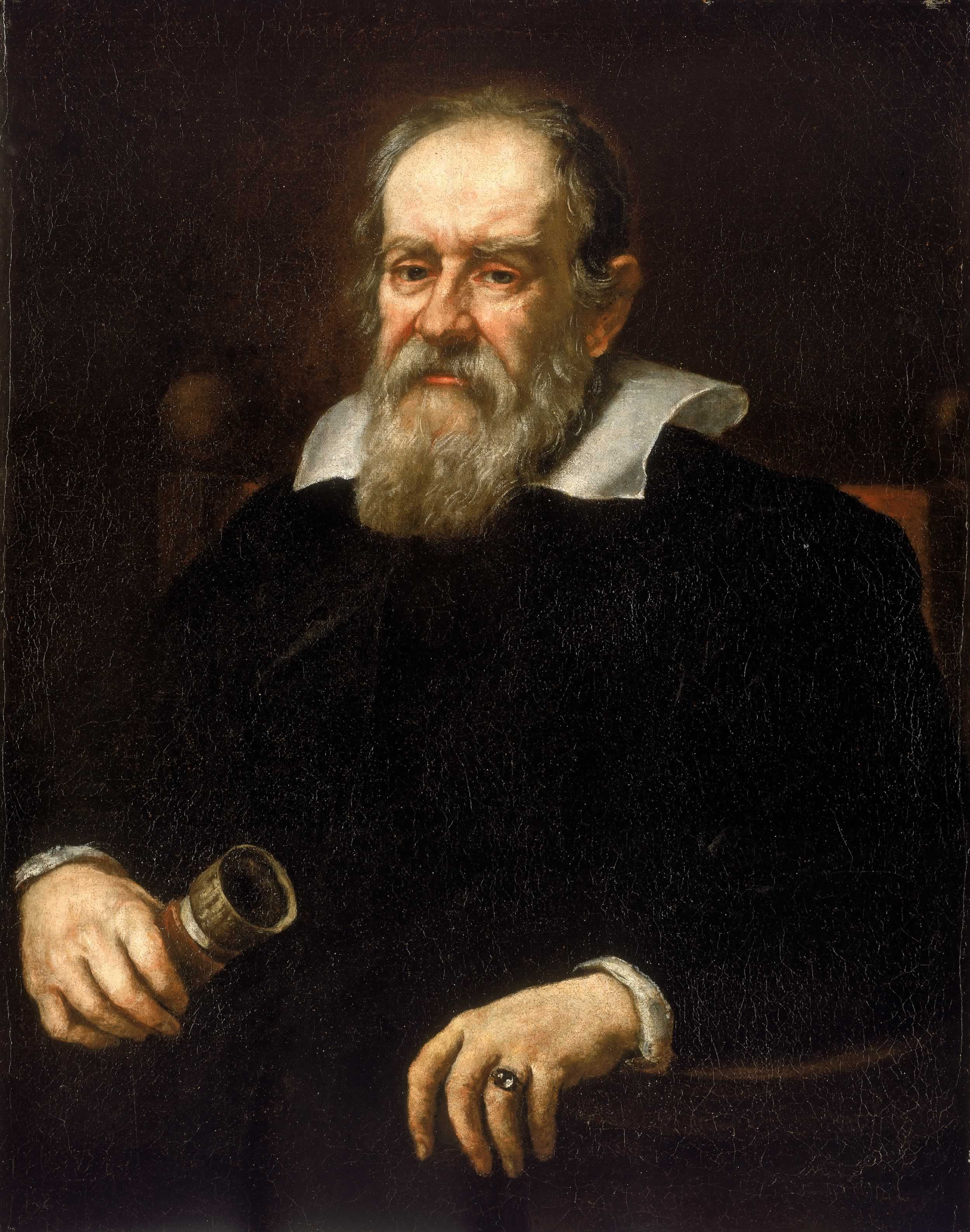
The expansion of technology also brought dangerous levels of new knowledge to the public, such as Pisan Galileo Galilei’s theory of a heliocentric Solar System. While the Catholic Church had affirmed its position with the Counter-Reformation on mass-printed pamphlets and manufactured goods, the scientific discovery had a great deal of theological backlash. Scholars at Sapienza studied Galileo’s theory, tested it, and recommended to the pope that it be upheld. With a public relations machine already in place, theologians quickly assembled doctrine to better explain the significance in the delicate mechanics of Creation.

Gradually, the power of kings in Catholic lands gave way to the political, religious, and economic power of the Pope and its many banking and industrial interests. Steam-powered ships from Portuguese and Spanish fleets created a global empire, and Protestants in Northern Europe routinely made alliances to carve out colonies of their own. Catholic colonies sometimes attempted to gain independence from their mother countries like the Protestants, but the risk of excommunication proved too great for nations at large to rebel against the Church’s commonwealth, which came to dominate South America, half of North America, Africa, and much of Asia.


--

In reality, the Sapienza – Università di Roma was founded primarily for the study of theology, and Pope Eugene IV focused on the four schools pertinent to the times. While universities in Italy focused on theology and medicine, universities in Northern Europe turned to arts and sciences, and it was common even in the Late Middle Ages for faculty and students to travel between the two for conferences. Today Sapienza is one of the largest universities in Europe, having over one hundred thousand students, and is listed in the top 3% of learning institutions in the world.

Tuesday, December 28, 2010

December 28, 1612 – Galileo Discovers a New Planet

Known as the “Father of Modern Astronomy,” “Father of Modern Physics,” and “Father of Modern Science,” Galileo Galilei led mankind in a great many discoveries, even that there were more planets to the cosmos than the five that had been charted since ancient times. While principally supported by patrons, he also had side-incomes from improving compasses and building telescopes. It was with his telescopes that Galileo would discern many secrets of the universe.

In January of 1610, Galileo discovered the four Galilean moons of Jupiter, the first solid description of a celestial object orbiting another. He at first took them for stars, but careful calculation proved that they were, in fact, moons like our own. It called into question the Aristotelian geocentric cosmos that has always been accepted, even with the understanding of a round Earth. That September, he discovered the phases of the planet Venus, which would fully discredit Aristotle and launch a new design by astronomical Tycho Brahe with a fixed Earth being orbited by the Sun, around which Mercury and Venus orbited.

Galileo became a celebrity around Europe and received many graces in Rome, especially from the Catholic Church who applauded his study of the wonders of Creation. Galileo, however, had opinions outside of the Church-recognized Tychonic system and pushed for recognition of a heliocentric universe. He searched for a way to prove the theory and constantly studied the skies.

In late 1612, Galileo came across another celestial object he took as a dim fixed star. A month later, he observed it again, and the star came to fascinate him. Over coming months, he watched it carefully, seeing it move ever so slightly that he could not be certain of his instruments. After some time, it became obvious that the star was moving in retrograde, meaning it had to be a planet like Mars or Jupiter. While Galileo felt certain that was the cause, his principles of observational science forced him to note that it may also have been a comet.

He busied himself with studies of sunspots and lunar mountains, but the strange “star” haunted him. Swallowing his pride, he took to the German Johannes Kepler’s suggestion of a convex lens as the eyepiece rather than Galileo’s concave one. The viewer suffered an inverted image, but the improved image astounded Galileo. During their correspondence on light refraction, Kelper was also able to convince Galileo of the lunar cause of tides, something Galileo always found fictitious as the tides were supposedly due to the movement of the Earth.

As Galileo was coming to appreciate the works of other scientists in his age and being baffled by what he would later recognize as the rings of Saturn, he wrote of new humility in letters to his daughter Virginia, now Sister Maria Celeste. Still, he felt that science must be kept pure, and he approached Rome in defense of Copernican ideals. Galileo was ordered by Cardinal Bellarmine and the Inquisition not to hold or defend heliocentrism. Admitting that without solid proof both were guesses, Galileo decided to treat the Sun-centered universe as a hypothesis, just as he would hold the Earth-centered one.

In 1619, Galileo came into a long discussion with Father Orazio Grassi of the Jesuit Collegio Romano about the nature of comets. While he felt great frustration with what he saw as incorrect science, Galileo methodically and politely arranged the discussion until finally admitting the planet he had been charting for nearly seven years. The Jesuits were shocked at the news, and Galileo conceded that the universe was much deeper than he had imagined, even accepting that comets were more distant than the moon.

Astronomers checked on Galileo’s planet, and confirmation came from various astounded sources. Rome again applauded the great Galileo, who named the planet Uranus after Saturn’s father. Riding his fame, Pope Urban VIII asked Galileo to write a discussion of heliocentrism, which he did in 1632’s Dialogue Concerning the Two Chief World Systems. The book stands as a model for fair and objective science to this day, ending with the conclusion that, excepting to fly up into the sky and look down on Earth’s foundations (if any), the question would be solved by discerning parallax of the fixed stars in the sky as Earth rotated around the Sun.

Such a feat would require a telescope of incredible magnitude and precision, and astronomers would quest for another century to find one. In the meantime, yet another planet would be discovered, this one closer than Galileo’s Uranus. English astronomer John Flamsteed would dub it “Nox” in 1690.


In reality, Galileo would note the “dim star” but not notice it sufficiently. He would be notoriously bigoted about his scientific opinions, scoffing at Kepler and Grassi, even though they were correct about tides and comets, respectively. His opinions clashed with those of the Church, and Galileo would be forced to recant heliocentrism and spend the rest of his life under house arrest. Uranus would be mistaken by John Flamsteed as a star and not determined as a planet until William Herschel in 1781. Neptune, though observed by Galileo, would not be discovered until 1846 by Johann Galle.

Site Meter