Showing posts with label peter the great. Show all posts

Monday, August 30, 2010

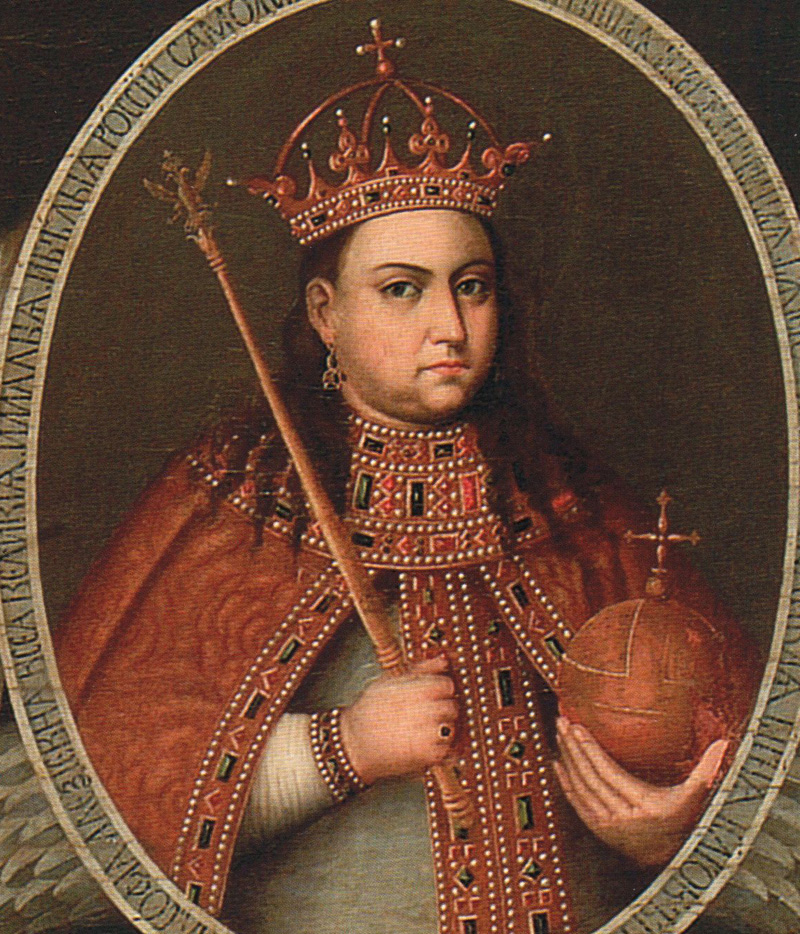
August 30, 1689 – Tsarina Sophia Assassinates Young Peter

The Tsardom of Russia stood as a massive Eurasian power first organized during the reign of the Khans. Ivan the Terrible had transformed the tributary of the falling Mongolian empire into a new kingdom for the Rus with his coronation in 1547. Since that time, Russia continued to expand in all directions, stretching west through Siberia to the Pacific Coast. The latest of these gains had been made by moving into the Amur Valley in Manchuria, causing conflict with the Chinese to the south.

Conflict bubbled in the Russian nobility as well. In 1676, Tsar Alexis had died, leaving the ill Feodor III as tsar until his own death in shortly thereafter in 1682. Ivan V, the next son in line for the throne, was also ill both in mind and body. Seeing problems of continual poor rule, the nobles in their Duma put forth as tsar ten-year-old Peter, a son from Alexis' second marriage. Though ratified by the people, Sophia Alekseyevna, a daughter of Alexis, led a coup by the Streltsy, the elites of the military. Through murder and intrigue, she placed herself as regent and the young Ivan and Peter as co-tsars.

Sophia ruled the country well, carrying out successful campaigns against Turkey, signing an eternal peace agreement with Poland, and working with China on peace agreements in the east. In 1689, however, Peter had come of age, and in the summer he began his plans to take power. She hoped to use the Streltsy to overthrow Peter, but many of them had deserted her camp and taken up with the young prince as he fortified himself in the Troitsky monastery. She invited Peter to join her at the Kremlin, but he refused and demanded execution and exile of her highest advisers.

It did not seem that she could win a civil war, and Peter was remaining resolute against her intrigue, so Sophia decided on one of politics' oldest tactics: assassination. Stalling for time, she and Peter debated through couriers for weeks until finally she was able to coax his guard weak enough for an assassin to strike. Peter was stabbed with poison blades and, though the assassin was quickly killed by his guards, died after a week of fever. Without their leader, the wayward Streltsy deserted again, and a few policing battles secured power for Sophia.

She proclaimed herself tsarina, co-ruler of Russia with Ivan V, who was weakening by the year and died in 1696. Ruling alone, Sophia worked to keep the Russian army politically strong against the nobles, with whom she had several squabbles as she delivered rights to peasants. Infighting kept Sophia busy maintaining her control over the vast tsardom.

As the Great Northern War (1700-1721) broke out, Sophia would see her power come to an end. Charles XII of Sweden had swept through Denmark and Poland and even liberated Ukraine. She brought the full might of her armies down on the Swede, but the technologically superior Scandinavians and their allies outmatched any number of Russian soldiers. As Charles approached Moscow, the nobles would finally overthrow Sophia, who died shortly thereafter in a convent. Charles' terms were hard but fair to the nobles, and Russia found itself formed up as part of the growing Swedish Empire.

With their massive force, the Swedes came to dominate Europe with their allies in Prussia, even overthrowing the growing power of the British in the War of Austrian Succession and, more importantly, the Seven Years' War. Seizing many of Britain's colonies, the Swedish Empire would find itself overstretched by the 1770s and unable to halt the American Revolution against the Swedish governors installed. With its absolute monarchy weakened, Sweden would find itself caught up in the surge of revolutions in Europe over the 1790s following the French. Sweden would hold to its empire with concessions made to the Riksdag parliament, but counter-revolutionary forces would tear the country apart.

In the Napoleonic Wars, the French defeated the Swedes and broke up their empire. For the first time in a century, the Russians were free and welcomed Napoleon as a great liberator. He established a puppet government among the boyar nobles and helped modernize Russia as he did with the German and Italian states. Nationalism would follow the Napoleonic era, and Russia would be instrumental in Germany's defeat in World War I (1914-1917), despite an attempted communist coup against the king and Duma. In World War II, Germany would give Russia its own defeat as the government crumbled in the face of Hitler's overwhelming army.

Fortunately, and thanks largely to the American A-bomb, Hitler would be defeated in 1947. Russia, like China and other countries demolished in the surge of the Third Reich, would undergo a series of civil wars until the US-sponsored Russian Republic came to power in the mid-1970s. Russia joined the growing politico-economic unit known as the European Union in 2010 in hopes of building up its lagging trade and industry.


In reality, Peter was not assassinated by Sophia. His political power grew, and he overthrew Sophia, sending her to a convent and putting down the Streltsy Uprising to reinstate her in 1698. Forceful and violent, Peter was greatly learned and worked to modernize Russia through shipbuilding, military, and science. His improvements of soldiers and tactics enabled Russia to defeat Sweden in the Great Northern War and transform the tsardom into an empire. Over the next centuries, Russia would hold major influence over Europe and the world in the form of the Russian Empire and Soviet Union, which spawned from uprisings against antiquated law always in need of updating.

Thursday, July 8, 2010

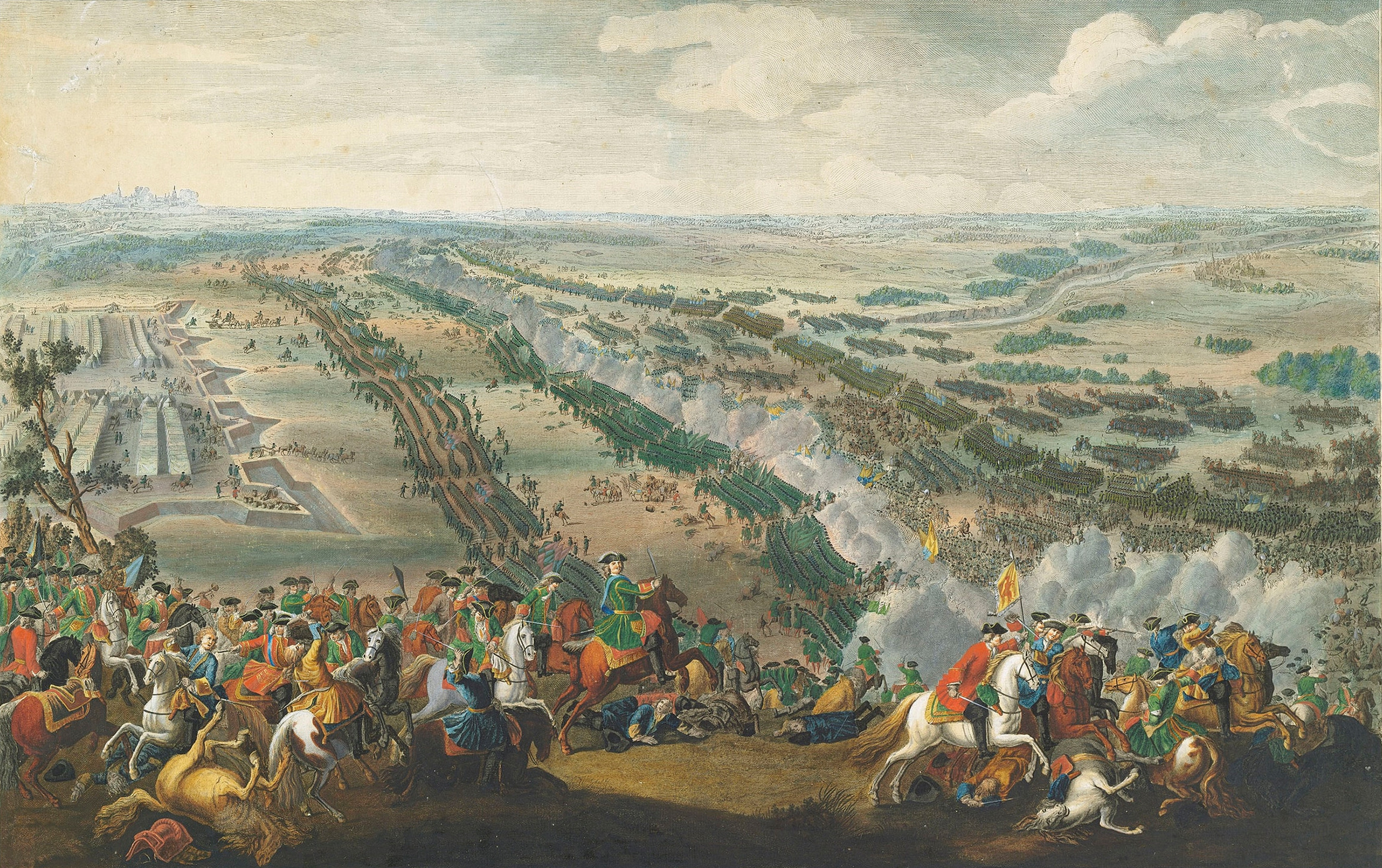
July 8, 1709 – Swedish Victory at Poltava

On a warm and humid night, Swedish troops under the command of Charles XII attacked and prevailed over a larger Russian army commanded by Peter I.

The Great Northern War had raged since 1700, when Denmark, Russia, and Poland attacked Sweden and its allies. Sweden under Charles XII turned back the tide of war, first opposing the Danish and Russian attacks, then in a counterattack defeating August the Strong (Elector of Saxony, King of Poland, and Grand Duke of Lithuania), driving him out of his throne and turning the lands into allies. With the Danes removed from the war by skillful maneuvers of the Swedish navy and army and August destroyed, Charles turned toward Russia.

Peter I, rarely known as Peter the Great, had spent the years Sweden fought into modernizing his army and making conquests in the eastern Baltic. His greatest stab at Sweden was founding Saint Petersburg in 1703 to solidify a port on what was once Swedish soil.

Charles marched into Russia and the Ukraine (a longtime conquest of Russia) in 1708, having waited for the winter to freeze the Vistula River. He sent General Lewenhaupt out to gather supplies, which he did speedily that spring, rejoining Charles in the Ukraine with news of the improved Russian troops, which he had narrowly evaded by the Sozh River. Skirmishes and small battles had quieted any arrogance Lewenhaupt might have about Russian infantry.

In 1709, having wintered with only minor losses thanks to the supplies secured by Lewenhaupt, Charles went to secure his supply lines in preparation for a campaign on Moscow. His first target was Poltava, which Peter had defended with improved bulwarks and 60,000 troops. Kalmyk allies to Russia were on their way to join Peter, so Charles acted quickly.

Swedish cannon pounded the defenses, and, at 3:45 AM, Lewenhaupt led a stout Swedish attack of infantry. Because of the effective use of artillery, the Russian defenses folded. At 8:30 AM, Peter himself led a desperate counterattack from the north aided by his cannons. While the Russians routed Swedes initially, they pursued outside of the range of fire, and were routed. Peter was killed at the head of his troops, reportedly not dying from musket wounds until being torn limb-from-limb by cannon-fire.

With the Tsar dead, the Russian troops retreated. Charles secured Poltava, rebuilt the defenses, and routed the incoming Kalmyk cavalry in such a defeat that they abandoned their Russian allies. Left with Peter's wife Catherine in command, Russia mounted a brave defense (though not daring enough for scorched earth). No armies could stand up against Charles' quick attacks. With newly liberated Ukraine giving supplies from the breadbasket of Europe, Charles arrived in Moscow in October, wintering there while working with Catherine over the details of her surrender. Rather than conquering Russia, Charles would make it an ally, a buffer against western Mongol bands. The Great Northern War had ended with Sweden victorious, effectively knocking Russia out of significance in Europe. Russia would remain an Asian power until its disastrous defeat by Japan in 1905.

In Europe, Swedish power continued to grow. Charles was ceded Saint Petersburg (he kept the name) and maintained Baltic dominance. In the following century, Sweden would begin many important colonies all over the world in Africa, the East Indies, and the West Indies to build its naval power. While it would lose ground in the Seven Year's War, Sweden would injure its new enemy Britain by aiding its rebellious colonies in the 1770s and gain great conquests as Napoleon's ally until his betrayal in his disastrous attempt to conquer Stockholm in 1812. Then fighting opposed to Napoleon, Sweden was given Norway in 1814 at the Congress of Vienna.

The nineteenth century would prove generous to Sweden, though World War I would devastate its navy as German U-boats tore through Swedish battleships. The loss of manpower in the Danish trenches and collapse of the world economy would tear the Swedish Empire apart, making way for the fascists to gain control in 1933. World War II would prove even more disastrous as the Allied Powers turned their attention to Sweden after the fall of Hitler. The Swedish Empire would be broken into pieces with liberated Norway, occupied Sweden, and Finland finally held once again by their old nemeses, the Russians. Gradually Sweden would fall to Communism in the late 1950s and try to reconquer its neighbor Norway, sparking the long and unresolved Scandinavian Conflict with its Demilitarized Zone stretching over 1000 miles. Car bombs and paramilitary attacks are common on the war-torn peninsula.


In reality, Lewenhaupt did not leave until late June on his mission to gather supplies. When his army did march, he was dogged by modernized Russian troops, losing the Battle of Lesnaya. He abandoned cannon and supplies, which caused a mutiny of his soldiers, who proceeded to drink. He left more than one thousand drunken troops in the woods, and only half of his 12,000-strong army managed to regroup with Charles.

The defeat at Poltava would spell doom for the Swedish Empire and make way for Russia as the next great power in eastern Europe.

Site Meter