Sunday, October 24, 2010

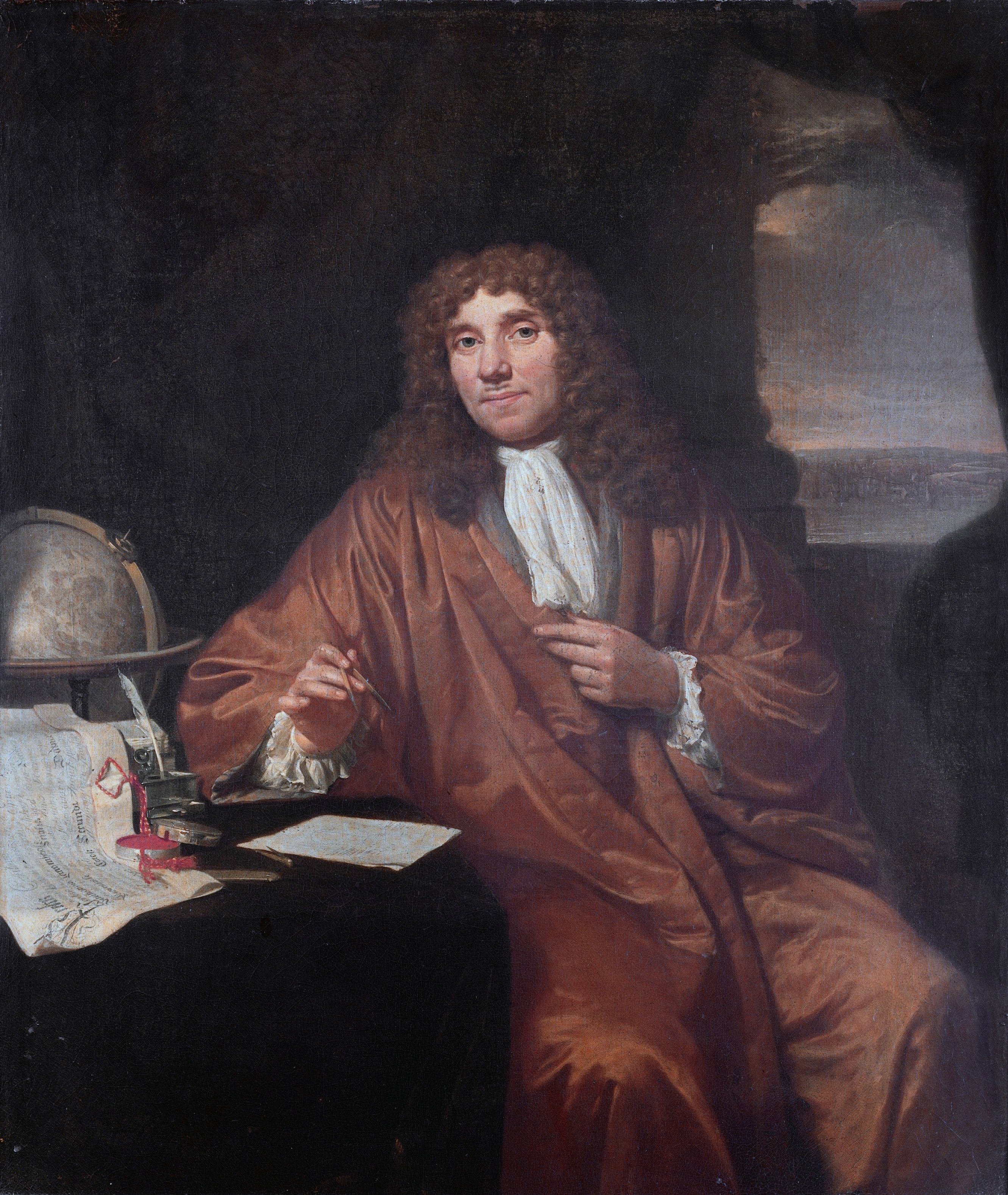
October 24, 1638 – Leeuwenhoek Blinded

When Antonie van Leeuwenhoek was born in Delft in the Netherlands, the baby seemed well enough: he cried, he reacted to his mother, he ate and grew. As little Antonie grew, his family came upon troubled times. Two of his sisters and his father died, and Antonie suffered a terrible fever that would blind him by his sixth birthday. The boy recovered, but he now faced a terrible handicap.

In 1640, Leeuwenhoek's mother remarried, and he was sent to a monastery in Germany that cared for the blind. While unable to read, Leeuwenhoek would be taught songs and oral passages from the Bible by the monks. He was considered the brightest of the children in the care of the monks, and they came to give him special privileges. Sometime when Leeuwenhoek was about sixteen, he was with a scribe who told him about the illuminations in the book he read to Leeuwenhoek and offered him to touch the gilt and thick medieval paints. Leeuwenhoek's later letters described the sensation of feeling images as almost as if he could see again with his mind's eye.

When he became sixteen, the monks encouraged Leeuwenhoek to pursue a trade beyond simple manual labor. He considered several options before becoming a draper, being able to measure by a grooved ruler he carved himself, having the monks check its accuracies for him. When his skills were approved, he moved home to Delft and secured an apprenticeship with a cloth merchant. While he worked, he considered his system of grooves and the illuminations, and, by 1653, he developed a method of “writing by texture.”

Leeuwenhoek worked in business until he had built enough capital to set himself up as a teacher. He did not know Latin, and he had never attended university, but his drive to develop a written alphabet for the blind pushed him. Over the course of months and perfected over years, he built a set of mirrored letters. His method of writing was to etch each backward to be used as a mold. He experimented with systems of carving wood and pouring wax, but the wax was prone to melt under the warmth and pressure of fingers. Lead proved too soft, and tin plates warped. Finally he settled upon glass, and the glass books he produced became the first written code for the blind.

Leeuwenhoek's school attracted the attention of parents of blind children among the growing middle class of the early Enlightenment, and he soon found himself with no shortage of students. His methods spread across Europe and were translated to match the alphabets of French, English, and German. Only two of his original glass books are known to survive due to breakage and the glass being worn down by generations of fingertips. In place of glass, Leeuwenhoek experimented later with typesetting machines into plates of alloys, adding mechanical engineering and metallurgy to his life's impressive list of feats.

His contributions to science are held among the greatest of the Enlightened Age. Along with the creation of calculus, natural law, and principles of physics. It would not be until the Industrial Revolution that discoveries in biology and anatomy would catch up with the science of microbiology founded in part by Charles Darwin, whose theory of the sexual reproduction of microorganisms would cause scandal among the Victorian world, though later contribute to Sir Alexander Fleming's germ theory.


In reality, Leeuwenhoek was healthy. He became the apprentice of a cloth merchant and eventually set himself up as a draper, where he saw a magnifying glass with a 3x power. Inspired, Leeuwenhoek would develop more and more powerful microscopes over his lifetime, building over 250 of them and grinding 500 lenses. Considered an amateur by the scientific elite, his discoveries with microscopes capable of 275-500x magnification included: bacteria (called “animacules”), protists, spermatozoa, and great expansions on the work of Robert Hooke.

Saturday, October 23, 2010

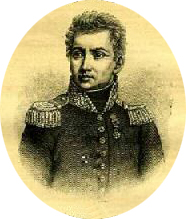
October 23, 1812 – Malet's Coup Accidentally Succeeds

Claude Francois de Malet loved his country and felt that so much more could come from a France not chained under autocratic rule. When he had come of age at seventeen, he had enlisted as a Musketeer, as was common for minor nobles like himself to do under the reign of the Bourbons. Louis XVI disbanded the guard in 1776, and Malet realized the abuse of power one man could hold.

When the French Revolution began, he found common interest among the republicans. His family disinherited him, but Malet was content to fight for his own way and the way of his countrymen. He volunteered for the revolutionaries' army and became captain in the Army of the Rhine. Malet reenlisted after his first tour lapsed, and he fought valiantly until 1802 with many honors, being promoted to brigadier general in 1799.

Malet returned to France and found that the Revolution for which he had fought much of his life had given way to a new heavy-handed system. As the Consulate came to power, Malet voted against Napoleon as the First Consul. While a member of the Legion of Honor and thus a powerful enemy, Napoleon worked to push Malet's vehement voice away from public ears. Napoleon crowned himself emperor, and Malet resigned from service. Despite their differences, both Napoleon and Malet worked toward the greatness of France, and Malet accepted governorships in the Kingdom of Italy. He served in Italy for several years before being sent to prison for ten months in 1807 on charges not even considered in court as he was released without trial in 1808.

Returning to Paris after yet another stint of national service abroad and now seething from lost months of his life, Malet found himself arrested on suspicion of being a member of the Philadelphes, a society of Masons who had dedicated themselves to republicanism and, especially, opposition to Napoleon. From 1810, he sat under house arrest and began to plot. He built a network of allies and careful forgeries that would overthrow the dictator upon the false news of his death. Even if Napoleon were to return, Malet felt that the people of France would consider not taking back the emperor. When Napoleon marched on Moscow, Malet knew his chance had come.

October 23, 1812, Malet escaped and released his fellow conspirators from their prisons with forged documents, the presence of his general's uniform, and his sense of command. He marched to the barracks of the Gendarmerie, woke up the troops, and displayed further forgeries of orders to establish a republican Paris. The provisional government was established, and Malet's plan went smoothly.

Word of the coup filtered to Napoleon, who was sitting atop the ashes of Moscow. He passed command of the remnants of the Grande Armée to Marshall Joachim Murat and returned to Paris by fast-moving sleigh. Near Krasnoy, Russian snipers spotted the sleigh, thought it a messenger, and shot the passengers dead. After the disappearance of the emperor, emergency patrols would be launched, and his blood-soaked sleigh would be found November 14. When the news spread of the emperor's actual death, the Russians launched a renewed campaign against the devastated French troops.

In Paris, the news of Napoleon's death would be met with confusion. Malet worked to weave his lies and the truth into powerful propaganda that the French determined one was a false report, but no one knew which. In either case, they already had their provisional government established, and there was no need for a Napoleon II.

With the return to the republic, Malet worked to rally the army and peacefully disassemble Napoleon's web of satellite states, puppet kings, and forced alliances. While many in Europe called for a Sixth Coalition to defeat France wholly, the Continent was weary of war. Malet swore to fight defensively for French soil, but the diplomats were eager to take back their conquered lands without further bloodshed. A new balance of power was struck at the Treaty of Leipzig in October of 1813. Britain assumed dominance of the seas, Austria regained its holdings in Germany and Italy, and Russia grew in influence over Poland and Finland. France, meanwhile, would rebuild.

Malet was said to have “retired” France, and several groups rose up in dissension about his parceling up of the empire. Still, he argued if he had fought, the Coalition would have torn France apart, and his righteous anger proved that the age of old empires had come to an end. The colonies of Spain and Portugal would gain independence, and Germany under the Bavarians then Italy would unify themselves into European powers. Malet would die in 1826, not seeing the latter two actions, but living long enough to see the establishment of a new generation of free Frenchmen. Their republican ideals would spark waves of revolution across Europe in the 1830s and again in the 1850s, gradually dissolving the power of autocracy.

In its place, a sense of nationalism would grow up, sparking competition and, in the 1870s, the Great War. As the Prussians balked under Bavarian rule to began a civil war, all of the nations of Europe drew sides to divide the Continent and cost over a million lives. New systems would rise from its shadow, such as anarchism, communism, and progressive republicanism.


In reality, Napoleon did return to Paris. He quickly resumed power as the people loved him, but he was annoyed that no one had called for the continuation of his dynasty. Malet and his conspirators were gathered before trial on October 29 and executed by firing squad.

Friday, October 22, 2010

October 22, 1633 – Hans Putmans Rethinks His Strategy

China faced a great time of turmoil in the twilight of the Ming dynasty. Europeans from the West encroached on imperial power while war with Manchuria emptied the coffers and piracy limited trade that would produce tax-income. If Emperor Chongzhen were going to win the war in the north, he needed to secure the seas to the south.

In 1628, the pirate Zheng Zhilong, leader and founder of the Shibazhi, a powerful organization of eighteen pirates, defeated the Ming fleet. Zheng had undergone an impressive life: he studied business in Macau at 18, was baptized into Catholicism, translated among the Dutch, worked under famed pirate Li Dan (“Captain China”), inherited the pirate's empire, and grew it to an even more impressive stance. Upon his display of mastery of the seas, rather than fight continual losing wars against him, the Emperor took Zheng on as a major general. In 1633, Chongzhen promoted him to Admiral of the Coastal Seas and charged him with establishing seas free from piracy.

This event would be a boon for Chinese business, but the monopoly would challenge the lucrative Dutch control of trade with Japan. Hans Putmans, governor of Formosa (Taiwan), decided to end the Emperor's action before it could be started and launched a sneak attack on Zheng's fleet in harbor. On July 7, 1633, he destroyed much of the fleet.

Zheng reacted with a cunning plan to rebuild his fleet: use locals. He set up recruitment with two pieces of silver for each man volunteering for service, five if the battles with the pirates and Dutch went long. Though not expert sailors, they were organized into 16-man fire-boats that were easily maneuverable and sailed. For each Dutch ship destroyed, the boat would be given a bounty of 200 silver pieces. Each Dutch head brought in would be traded for 50 silver pieces.

With more than one hundred fire-boats on the prowl, Putmans and his pirate allies faced gradual attrition over the summer and into fall. By October 22, Putmans' fleet of twenty warships had been dwindled to nine. When he and his fleet spotted the Chinese warships approaching, Putmans made the split decision to retreat to the safety and regroup. While he might have won the battle, the war was against his favor.

Instead, Putmans decided to fight fire with fire: this was to be an economic war. He took on volunteers at three silver pieces each and promised bounties half-again as much for destroyed Chinese ships and heads of Chinese crew. Through the rest of fall, the south sea turned into a bloodbath, attracting pirates from as far away as Arabia. The Dutch East India Company questioned Putmans' wild expenses, but the governor assured stockholders that the small debt would be a valuable investment. By the time shipping slowed for winter, the war had become a stalemate.

Putmans and Zheng both rebuilt their fleets and launched into one another early in 1634. While the Chinese had English-made cannon, the Dutch ships had been able to produce more firepower from their Formosan smiths. On April 2, 1634, the fleets met in a decisive battle that ended with the capture of Zheng. Rather than execute the enemy, Putmans offered to hire Zheng away. Zheng said that he would only join the Dutch if given an exorbitant ten million pieces of silver, but Putmans surprised him by agreeing. The Company balked, but Putmans silenced them with promise to pay out of his own earnings in addition to yearly installments.

Zheng came to dominate trade while Putmans worked to develop Formosa, building plantations and settlements. He set up a “blood tax”, forcing natives to give up children as slaves, which produced profitable cheap labor for the Company. In 1644, the Ming Dynasty fell to the uprising of Li Zicheng, and Putmans made his move. Using Zheng's connections, the two masterminded a Dutch invasion of the south of China, establishing a huge new sphere of influence. Zheng was made the governor of the land, becoming almost a king as he worked to improve profits for the Company.

The Dutch came to control the Far East, while the French and, especially, English attempted to challenge their power, but fast alliances with Zheng and his legacy of pirates made the Dutch all but invincible there. Over the next century, great wealth poured into the Netherlands from the East, which they in turn invested back into imperial growth. Despite attempts to keep the locals under thumb, Japan would eventually come to their own industrial revolution and challenge Dutch authority in the Dutch-Japanese War through the 1930s. The carefully cultivated resources came under Japanese control, though fleetingly as their choice of allying with Hitler's Axis would end in surrender under atomic barrage.


In reality, Putmans' fleet met with that of Zheng Zhilong and was destroyed. Zheng ordered his crews to focus on the more threatening Dutch ships and, once those were defeated, to mop up the rest of the pirate menace. Three Dutch ships were lost, forcing Putmans to retreat and surrender the strait to Chinese control. He continued his governorship of Formosa, developing the island at the cost of native lives. Zheng, meanwhile, gained enormous wealth from his victory and would gain further wealth by switching allegiances to the Manchu in 1646. He would later be executed by the Qing.

Thursday, October 21, 2010

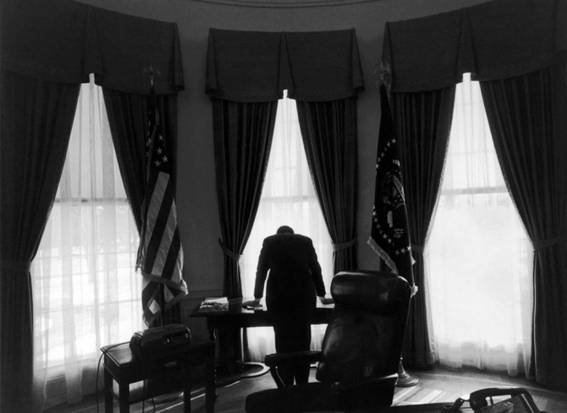
October 21, 1962 – Kennedy Approves Nuclear Action

At 10:00 AM, President John F. Kennedy met with Secretary of State Dean Rusk and Secretary of Defense Robert McNamara and approved the plan to threaten preemptive nuclear strike. Tensions between the United States and the Soviet Union had never been tauter. Since World War II, the two superpowers had checked one another and maintained aggressive military build-up, though the Americans found themselves greatly outpaced by the Russians as the '50s progressed. Russians first caught up by developing their own atomic weapons after the war. In '48 and '49, America and its allies had cowed the Russian attempt at fencing West Berlin with the Berlin Airlift, keeping them from leading world affairs. Korea had turned into a draw, though Communism continued to spread in places such as French Indochina. By '56, however, the USSR had come to the forefront with their launch of Sputnik.

The Russian lead in the Cold War struck closer to home when, in 1959, Castro and his Communist regime overthrew Batista in Cuba, just miles from the Florida coastline. While Cuba and the Soviet Union were establishing relations, the US moved forward with plans to establish missile bases in Turkey, which became operational in April of 1962. Just months later, the Soviet Union would begin its own missile bases in Cuba. In September of 1962, American U-2 high-altitude spy planes discerned these bases, and reports were presented to the president. On October 21, he made his decision for action.

Kennedy had considered the use of a naval quarantine, but a blockade was considered an act of war under international law. While the Russians might not dare consider it so great, they might also consider the action too little to be a threat to their activities. The Russians might even step up to the challenge with their own “Cuban Airlift” as a thumbed-nose toward the Americans. International embarrassment was the lesser of evils if missiles were to be launched from Cuba, but the Cold War had long been a game of nerves.

Monday, October 22, Kennedy gave a televised address about the discovery of the weapons. He concluded by telling the Soviet Union that America would strike if these bases were not disassembled immediately. Truman had authorized nuclear attacks on Japan as well as several key supply lines in Korea, and Kennedy would authorize attack on every known Soviet missile base, Cuban, Russian, or any other member of their bloc. He likened the situation to discovering a man with a gun, and he insisted Premier Khrushchev “put the gun down.” If not, he would “shoot the gun-hand.”

Internationally, the threat was taken in a variety of reactions. Many questioned validity of the spy photos, others applauded America for taking action, and far more feared what might come. Khrushchev wrote a letter of reply, saying, “I must say frankly that the measures indicated in your statement constitute a serious threat to peace and to the security of nations...We reaffirm that the armaments which are in Cuba, regardless of the classification to which they may belong, are intended solely for defensive purposes in order to secure [the] Republic of Cuba against the attack of an aggressor. I hope that the United States Government will display wisdom and renounce the actions pursued by you, which may lead to catastrophic consequences for world peace.”

Kennedy replied that no nuke was merely defensive; Khrushchev scoffed and waited for America to blink. The two stood at an impasse for nearly a week until October 27, when Castro's forces shot down a U-2 spy plane. Kennedy noted the evidence of fully operational missile bases that, if merely defensive, would not need to shoot down spy planes. Khrushchev said the same about the American missiles in Turkey. While there may have been a diplomatic action to dismantle both, an accidental flight of a U-2 plane over Soviet airspace caused a dogfight between Soviet MIG fighters and American F-102s, whom Kennedy granted permission to fire.

The war began as the fighters fired nuclear-tipped missiles over the Bering Sea. Limited missile exchanges followed, destroying bases in the Soviet Union, Cuba, Europe, and the United States. Submarines were blown up by charges in both navies. After the horrific volley, utter devastation gave way to cries from the UN to stop the madness. World War 3 would last two days and cost thousands of lives, ultimately millions as the world began to deal with radioactive fallout.

The display of aggression also caused a worldwide movement for the banning of nuclear weapons. Through the course of the Sixties and early Seventies, the governments of the world would give up their atomic arms and return to heavy traditional weaponry for defense (China being the last, finally persuaded by Nixon's system of economic benefits). For countries developing new weapons, sanctions would slow them or military action would put a stop to the programs.

After a short era of good feelings, however, the Cold War would creep up again with the USSR moving into Afghanistan in 1979. The war would prove costly and ultimately contribute to the fall of the Soviet Union. As the only remaining superpower, the United States would undergo the extremely expensive position of policing the world and being aware of potential developers of nuclear programs. Under the administration of George W. Bush, America would occupy both Iraq and Iran under suspicion of weapons of mass destruction. Many fear that these costly wars may do to the US what Afghanistan did to the Soviets.


In reality, Kennedy ordered the blockade. Several ships would test it, including a Soviet submarine that was shaken by US Navy depth charges, but eventually Khrushchev and Kennedy would agree to dismantle bases in Cuba in exchange for the closing of bases in Turkey and Italy.

Wednesday, October 20, 2010

October 20, 1740 – Austrian Throne Left Empty

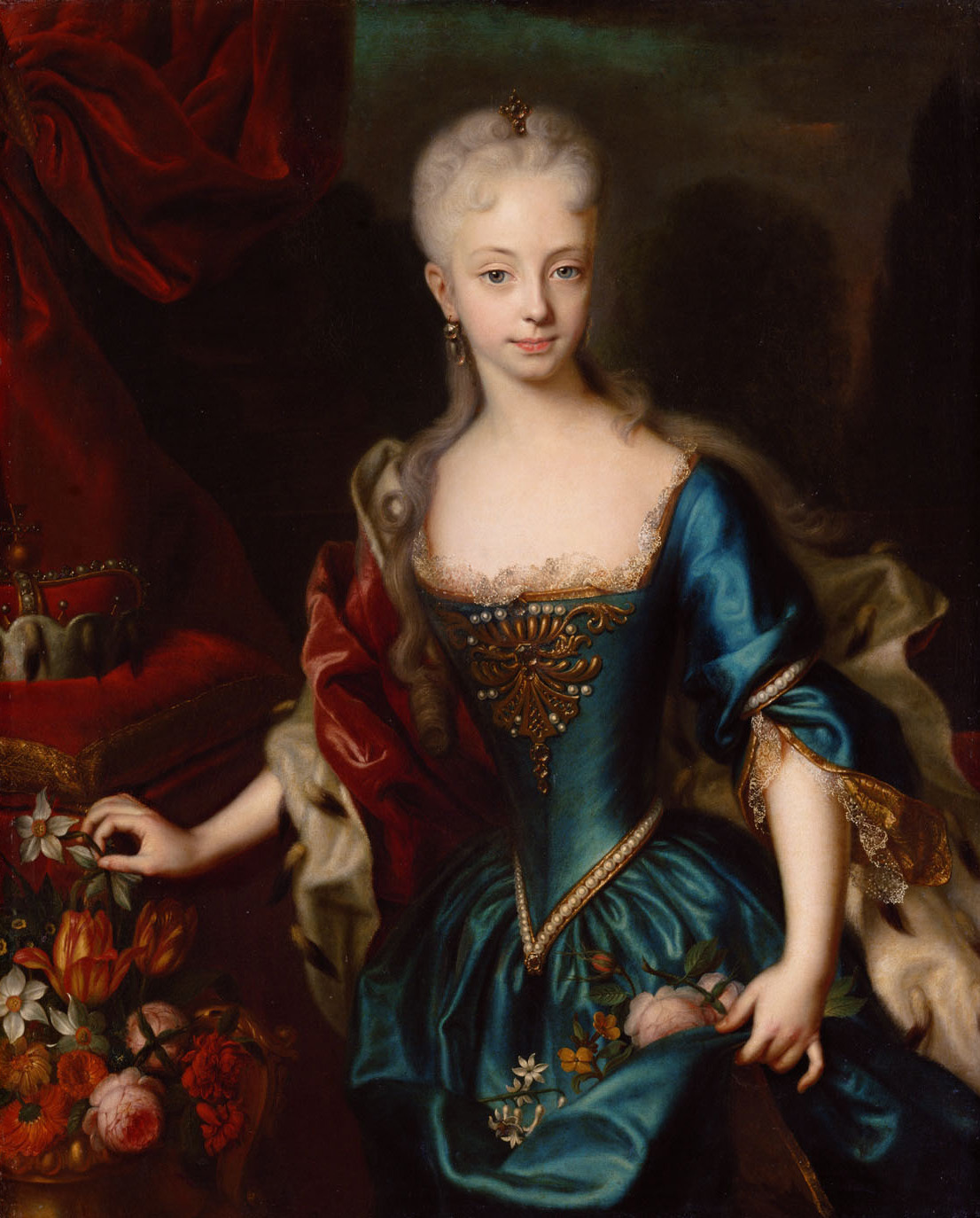
For dinner, Charles VI, Holy Roman Emperor, King of Hungary, Croatia, and Bohemia, Archduke of Austria, and ruler of too many duchies to list, decided he would like some mushrooms. Delighted, he shared them with his daughter and heir, Maria Theresa, whom he had kept near him for fear of his death since 1738. He had worked throughout his reign to secure the Pragmatic Sanction of 1713, which would allow a daughter to secure the throne of Austria. Female rulers, while sometimes seen in Europe such as England's Elizabeth and Poland's Jadwiga, were simply unheard of in the traditions of the ruling empires of the Continent. All of Charles' work would be undone in a quick lapse of thought as the mushrooms would prove poisonous.

Charles died, and Maria Theresa followed him soon after. It was believed that Maria Theresa was pregnant, but autopsy upon a royal was forbidden, and there was no reasonable way to be sure beyond the whispers of her nurses. Maria Theresa's husband, Francis Stephen, stood to directly inherit the titles, but he was distrusted by many of his people, and his claims were hardly locked in iron-clad law. Instead, a surge of Austrian nobles, as well as the Hapsburgs in Spain, looked to take up the throne. Civil war would break out in the empire and then all through Europe in what became known as the War of the Austrian Succession.

Austria proved itself unable to secure a ruler. Its coffers had been emptied by the expenses of the War of the Polish Succession and the Russo-Turkish War. Charles had ignored suggestions to focus on restoring the imperial treasury as well as expanding the military, which had dwindled to 80,000 soldiers who had not been paid in months. Instead, Charles focused on the security of his Pragmatic Sanction, but now there was no ruler at all. Austria unable to defend itself, Frederick the Great of Prussia would begin the international move carving up the empire with his invasion of Silesia on December 16. The Hungarian Diet would declare its independence early in 1741 and drop out of the war.

The rest of Europe would hurry to grab what it could. France and Spain turned on each other and fought bitterly over duchies in northern Italy. Frederick, meanwhile, began a campaign to unite the German states not as Holy Roman Emperor, but as Emperor of Germany, a Kaiser as he called it. Saxony would initially fight, then yield, as would most of the others. England joined Spain against France in a bid for domination in the colonies of North America and India. Russia, meanwhile, became embroiled in a two-front war with Sweden while attempting to block the Prussians' move south.

When the war ended and the dust settled on battlefields in 1756, Europe reached a new balance of power. Spain made great gains in Italy, Germany stood united under the Prussian crown, and Russia gained a sphere of influence in the Balkans. The French were removed from North America while the British came to dominate Canada and India. Expenses would be charged upon the colonies, spurring a reprisal from the American colonists that demanded representation to determine their taxes. As one of his last actions before his death, George II promoted new ministers of parliament from the colonies, a rash decision in the minds of many, but what he considered best rather than leaving the matter to his grandson who would “foul it up.”

Austria itself would become a shadow with only its lands west of the Alps under the new Austrian King Leopold. The many subordinate peoples broke free and named their own kings, which each had to be approved by the Great Powers to ensure a return to European stability.


In reality, Maria Theresa survived her father. The Pragmatic Sanction divided Europe as many supported the Austrian succession while Prussia's Fredrick the Great led the dispute against it, seizing Silesia. After years of war and the deaths of thousands, much of the status quo would return to Europe despite extravagant battle plans. Spain took a few duchies in Italy in the Treaty of Aix-la-Chapelle in 1748 while Prussia kept Silesia, but few questions had been answered. These matters would be brought up again in the Seven Years' War less than a decade later.

Tuesday, October 19, 2010

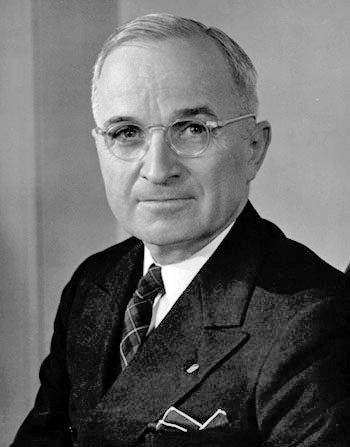
October 19, 1950 – Chinese Invade Korea; Truman Approves The Bomb

Extra UN patrols sent by United States General MacArthur came upon massive Chinese troop movements across the Yalu River, the border between China and Korea, the latter of which had been torn apart by war for years. MacArthur had been haunted by nightmares of the Chinese invading, throwing back the UN peacekeeping force that had battled the Communist North Koreans since June. Because of his nightmares, the general had courteously met with President Truman in Washington on October 15 and advised an end to the war before an estimated 300,000 Chinese troops in Manchuria and 120,000 along the Yalu turned the war against the UN.

While MacArthur’s estimates were the entire troop strength for the region, most of whom would stay for defensive reasons, Truman noted such an escalation to the war. His approval rating had come into question over the Korean War with the Americans wondering if they had blundered into an unending war in miniature to World War I. At MacArthur’s humble request, Truman agreed to consider the using America’s atomic bombs, despite the risk that it may spark outright war with Russia.

Upon returning to Korea, MacArthur redoubled his aerial patrols to spy on Chinese movements. Chinese troops in the “People’s Volunteer Army” had moved secretly, mostly through the night under camouflage, but the overwhelming number of spotters finally picked them moving across the Yalu as lights flickered on water. MacArthur relayed the information to Truman, who ordered the move of nuclear weapons to airfields. At the disastrous defeat of the Battle of Unsan at the beginning of November, it became obvious that the Chinese meant total war. Truman approved MacArthur’s use of the atomic bomb, but only at key locations within northern Korea.

Since Unsan had been a surprise attack, MacArthur repaid in kind with seven atomic bombings of military positions on November 20. The strikes were followed by the Home-by-Christmas offensive on the 24th of November, turning what could have been a disastrous ambush into an overwhelming rout. Further atomic bombings destroyed key passes to China, irradiating the landscape and making troop movements possible only with protective gear. The trapped Chinese armies began to surrender while others made desperate attempts to escape through radiation-infested lands.

Appealing to Stalin, Mao began the campaign opposing the United States’ use of nuclear weapons. The USSR was the only other country to have an atomic bomb and the only that could challenge the might of the US. The Cold War had been obvious even before the end of Hitler’s regime, and now it had come to actual conflict. Stalin declared war December 12, and strikes in Europe against American allies began immediately.

Truman caught the blame for starting the Red War (also known as World War 3), and he would spend the rest of his term defending his decision. If he had not acted, he noted that the two nations would continually stockpile ever-more-powerful weapons until one destroyed the other or itself. Atomic weapons would play a key role, but the vast majority of the fighting would be traditional bombings, armor offenses, and infantry marches. For the third time in four decades, Europe would be torn apart by warfare. The Korean theater would serve as a radiation-protected launching ground against eastern Siberia and China, where the US Navy would also see support from new bases in Japan. In recently invaded Tibet, Chinese troops newly arrived in October of 1950, were driven out by NATO-supported Tibetan troops.

Facing a new war, perhaps even worse than that against Hitler, the West turned to the leaders that had gotten them through the last. Churchill was reelected Prime Minister in 1951, and the Americans elected General Eisenhower as President almost unanimously. Russia held to Stalin until his death in 1954, while the Chinese supported Mao until his Great Wall program to turn all of China into defense began logistical collapse. Credited with lasting leadership and bringing the front to the enemy first, the Capitalists of the world won the war with the liberation of Moscow in 1955 and then the overthrow of Mao in 1957.

With the restructuring of the world along the grounds of the Pax Americana, economic and technological improvement flourished over the course of the latter part of the twentieth century. In 2010, the radiation levels of the first of the cobalt-based nuclear weapons used in Korea have depleted to livable standards. The world looks forward to new areas of Germany, the Ukraine, Manchuria, and Siberia becoming survivable once again for renewed development after the world’s bloodiest war.


In reality, MacArthur had been discourteous to Truman, forcing the president to meet him at Wake Island on the 15th. Throughout the war, MacArthur would be eager to use up to thirty-four atomic bombs on China, but Truman would allow no more than the threat. In the week-long Battle of the Ch’ongch’on River, Communist forces would regain all North Korean territory above the 38th Parallel. MacArthur was relieved of command April 11, 1951, for his aggressiveness toward pushing for total war against the Communists. Ceasefire would be declared on July 27, 1953, but the war continues to this day.

Monday, October 18, 2010

October 18, 1912 – Serbia Refuses to Yield in Albania

With the growth of nationalism in the course of the nineteenth century, ancient empires began to split along the seams of peoples that had been stitched together by rule of force for centuries. The Holy Roman Empire had disintegrated, much of it becoming reborn as the German Empire. Italy reunited after some 1500 years since the Romans. Later, in the Balkans, the various peoples of the mountainous peninsula began to erupt against centuries-long Ottoman domination.

Nations like Romania and Serbia had successfully broken away from the Ottomans, while the neighboring empire of the Austrian-Hungarians had pushed administration upon Bosnia-Herzegovina to bring it to a more European rule. Bulgaria stood ready to unite the Bulgars under their Tsar Ferdinand, having set up a state of their own in 1878.

The “Great Powers” of Europe, the dominant empires in the world, scanned the political situation and waiting for opportunities to conduct influence toward their goals. Russia stood ready to expand into a pan-Slavic rule, uniting the Balkans under their sphere and gaining significant ports. Austria-Hungary wanted to keep the balance with the Ottomans, using them as a pendulum to guide Serbian nationalism away from imperial lands. Germany and France both wanted influence in the eastern Mediterranean, the former with the Ottomans as a puppet state and the latter with political control in the Levant.

Modernist thought struck the Ottoman Empire at home with the Young Turk movement pushing a new constitution in 1908. Struggles between Bulgarian/Greek freedom fighters and the Ottoman army in Macedonia had continued since 1904, but now was the time for action. Bulgaria named its tsar, Austria-Hungary officially annexed Bosnia-Herzegovina, and Italy began the path for victory in the Italo-Turkish War in 1911, gaining much of the Ottoman Mediterranean territories.

In 1912, war would spread like plague through Eastern Europe. With the Turks falling to Italian forces, Bulgaria, Serbia, Greece, and Montenegro rose up as the Balkan League. Austria-Hungary was uncomfortable at seeing their counterpart begin to fall and hoped to reign in the battles by declaring an ultimatum against Serbian troops that had pushed south into Albania. The Serbs reportedly “spat” at the ultimatum and continued their liberation and division of Balkan territory among the League.

German Kaiser Wilhelm II had vowed support to Archduke Franz Ferdinand, and, with such imperial clout, the Austrians joined the Balkan War against the League. In response, the Russians excitedly went to war in support of the League they had helped establish. France and Britain both took up neutral positions despite France's longtime alliance with Russia and Britain's not-so-secret unease at any Russian expansion, which had been seen in the Crimean War only decades before.

In the German Imperial War Council of December 8, it was realized that the fitness of the German army was not what the Kaiser had hoped, and victory would not be quick. The Austrians found themselves simply holding fronts against Russia and the Balkan League. While the first two years of war were grim, Germany and Austria arose in 1914 with a huge military push through Poland. Russians pursued scorched earth, but the speed of the German army checked their age-old tactic. Hundreds of thousands of Russians would die as the Germans marched toward Moscow before the Czar called for armistice.

In the south, Austria found itself stretched and finally broken. The empire collapsed into anarchy that even anti-Serbian sentiment could not resolve. At the Treaty of London in 1917, a new eastern Europe was drawn up. Many new nations stood independent: Albania, Austria, Czechoslovakia, Hungary, Poland, Finland, Estonia, Latvia, Belorussia, and Lithuania. Much weakened, Russia erupted into civil war between Communist and Tsarist factions that lasted until foreign Allied troops settled the matter in the favor of the Tsar in 1919, with the new independent nation of Ukraine being founded. The Ottoman Empire, too, would succumb to the rash of revolution through the 1920s that were said to be akin to those of the 1790s and 1840s. Nationalism broke up the empire, which caused the Great Powers to grab influence in the Middle East where they could.

The twentieth century would see effective reform of the imperial system, guaranteeing more social rights, but the overall rule of monarchs balancing one another continued. Some said that the settling of the Eastern Question saved the kings of Europe, but many historians scoff at the idea of a war so vicious that it would cause the end of constitutional monarchy as Europe's inherent political system.


In reality, Serbia acceded to the October 18 ultimatum. Austria-Hungary did not wish to become part of the war due to its own internal struggles, especially after Germany withdrew their boast of military readiness until “mid-1914.” By that time, all of Europe had built up such war machines that the spark of the assassination of the Austrian Archduke ignited the “War to End All Wars.” In the meantime, the Balkan League had settled much of themselves through the First Balkan War against the Ottoman Empire and then the Second against Bulgaria to settle disputes over land.

Site Meter