Monday, January 30, 2012

February 19, 1777 – Benedict Arnold Promoted

After much political infighting and discussion, the Continental Congress announced promoting five men to the rank of major general. The move was largely bureaucratic, but attempts influence came from every direction with much of the decision being a balance of generals from the various states of the new republic. Thirty-six-year-old Benedict Arnold was nearly passed over for the promotion largely due to his poor relations with other officers, but a final decision to promote him over Scotsman Arthur St. Clair came as both he and Thomas Mifflin were of Pennsylvania, and Thomas Mifflin was necessary as the Quartermaster General. Arnold was not popular, but his connections with Washington gave him some credence, and St. Clair proved more useful as a commander beside Washington.

Arnold’s record would prove impressive. Orphaned by the age of twenty but highly successful in business, Arnold quickly joined the Sons of Liberty in resistance against the Sugar and Stamp Acts. He was away on business in the West Indies at the time of the Boston Massacre, of which he wrote, “good God, are the Americans all asleep and tamely giving up their liberties?” When the Revolutionary War began, Arnold became a member of the Connecticut militia and suggested the capture of Fort Ticonderoga in New York, which was so strategically significant it was known as the “Gibraltar of the North” but had an insufficient British garrison. Gaining the rank of colonel, he joined with Ethan Allen in the successful capture of Ticonderoga. During the failed invasion of Quebec (also believed to have been Arnold’s suggestion), Arnold’s wilderness route gave extra support and earned him the rank of brigadier general at the cost of wounds. He commanded Montreal until forced to retreat by British advancing forces, but ordered the construction of the defensive fleet for Lake Champlain that slowed the British advance to Ticonderoga by months and was noted by James Wilkinson to be the last to leave.

While supervising the defense of Rhode Island and remarrying (his first wife had died while he was conquering Ticonderoga), Arnold received his promotion and was dispatched to command the defense of Ticonderoga while St. Clair was kept at Washington’s side with great praise for his strategy at Princeton. General Phillip Schuyler, then in command of the North, requested 10,000 men for the defense of Ticonderoga, but Washington expected British advance to come from the south following the Fall of New York. Arnold was to command only 2,000 men against the approaching forces of General John Burgoyne. Realizing that he had far too few troops to defend the large fort, Arnold ordered an immediate reconstruction of the fort, breaking up much of it and moving it to the higher, more defensible Sugar Loaf height (later known as Mount Defiance). John Trumball had shown the year before it was too high to be shot by cannon from the fort, and Arnold countered opinions that it was impossible for cannon to be set there as he himself had climbed it while injured.

The new works were established shortly before Burgoyne’s 7,800 troops arrived on June 30, 1777. Many of Arnold’s advisers suggested a withdrawal and regrouping with American troops to the south, but Arnold determined to stand firm and call for reinforcements. Burgoyne took the small fort at Crown Point and the remains of Ticonderoga with ease, but then found himself under fire from the American forces atop Mount Defiance. Burgoyne laid siege and was unable to move south, giving General Gates the time needed to collect thousands of local militia and march northward to raise the siege. Burgoyne counterattacked despite recommendations to retreat, and the resulting victory for Americans would be the turning point of the war. While Gates received much of the credit, Arnold won great new political connections through the commander and went with him to the southern theater following the loss of Charleston, where Arnold would manage the retreat at the Battle of Camden in 1780 to keep it from becoming a disastrous rout. Under Nathanael Greene, Arnold would be instrumental in the victories of the South, where his Tory leanings were appreciated.

When the war came to conclusion in 1783, Arnold continued in politics. He joined with the Federalists and determined to keep Georgia and the Carolinas, where he was very popular, from falling under the sway of Jeffersonian Virginia. Campaigning extensively over the value of unity, he took the place of John Adams as the Federalists’ bid for president, giving Adams his desired position of Chief Justice of the Supreme Court in return. Arnold’s presidential term would be a disaster as he used his position of Commander-in-Chief to extremes during the military build-up in the Quasi-War with France while many hoped for a recall of Washington to arms.

Arnold was soon seen as a potential dictator, and he was expunged from office in 1800, dying of dropsy after complications from gout the next year. Federalism came under great suspicion despite Alexander Hamilton’s attempts to distance his party from Arnold. Under Jefferson, the Twelfth Amendment would see a great restriction of executive power, clarifying many rights to the states.


--

In reality, Benedict Arnold was passed over for promotion. He made enemies with men such as Moses Hazen, the commander of the 2nd Canadian Regiment, nicknamed “Congress’ Own”, and John Brown of Pittsfield, a member of the Massachusetts Committee of Correspondence, who had been in charge of failed diversionary tactics that led to American defeat at the Battle of Quebec. Arnold would ultimately turn traitor to the American cause with his offer to surrender West Point, then later serve the British in commanding a number of raids. After the war, Arnold attempted to set himself up in business in Saint John, Canada, but found himself unpopular anywhere he went.

February 18, 1637 – Dutch Convoy Defeats Spain off Lizard Point

The Dutch War of Independence had dragged on for some seventy years after the lowland provinces began their attempt to break away from Spain. There were numerous reasons for the rebellion, including cultural and religious differences exacerbated by the birth of Protestantism, political ideals, and, perhaps most importantly, the growth of the Dutch economy. While Spain had made tremendous wealth by conquering the lands of the Aztecs, Inca, and others, Dutch merchants prospered greatly from the increasing maritime trade. This income fueled Dutch desires for independence as well as giving it the ability to hire, train, and outfit some of the greatest soldiers Europe had seen.

In 1637, the Dutch economy was soaring. Spanish embargoes had limited Dutch trade for some time, but victories at sea lifting river blockades in 1629 came alongside the timely end of the Polish-Swedish War, which opened the Baltic to safe trading once again. When the Franco-Spanish War erupted in 1635, Spanish Flanders lost its southern trade and instead had to pay hefty tariffs for a route through the north. Along the same time, demand for supplies for the Thirty Years’ War in Germany gave an enormous market, easily fed by the victories of the Dutch East India Company and the Dutch West India Company, which gave the Dutch extensive colonies, including vast sugar plantations in newly conquered regions of Brazil. This massive influx of money led to speculation, including the projects of draining land in Holland and famous spikes in luxury goods such as tulips.

The economy of the small nation depended upon trade at sea, which was readily targeted by the Spanish navy. Miguel de Horna, new commander of the Dunkirk squadron as his predecessor was captured and died of illness, was fresh from the capture of a merchant ship when his fleet came upon a convoy of 28 Dutch and 16 English merchant ships escorted by six Dutch men-of-war off Lizard Point, Great Britain’s most southerly tip. Horna’s fleet of six galleons and two frigates descended upon the Dutch, whose warships lined up to fight closely while artillery from the armed merchantmen gave support. Three of Horna’s ships, including his own flagship, assaulted the Dutch flagship, which was crippled early in the battle. Whether through accident or desperation not to be captured, the Dutch flagship was set aflame. Explosions riddled the Spanish ships when the fire reached the magazine, injuring Horna and turning the tide of battle. The remaining Dutch were able to disengage and make safely for port while the Spanish were forced to limp home for repairs.

The Battle off Lizard Point was said to wreck Horna’s nerves. He continued to harass Dutch shipping, though rarely again fighting closely enough to capture prize ships. Two years exactly after his fateful defeat off Lizard Point in 1639, Horna was due to leave Dunkirk and join Admiral Antonio de Oquendo's fleet, but he was pinned by the Dutch blockade under Admiral Maarten Tromp. Horna sailed close to the shore, using batteries from shore as cover. Tromp pursued and came into the shallow waters where the vice-flagship had lost its steerage and run aground. Though he was able to capture the ship, it limited the Dutch maneuvers, and the rest of the Spanish fleet escaped with fair damage.

That October, the fleet under Oquendo was set to escort a series of neutral English transports bringing fresh troops to relieve Dunkirk. Tromp arrived with over one hundred ships to block them, and the Battle of the Downs began. Tromp dispatched several squadrons on tasks of preventing escapes to the north or south and interference by the English populace (gathered to watch the battle) and attacked directly with his three remaining squadrons, using principally fire ships against the large, ungainly Spanish warships. Horna and his seven ships were placed as the vanguard due to their familiarity with the Channel, and Oquendo had already experienced a battle with Tromp that September. Horna’s slow hand recommended defensive tactics, and Oquendo had learned a lesson from his humiliation from bravado at the battle on September 16. The battle raged tightly with the Spanish troops meant for Dunkirk used to keep away the grapples of fire ships until a fog fell. Unable to use their artillery, the Dutch were drawn in close, and the Spanish swarmed them. With Tromp imprisoned, the Dutch fleet was in disarray, and the Spanish managed to escape the blockade.

While the war was largely over with Spain increasingly caught up in battles inside Germany and an uprising in Portugal, the Dutch were unable to confirm themselves as masters of the sea. The Republic affirmed its independence in 1648 with the Peace of Munster, and the economy gradually switched to peacetime. However, without maritime laurels to rest on, the Dutch found themselves needing to maintain their navy as protection from privateers. Although losing out in North America to the English, the Dutch would become the principle force in the Pacific, maintaining Formosa despite Chinese attack and expanding their East Indies colonies to include New Holland and New Zeeland.


--

In reality, Horna would be one of Spain’s most effective commanders. After seizing seventeen ships off Lizard Point, he would ravage Dutch shipping in the English Channel. Although his initial attempt to break the Dutch blockade in the Action of 18 February 1639 would fail, he injured the Dutch forces enough to force a retreat. Horna fought valiantly against tremendous odds at the Battle of the Downs and led his squadron to escape a blockade once again, though the rest of the Spanish fleet would be wiped out, establishing Dutch dominion over the sea for some sixty years but never again afterward. Horna was knighted further battles with the Dutch and French, but died in 1641 while on another convoy raid.

Tuesday, January 24, 2012

February 17, 1801 – Burr Confirmed Third President of the United States

In a shocking turn, Aaron Burr was elected as the third President of the United States instead of Democratic-Republican Party leader and former vice-president Thomas Jefferson. The election was expected to be a monumental one as the Federalists, who had reigned in American politics since the days of Washington, had become exhausted in public opinion during the term of second president John Adams. When Washington had resigned rather than seeking a third term in 1796, the two parties had fought a bitter campaign with Adams narrowly winning. They favored centralization of power and improved terms with Britain, but taxation in the Quasi-War with France as well as the unpopularity of the Alien and Sedition Acts drove voter-support toward the Republicans. Further, the Federalists became divided between Adams’ legal mindedness and the belief of Alexander Hamilton’s “High Federalists” that a heavy hand was needed for a strong America.

Jefferson and his second-in-command, James Madison, knew a victory could be had, but they needed to win support in the Federalist North, especially the powerful state of New York where Hamilton dominated. There, they asked for political aid from Aaron Burr. Burr had an illustrious career: a grandson of famous evangelist Jonathan Edwards, service to the Continental Army during the Quebec Campaign and winter at Valley Forge with later command as Lieutenant Colonel (where he systemized his famed “shaming” punishment), and political experience as a member of the New York State Assembly, New York State Attorney General, and United States Senator. When Jefferson asked him to aid in the election of 1800, Burr leaped onto a number of campaign strategies, including boosting the Tammany Society from a social club into a political machine and founding the Bank of Manhattan in 1799.

During the election itself, both sides worked to ensure winning the maximum number of votes in whatever manner possible. Popular election was replaced with electors chosen by the state legislature in Georgia, New Hampshire, Massachusetts, and Pennsylvania. Virginia removed its practice of election by district to voting as a whole, ironically removing some of the Jeffersonian ideal of de-centralization to assure it would be seen on the national level. Further plans took place among the electors themselves. At the time of election, each elector put forth two votes, and the one with highest vote became president while the runner-up became vice-president. The Federalists put into effect a plan where one elector would vote for John Jay, thus establishing a firm choice for Adams as president with Pinckney as vice-president. The Democratic-Republicans intended to make a similar action, but the plan never materialized.

When Burr caught wind of the idea, however, he determined to use it. Anthony Lispenard, a New York faithless elector had determined to vote for Burr twice, and Burr suggested he simply cast his second vote for someone else, thus giving Burr a head start if he and Jefferson did, in fact, otherwise tie. The gamble paid off as Lispenard voted for Madison in secret ballot, giving Burr the election with 73 votes and Jefferson again serving as vice-president with 72. Jefferson was furious, and the matter arose of the improper form of the Georgia ballot results with demand for a recount. The decision was finally put to rest when the Supreme Court received the proper documentation from the Georgia electors, and Chief Justice John Marshall (himself in office for only 17 days) proclaimed Aaron Burr rightful president.

Burr’s term in office started by clearing the Federalist acts, clarifying election issues with the Twelfth Amendment, and the landmark Marbury v. Madison, in which the Marshall court established the principle of Judicial Review. Also in 1803, Burr presided over the purchase of the Louisiana Territory from France, doubling the size of the United States and opening huge areas to settlement beyond Ohio. Burr, however, felt that war with Spain was eminent, and he was glad to have established the US Military Academy at West Point, NY. Under the authorities granted by Congress to fight the Barbary War, Burr greatly expanded his Navy and especially Marines and refused the first offer of treaty on payment of $60,000 to protect American shipping. He also worked to ensure his re-election, winning over much of Jefferson and Madison’s camp while diminishing the waning power of Hamilton with use of his own Sedition Act. Burr was reelected with a begrudged Madison as his new vice-president.

In early 1808, war began with Spain, guaranteeing Burr an unprecedented third term as commander-in-chief during a crisis. Although there were tensions with Britain or France to defend American neutrality in the Napoleonic Wars, Burr had picked a fight with Spain after ordering American troops into Florida in pursuit of Seminoles who had attacked Florida. The Spanish homeland was in disarray as Napoleon worked to conquer his former ally, and American victory came easily. Burr expanded westward in 1810 as Baton Rogue requested US protection. Britain, meanwhile, was in a difficult position of to defend its ally at home or abroad, and finally peace was brought about in 1812 as part of Burr’s campaigning for a fourth election with the Treaty of Veracruz, which defended American ships abroad as well as seizing the Spanish territories of Florida as well as Tejas. While land-hungry settlers applauded, the expansion would cause violent turmoil over the question of the expansion of slavery only twenty years later.

Many believed that Burr’s continued naval build-up despite the treaty would become a push to conquer British colonies in the Caribbean, and calls of conspiracy arose. Burr’s plans were upset by the election of fellow New Yorker DeWitt Clinton under a reformed moderate Federalist party. Politics forced Burr into retirement, and he lived out his days as one of the most famous and infamous early American presidents.


--

In reality, Jefferson won the Election of 1800. Lispenard voted for Burr twice, which was illegal and translated into a vote for Burr and one for Jefferson. Jefferson and Burr tied, and campaigning by Hamilton gave Jefferson the presidency. Hamilton would upset Burr again as the latter ran for governor of New York, and Burr killed Hamilton in a duel in 1804. Afterward, Burr fled to unsettled territory with arms in expectation of war with Spain and was eventually brought to trial for treason, left for Europe, and finally returned to law practice in New York, where he died in 1836.

February 16, 1804 – American Raid on Tripoli Fails

In the early days of the new United States, the nation struggled to establish itself with global credibility. Many assumed that Britain would eventually reabsorb its colonies, while France had even anticipated conquering the colonies after they were weakened by separation from Britain. One of the keys to achieving recognition internationally was establishing a navy to protect American interests abroad, but for the first few decades, the Unites States struggled. After the creation of the Continental Navy in 1775, Benedict Arnold’s fleet of hastily built ships was wiped out in the Battle of Valcour Island but was strategically successful with slowing down the British support to the Army on land. Except for the legendary stand by John Paul Jones, the early US depended upon privateers and, most significantly, the navy of the French. While allies for a time, the US refused to pay debts to Republican France on money borrowed from the Crown, and France began to prey on American merchants at sea in the Quasi-War. The US had newly restarted its Navy after defunding it from 1785-94, first building six frigates to battle the Barbary Pirates, who had ended the Portuguese blockade holding them within the Mediterranean after Portugal was weakened with the French Revolutionary Wars.

The Quasi-War had given the American Navy a handful of notable victories and ended with the Convention of 1800 with French recognition of the Americans’ rights at sea, but piracy from the Barbary Coast continued. While America again scaled down its navy to six ships in 1800 as the Federalists left office, the Pasha of Tripoli demanded $225,000 tribute from the incoming President Thomas Jefferson. Jefferson refused, and the Pasha declared war by cutting down the flag of the US Consulate. Congress did not officially return the declaration, but they did grant Jefferson powers to give defensive commands to Americans at sea. An attempt was made to blockade Tripoli, but it was largely unsuccessful aside from the morale-boosting victory of the USS Enterprise over the Tripoli. Commodore Edward Preble established short blockades and launched attacks against the Berbers with varying success until the USS Philadelphia ran aground in Tripoli’s harbor and was captured intact in October of 1803.

Tripolitans took the Americans prisoner and turned Philadelphia into another shore battery to keep Americans at sea. After nightfall on February 16, 1804, a team of US Marines under Lieutenant Stephen Decatur sneaked into harbor with a captured Tripolitan ship, attempting to float close enough to the Philadelphia to storm her. Unfortunately, their position was deemed suspicious, and the Tripolitans opened fire at point blank range, decimating the Americans and killing Lt. Decatur. Humbled, the Americans returned to heir blockade. Washington fell into a political quagmire with some suggesting America pay a tribute while others called for a simple withdrawal, and Jefferson’s plans of reinforcement under Commodore Samuel Barron were put on hold. On his own, Preble grew more daring in his attacks, even launching a fire ship into the Tripolitan fleet, but most actions proved unsuccessful. It was not until the overland attack on Derne by mercenaries and 100 Marines under William Eaton, formal consul to Tunis, through the desert that the Americans gained an upper hand.

Preble saw his opportunity to press for victory, and he reinvested his sailors into further Marines to press the overland attack. Eaton had with him Hamet Karamanli, the Pasha’s ousted brother who had claim to Tripoli’s throne, and Preble encouraged him to march quickly for the capital. Coordinating with naval attacks learned from British assaults, the Americans swept into the city and took it on June 10, 1805. Many felt that Yussif Karamanli had attempted to make peace and the hungry-for-victory Americans had quashed him, but Jefferson and Congress were satisfied that the problem of pirates had been resolved in what became known as the Barbary War.

Naval problems continued with Britain as the Royal Navy pressed captured Americans into service and even seized the USS Chesapeake in 1807 after Captain James Barron refused an illegal search. This, along with US expansionism, led to the War of 1812 with Britain, which saw another wave of American struggles at sea. One of the most disastrous was the American attempt to run the blockade at New London, Connecticut, in 1813, which led to the capture of three ships, including the Macedonian, which the US had captured from the British only the year before. By the end of the war, Americans had had enough of naval battle and decided to focus on a transport fleet for a wider number of Marines.

These Marines would be instrumental in the cleanup of pirates in the Caribbean in the 1820s. Many of the estimated 3000 ships captured there were taken by privateers, and so the Marines dealt with them in a similar manner as Tripoli: attacking primarily on land while supported at sea and using large numbers of local mercenaries. The strategy was successful, and brought American imperial influence southward, making a number of newly liberated states from Spain into virtual American colonies. The Mexican War saw another use of the transport fleet as 12,000 soldiers invaded Veracruz and captured Mexico City, with the resulting treaty giving the US its Southwest quarter.

While having strong diplomatic measures close to home, the US did not participate in much foreign activity, such as the 1862 Opening of Japan by British forces newly victorious from the Second Opium War in China.


--

In reality, Decatur’s raid was successful and declared the "most daring act of the age" by British Admiral Horatio Nelson. Jefferson reinforced the American blockade with an additional four ships and dispatched Samuel Barron, who held high enough rank to determine peace with Tripoli. Barron limited Eaton’s attack and quickly made a treaty with Yussif Karamanli after the victory at Derne, winning back American prisoners but at a cost of $60,000 ransom. In a few years, Barbary pirates would strike again, this time under the flag of Algiers, and the US would fight the Second Barbary War in 1815. Decatur would serve as a valiant and successful officer until his death in 1820 in a duel with James Barron after Barron sought satisfaction over Decatur’s disparaging remarks upon Barron’s return to the Navy after court-martial.

Saturday, January 21, 2012

February 10, 1846 – Sikhs Defeat British East India Company

The Sikh Empire had one of its greatest military triumphs and began its second imperial age with the defeat another great imperial force, Britain. Although Sikhs as a culture had begun some three centuries before in the Punjab region of India, it would not be until the fall of the Mughal in the mid-1700s that the Khalsa (Sikh army) was organized to support a confederacy of newly freed Sikh misls. Ranjit Singh rose to power from leader of one misl into uniting the Sikhs into an empire in 1801. He modernized the Khalsa, even including Western artillery and mercenaries, and expanded his control by conquest of Afghan territory as well as the kingdoms of Jammu and Kashmir.

At about the same time, the British Empire through the East India Company worked to extend its control in the region. Afraid of Russian interference, the British fought the initially successful but later disastrous Anglo-Afghan War, which had been supported by Ranjit Singh. After the death of Ranjit in 1839, however, the Sikh Empire began to wane as centralized control dissipated. Many applauded the return to the ideal confederacy, but unrest was common. The Khalsa tripled in size to maintain order, even though they themselves were responsible for much of it, such as killing viziers who proved to be thieves or cowardly or holding a riot to find anyone who spoke Persian and executing them on grounds they might be corrupt administrators in charge of financing. The court, known as the Durbar, faced its own turmoil with intrigues and assassinations that caused the throne to change hands quickly between sons and regents until finally settling on eight-year-old Duleep Singh with his mother, Maharani Jind Kaur, in control of real power. Seeing the chaos just over the border in what British visitors described as a "dangerous military democracy", combined with the sudden and ultimately rebuffed Sikh invasion of Tibet in the Sino-Sikh War (1841-42), the East India Company built up military forces near the Punjab for protection of their holdings.

The British massing caused tension to build further with the Durbar disagreeing with both the Khalsa and the representatives from the East India Company working to keep trade free of the hang-ups of corruption. In December 1845, a British force made up largely from units of the legendary Bengal Army under Sir Hugh Gough began maneuvers to join units already stationed along the border at Ferozepur, and the Khalsa responded with their own armies led by the rajas Tej Singh and Lal Singh. The two generals meandered: Tej refused to attack an exposed British division at Ferozepur that became instrumental in the close British victory at the Battle of Ferozeshah, where he appeared late and withdrew upon misinterpreting the retreat of the British cavalry as a flanking maneuver. Lal, meanwhile, failed to reorganize his troops after a few British soldiers broke Sikh defenses. After the battle, both armies retired with the British exhausted and the Sikhs in disarray. In Lahore, the Sikh capital, Jind Kaur blamed the cowardice of officers rather than her commanders, even dismissively throwing garments in their faces.

Upon this insult, Khalsa tempers rose and became embodied the Sham Singh Attariwala, a hero who had served in the Sikh army since enlisting in 1817, whose daughter had married Nau Nihal Singh (the second in line for the throne after the death of Ranjit and died from wounds after a building fell), and who served on the council that observed the regency for Duleep Singh. He ordered corrupt prime minister Gulab Singh exiled and Jind Kaur placed under house arrest, naming himself regent for Duleep. Sham also began a purge of the lackluster command of the Sikh army, finding both Tej and Lal Singh, upper-caste Hindu Dogras rather than Sikh, not only futile but treacherous, having sold battle plans to the British. Both were executed, and Sham himself took command of the army, reinforced with troops from the western part of the empire. The British, themselves reinforced, attacked the pontoon bridge at Sobraon, trading artillery fire before Gough was told his cannons were low on ammunition and he replied, "Thank God! Then I'll be at them with the bayonet." The resulting attack, however, would prove a repeated failure to break through Sikh lines. When the British began to withdraw, the Sikhs counter-attacked and routed them.

The expedition would prove a disaster for the British, but it cemented the Khalsa in control of what would become known as Sikhistan to the West. Sham Singh Attariwala himself ruled until Duleep Singh came of age and ruled until his death in 1893. He westernized his country as per his tutelage under Sham and maintained it as the richest part of India, many historians believing due to the secular nature of the diverse country. Duleep traveled to Europe a number of times and was on good terms with Queen Victoria, creating a peaceful coexistence of the Sikhs alongside British India. India would not see independence from Britain until 1947, when it was divided into predominantly Hindu India and Muslim Pakistan. The resulting Partition of India would be largely calm in the north as Khalsa watched over the borders, and the population of Sikhistan surged as refugees were taken in after escaping brutal clashes in the south.

Today Sikhistan is an economic leader in the region as well as its territory of the Punjab considered “the breadbasket of India.” While there have been some border altercations, the military strength of the Khalsa has maintained order in what otherwise could be an area of violent tension.


--

In reality, the Khalsa did not rise up. Sham Singh Attariwala appeared at the Battle of Sobraon, encouraging the army never to retreat again. Lal Singh supposedly sold information to the British, while Tej Singh fled the battlefield early, reportedly destroying the pontoon bridge behind him. The Sikhs fought to the last man, but ultimately the Sikh Empire was defeated. Although promised even marginal independence for over 150 years, the Sikhs have yet to find it.

Thursday, January 19, 2012

February 9, 1861 – Alexander Stephens Elected CSA President

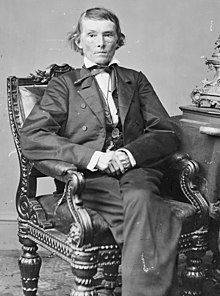
In a surprising turn, longtime Congressional Representative Alexander Stephens was chosen as President for the provisional government of the Confederate States of America to hold office until formal elections could be held. The constitutional convention meeting in Montgomery, Alabama, had been expected to choose Jefferson Davis, who had twice served as senator from Mississippi as well as being the Secretary of War under Franklin Pierce. However, it became clear that Davis would rather serve his country as a general, and so Stephens was chosen, as he was also a moderate, instead of fiery secessionists Howell Cobb and Robert Toombs. While Toombs had called for war almost immediately (his farewell speech to the US Senate had included, "as one man would meet you upon the border with the sword in one hand and the torch in the other"), Stephens was slow to raise arms. Earlier in the convention that elected him, he campaigned against secession and detailed the American political system with the Republicans holding a minority in Congress and, even if any laws were to be passed around them, the Supreme Court would continue the status quo, as it had in its 7-2 decision in the Dred Scott case four years before.

Georgia native Stephens had always seemed to best understand the mechanics behind the obvious. Despite growing up poor, benefactors had paid for his education, and he passed the Georgia bar at age 24 after graduating at the top of his class. He was routinely ill, even from childhood, but he was a masterful lawyer who, in his 34 years of practice, never had a client charged with a capital crime meet the death penalty. As he became wealthy and established himself with land and slaves, he returned the generosity he had been given by opening his own home to the homeless and paying for more than one hundred students' educations. Even though he was constantly thin from illness, he earned the nickname "The Strongest Man in the South" from his intelligence and craftiness. Stephens went on to Washington as a Representative as a Whig, Unionist, and finally Democrat. His self-described "greatest glory of my life" would be the passage of the Kansas-Nebraska Act in the House by use of rare point of order, thus bringing popular sovereignty to the territory despite the Missouri Compromise limiting slavery to the South.

After the election of 1860 gave Lincoln the White House, Stephens was sent as a delegate to the convention judging the question of secession. Stephens opposed it, arguing that the South bide its time, but was eventually convinced on the grounds of the North not abiding by the Fugitive Slave Law. As one of his first acts in the presidency, Stephens gave his impromptu "Cornerstone Speech" in Savannah describing the new constitution the convention had written, clarifying its differences from that of the United States. While Lincoln referred to the famous line "all men are created equal" in the Declaration of Independence, Stephens replied, "Our new Government is founded upon exactly the opposite ideas” and called slavery a “natural and moral condition." Stephens also outlined economic independence rather than the Federalism of the North, stating, “If Charleston harbor needs improvement, let the commerce of Charleston bear the burden. If the mouth of the Savannah river has to be cleared out, let the sea-going navigation which is benefited by it, bear the burden.”

Finally, Stephens also noted the significance of Fort Sumter, which would prove the first issue of his presidency. Lincoln, only a month into his own presidency, ordered a relief expedition after skillfully dodging any agreements with the South that would have served as a political recognition of the CSA instead of considering it a rogue government. He notified South Carolina’s Governor Pickens of a delivery of “provisions only”, and Pickens turned to General P.G.T. Beauregard, who relayed the information to Stephens. While his cabinet (interestingly, though, not Secretary of State Robert Toombs) called for an attack to clear out the fort, Stephens ordered the CSA to stand down, and Lincoln achieved his goal of feeding Sumter. Stephens was declared “yellow” by many, but the political tide turned back to favor the South a month later when the heavy-handed actions of Union General Lyon in the West attacked parading Missouri State Militia called up by secessionist Governor Claiborne "Fox" Jackson.

While not enough to swing Virginia’s support to the South, Yankees were increasingly perceived as brutes, tarnishing Lincoln’s image, who sent additional troops to Missouri and Kansas, resulting in secession by Arkansas. Guerilla fighting continued, but it was never enough to make a full move against the South without seeming the aggressor. The quasi-war dragged on for years until Lincoln lost his bid at reelection in 1864, and President Horace Greeley was elected by Copperheads to end the war.

Stephens retired the presidency after his single term (as per the CSA constitution) in 1867 as a hero who had “waited out the Union” and became governor of Georgia, confirming the supremacy of the states. The Confederacy continued on its states’ rights, later seeing the secession of the Republic of Texas in 1874 (who later had a number of military disputes with both the US and CS as the West became settled). Attempts were made to add Caribbean and Middle American states to the Confederacy, but each turned into either military blunders or economic burdens. By the 1890s, the South was seen as economically and culturally stunted compared to the great wealth and strength of the industrialized North. A movement began around the turn of the century to rejoin the Union, but many on both sides would refuse. President Theodore Roosevelt’s 1907 Goodwill Tour proved for naught after it brought international attention to the deplorable poverty of newly freed Africans and entrenched the crippling conservatism of the nation.


--

In reality, though Davis wanted to serve as a general, he willingly took the office of president when he was unanimously chosen to do so. CSA Vice-President Stephens disagreed with Davis on many of his policies and constantly pressed for attempts at peace, which was impossible once the war had begun.

Friday, January 13, 2012

February 8, 1807 – Napoleon Defeated at Eylau

At the height of the War of the Fourth Coalition against Napoleon, France came under defeat by Russia because of a simple failed charge. Napoleon had already defeated three such coalitions, finishing off Austria in 1805 at Austerlitz and forcing them to become his ally. Prussia stood to take Austria’s place among the allies against him, and Napoleon swiftly overran the Prussians, taking their capital Berlin in October of 1806. From there he marched eastward against the Russians, the final European power on the Continent to stand against him. He pursued their fleeing army until they stood to fight outside the East Prussian town of Preußisch Eylau.

The battle began in the afternoon of February 7 with unproductive French assaults on the heights and spilled over into the town itself as both sides attempted to take it, arguably for the simple reason that the soldiers were trying to find warm shelter from the snowstorm. The fighting died off at 10 PM when the Russians began a retreat and waiting for the French to attack again the next morning. The French obliged with Napoleon giving an attack from the center and his general Augereau, gravely ill at the time, advancing from the left just as a blizzard began. Artillery was blinded; the French firing on Augereau’s men and the Russians waiting until they fired point-blank as the French came out of the snow. Augereau fell back, and Napoleon was caught too far advanced as Russians pursued the retreating French. He had used the town church’s tower as a command post, and that is where the Russians caught him, taking him prisoner before the Imperial Guard could arrive.

The French army frantically assaulted the Russian lines to get Napoleon back, but the Russians had spirited him away from the battle while chaos reigned among the French. The battle crumbled into defeat, although the counterattack by the remaining Prussians under L’Estocq was repelled by the French cavalry under Marshal Ney, saving the French from a route. Ney united the French and organized them to wait for the terms from Russian General Bennigsen. Bennigsen, who held the enviable position as the first to have suffered Napoleon a reversal at the Battle of Pultusk the previous December, determined to hold Napoleon under strict guard and await the arrival of Tsar Alexander, commenting to his secretary that he had no idea what to do having caught the man known as "the oppressor of Europe and the disturber of the world's peace.”

Alexander soon arrived in Tilsit, where Napoleon was imprisoned in luxury. The younger Tsar had come to the throne at approximately the same time as Napoleon, and the two found that they shared similar ideals about autocracy as well as upholding the freedoms of the people. Alexander held great respect for Napoleon, though he had determined him to be “the most famous tyrant the world has produced" after the execution of the duc d'Enghien, which had prompted Alexander to join Britain on what he believed to be a mission from God. After Austerlitz, Napoleon had attempted to reopen diplomatic relations with Alexander, but the Tsar had waited until he suddenly had the upper hand. The two conferred terms of surrender, and, during the discussion, Napoleon astonished Alexander with visions of a world reined over by a French-Russian alliance. The talks concluded with Alexander exclaiming, “What is Europe? Where is it, if it is not you and we?”

The British demanded Napoleon be handed to them or at the very least dethroned, but Alexander understood that, with the tyrant of Europe in his possession, he was the new authority. A treaty was produced in July that protected Austria from being broken up and assured military assistance in the colonial dreams of an “Empires of the East and West” in which Napoleon controlled the Danubian states west, Russia held sway over Finland, and the two worked together to drive out the Ottomans and eventually conquer India. Alexander further drew up terms to end the Fourth Coalition, leaving Britain alone in its refusal to make peace with Napoleon.

Defeated in the east, Napoleon begrudgingly returned to Paris to find Spain in flames as its people rose up against his attempts to conquer the Peninsula. The British embarked a vicious guerilla war, and it was more than enough to occupy Napoleon’s time defeating it finally in 1813. War-weary Britain was at last forced to make peace with France and focus on the second war with its lost colonies in America. Afterward, Napoleon made good on his word to the idealistic Alexander (whom he called a “shifty Byzantine”), joining in the Russo-Turkish War with a Grande Armée of 450,000 soldiers. He rode through the Balkans, liberating the Serbs, Bulgars, and Greeks who had been awaiting arrival of Russian troops that had moved only as far as Bucharest. Although the campaign succeeded in besieging Constantinople, malaria and other diseases devastated the French troops, and Napoleon eventually retreated.

Europe came under peace for a time until a wave of revolution struck in the 1820s following Napoleon’s death in 1821. Spain and Portugal again rebelled, as did Rome, the Piedmontese, German students, and the Kingdoms of Naples and Sicily. Revolutionary sentiments struck Ireland with the attempts of Catholic Emancipation, but Britain held fast while the French Empire under the ten-year-old Napoleon II shattered. Russia, who had been the diplomatic giant of Europe for over a decade, also came into trouble with the Decemberists seizing power after the unclear succession upon the death of Alexander and a revolt of the Polish in the 1830s. Europe remained without a clear superpower until the gradual rise of Britain with its industrial empire eventually controlling nearly a fifth of the surface of the Earth.


--

In reality, the Imperial Guard arrived in time to drive away the Russian forces, which were held off by Napoleon’s staff. Thanks to one of the largest cavalry charges in history, the Battle of Eylau was a French victory, but without any great gain. Napoleon became master of Europe after the thorough defeat of the Russian army at Friedland, but his Continental System of economics meant to starve out the English drove away his allies and led to his disastrous invasion of Russia in 1812.

Site Meter