Showing posts with label secede. Show all posts

Sunday, November 25, 2018

January 15, 2013 – White House Inadvertently Spurs Secessionists


Later blaming harsh words on a bout of food poisoning, Director of the White House Office of Public Engagement Jon Carson addressed a series of petitions asking for an executive order to allow secession with a response that the petitioners had “no idea how the nation worked.” What was meant as an appeal to the legal system (Congress would have to grant secession, not the president) was instead taken as an admission of rigged government by the secessionists, who spun Carson’s words into a campaign that rattled and ultimately split the nation.

Image courtesy Wikimedia Commons
The petitions arose on whitehouse.gov’s We the People online petitioning system following the 2012 elections. Those upset by Obama’s reelection joined ranks with those already disgruntled by federal government to sign petitions asking for the right to secede. The notion was ridiculous to many, citing the obvious example of the Civil War, but the petitions actually gained momentum despite not having legal status as actual requests from states themselves. By January, eight states had petitions above the required 25,000 names to affirm a response from the White House. The petition from Texas garnered signatures into the six figures.

With the secessionists dominating the news cycle in objections to the White House’s response, more and more politicians made their feelings known, such as Texas legislature Speaker of the House Joe Straus III noting, “Our economy is so vast and diverse that if Texas were its own country — and no, don’t worry, that isn’t something we’re going to do this session — but if we were, we’d be the 14th-largest economy in the world.” Texas Governor Rick Perry admitted sharing frustrations with federal government, while Tennessee governor Bill Haslam stated, “I don’t think that’s a valid option for Tennessee.”

Even though Tennessee and others refused to go forward, proposals began to materialize from five states: Texas, Louisiana, Georgia, Alabama, and Florida. The issue divided the Republican-dominated House of Representatives as the party would lose their control with so many departing Republican seats. Believing the bill would be killed in the Democratic Senate, however, the House passed the Independence for FGALT Bill. The plans behind closed doors were said to blame Democrats for tyranny and build momentum toward shifting control in 2014 elections. To their surprise, along with the rest of the nation, the Senate passed the bill.

Many reasons were cited for voting for IFGALT, such as many just wanting to say “good riddance” to that whole voting block, but the primary voice was economics. Other than Texas, the states were a drain on federal spending, sending more tax dollars into the states than were procured out of them. After major efforts in balancing the budget over the past four years, a single bill would create a federal budget surplus, the first since 2001. The bill passed with more than the numbers needed to override presidential veto. President Obama, who said he would have refused to sign the bill into law if fewer senators had voted for it, stated that the hard actions of the day would make a stronger union for those who remained, though he feared for his legacy.

The transition toward independence for the states was surprisingly smooth as each formed new constitutions and representatives joined NAFTA to ensure continuance of open trade. The Republic of Texas and the Republic of Louisiana maintained independence while Alabama, Georgia, and Florida joined together in a new nation: the Allied States of America. The name prompted a lawsuit from CBS Paramount as it had been used in their 2006 television series Jericho. The suit was quietly settled in the end, but it did establish precedent between the nations to serve later legal issues.

A sizeable migration followed the 2013 departures of the five states with many citizens dedicated to the ideals of independence moving into the new nations while others departed to maintain their United States citizenship. Texas grew in population while the ASA remained steady; Louisiana, however, suffered as a major economic collapse that caused people to pack up in search of work. Politics became radicalized in Louisiana with many calling for a return to the Union. The Hillary Clinton White House, which handily won the 2016 election, dispatched aid but could do little more without congressional approval. The Republic of Texas, too, refused Louisiana’s request to join as a partner state despite close ties to its oil industry.


Other secessionist movements broke out across the nation, although most went silent seeing the collapse of Louisiana, shocking legal changes in the Republic of Texas, and the ASA’s struggles to find international relations distinct from the US. South Carolina had several factions calling for independence, but they could not come to agreement on how the new nation would be governed afterward. The state of Oklahoma campaigned to break in two, with the southern and western parts planning to join the Republic of Texas while the northeast sought to maintain US ties. East Oregon did succeed in splitting away from the more liberal coast, though it did not leave the Union. Several Native American groups announced their own campaigns for independence; however, none were recognized on a large enough scale to win congressional approval.


--

In reality, the White House’s Jon Carson wrote that the framers of the Constitution “enshrined in that document the right to change our national government through the power of the ballot — a right that generations of Americans have fought to secure for all. But they did not provide a right to walk away from it.”

Wednesday, January 11, 2012

February 1, 1861 – Texas Delivers Ordinance of Grievances

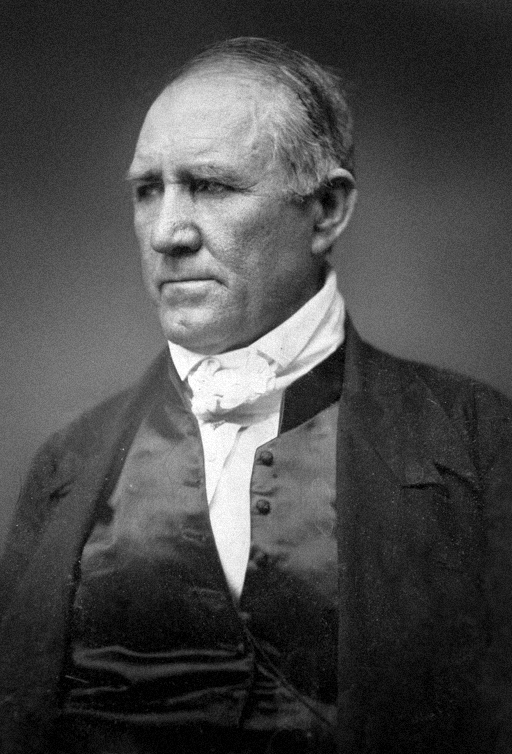
After a half-shouted speech by Governor Sam Houston on January 21, the Texas state legislature begrudgingly determined that they would not be able to rally enough support to pass an act of secession over his veto. In his speech, Houston called the election of Republican Abraham Lincoln “unfortunate” but not grounds enough for the "rash action" of seceding from the Union that Texas had come into only fifteen years before. Responding to increasing tension, Houston prophesied,

"Let me tell you what is coming. After the sacrifice of countless millions of treasure and hundreds of thousands of lives, you may win Southern independence if God be not against you, but I doubt it. I tell you that, while I believe with you in the doctrine of states rights, the North is determined to preserve this Union. They are not a fiery, impulsive people as you are, for they live in colder climates. But when they begin to move in a given direction, they move with the steady momentum and perseverance of a mighty avalanche; and what I fear is, they will overwhelm the South."

The special convention which had been expected by organizers to vote overwhelmingly for secession was hamstrung by the governor’s continued Unionist pressure, but the legislature vowed to review the decision of the delegates. Houston practically hounded the convention, drumming up support for the Union and noting that the United States of America had attempted to make peace with King George before its Declaration of Independence. Many Texans supported secession for a number of reasons, but others, especially the newly settled German population, respected the Union and wished to hold to it. Finally, with only a slight majority firmly wishing to secede, the convention voted to give Washington a chance to address the grievances of Texas, mainly the failures of protection from Indian attacks, raids across the borders for the theft of property including slaves, and an assurance of white superiority. Most of all, the ordinance called for support of states’ rights, which was outlined in the Tenth Amendment and final point in the Bill of Rights, “The powers not delegated to the United States by the Constitution, nor prohibited by it to the States, are reserved to the States respectively, or to the people.” Texas would remain neutral in the matter of secession for a time. New-to-office President Lincoln offered to send 50,000 Union troops to aid Governor Houston in quelling any rebel insurrection, but the elder politician declined and counseled Lincoln to be slow to call for punishment against his fiery Southern brothers.

A Texas state referendum on February 23 confirmed the list of grievances, which gave great credence to the Peace Conference of 1861 being held in Washington. Derisively dubbed the “Old Gentlemen’s Convention” because so many of its participants were former statesmen, including former president John Tyler, the conference met to discuss the necessities to avoid a War Between the States. Many of the points to come out of the conference were similar to the Crittenden Compromise, which had failed in Congress the month before, but the sentiment for peaceful compromise was enough to spur the later convention in Virginia to call for neutrality rather than secession after Lincoln’s meeting with Virginian delegates assured them that the firing upon Fort Sumter in South Carolina would be a black mark for the Confederacy, not Union. Virginia led many border states and joined with Texas in a sense of neutrality as the Federal government worked to resolve a compromise. Meanwhile, the Cotton South descended into the long and grinding Civil War from Tennessee to Florida and Louisiana. Paramilitary forces conducted bloody guerilla combat in neutral states such as Missouri, North Carolina, Arkansas, and, especially, Texas, where Houston worked feverishly until his death in 1863 to calm the massacres of German immigrants and slave rebellions. On a positive end, the “galvanized Yanks” (Confederate POWs who volunteered to serve in forts in the West) solved the issues of Indian raids with a seeming surplus of willing soldiers.

Lincoln narrowly lost the election of 1864 to Democrat George McClellan, who began the process of Reconstruction for the Cotton South after the surrender of P.G.T. Beauregard. While the slaves of rebellious states had been freed by Lincoln’s Emancipation Proclamation (believed to have been what cost him the election in the border states), slavery would continue in the United States until advances by the Industrial Revolution, growing labor movements, and international pressure caused it to disappear by the late 1880s, with Texas to be the last state in the Union to declare it illegal in 1891.


--

In reality, Houston was largely neutral, claiming that if Texas were to secede, it should at most revert to its independent status as a republic. The Texas legislature pledged to uphold whatever decision came of the convention, which voted 166 to 7 for secession. Houston refused to acknowledge Texas’ shift to the Confederacy and was drummed out of office. After being hounded by crowds calling for reasons behind his lack of support for the Confederacy, Houston made his prophetic speech on April 19, just days after the Battle of Fort Sumter, Lincoln’s call for 75.000 volunteers to retake federal property by force, and Virginia’s resulting secession. The war would end with the cost of over 600,000 lives and an 1879-estimated $6,190,000,000.

Site Meter