Showing posts with label texas. Show all posts

Monday, February 13, 2012

February 28, 1844 – President Tyler Killed in Accident

In an accidental explosion that caused many superstitious Americans to believe the office of President had become cursed, John Tyler was killed less than three years after the death of William Henry Harrison due to illness. During a party aboard the USS Princeton (the first screw stream ship in the Navy), some 400 guests were treated to displays of modern technology, including the 12-inch cannon known as the Peacemaker. It had been fired twice successfully over co-designer John Ericsson’s warning that the gun was not ready. The third firing, a tribute as they passed Washington’s home at Mount Vernon, caused the cannon to explode. Tyler, who was eager to impress young Julia Gardiner of his virility despite being a 54-year-old widower, had hopped up the ladder onto the deck, just in time to catch shrapnel to his head. Julia’s father, New York businessman David Gardiner, and Secretary of State Abel P. Upshur were also among the casualties in the worst peacetime explosion to that point.

Mourning for the disaster included curiosity at another unprecedented occurrence: the ascension of a President pro tempore of the Senate to the office of President of the United States. After the death of Harrison, Tyler had been the first Vice-President to assume the office, though many such as John Quincy Adams and Henry Clay thought that he was meant to fulfill a role rather than be a wholly new president. Despite being nicknamed “His Accidency,” Tyler went about resigning from the Whig political party and launching his own economic policy. He vetoed bills for a National Bank repeatedly, causing his cabinet to resign in disgust. While Tyler had a few supporters, such as Daniel Webster, he fought with the Whigs so much that they initiated the first impeachment hearings against him, though it would ultimately be voted down. Tyler’s greatest separation from the Whigs, however, was the potential annexation of the Republic of Texas. The matter had been raised before in 1837 with a Texas proposal that was declined by President Martin van Buren. Tyler had Secretary of State Upshur begin work on a treaty, but it remained incomplete at the time of their deaths. What Tyler had planned to be the great issue of the election of 1844 was a political afterthought.

As President pro tempore of the Senate, North Carolina Whig Willie Person Mangum became the eleventh president of the United States. Mangum was something of a reversal of Tyler, having left the Democratic Party in 1834 after declaring himself a Whig. He left politics and reinvented his career, working as part of a failed Whig plot to nominate four men for president to block out Martin van Buren in 1836 before returning triumphantly to the Senate in 1840. When New Jersey Senator Samuel L. Southard resigned from the Senate in 1842 due to his failing health, Mangum came onto the track that would accidentally make him president. Where Tyler had broken with the Whigs, Mangum worked alongside party leader Henry Clay to institute as much of his American System as possible with the Whig majority in the Senate, though the Democrats controlled the House and resisted several proposed tariffs. A new National Bank was established to capitalize on the rebounding economy after the Panic of 1837, and numerous transportation improvement projects began. These projects would be the main issue of the election of 1844 when Henry Clay narrowly defeated Martin van Buren with the promise of extending the National Road to Oregon and clarifying American control there rather than joint-rule with Britain.

The issue of annexation arose again after the California Republic won its independence from Mexico in 1846 under men such as Mexican general Mariano Guadalupe Vallejo and John C. Frémont. The republic proposed annexation by the United States, but Henry Clay politely declined. Such an annexation might have sparked war with Mexico, who was already upset over American soldiers unofficially participating in the rebellion, seemingly a mirror to Texas. The move is believed to have cost Clay and the Whigs the election of 1848 that gave the White House to Democrat Lewis Cass despite the efforts of the Free Soil Party under Martin van Buren to limit slavery in the territories.

Settlers poured westward on improved roads (including many government-funded rail projects), giving rebirth to the question of slavery in federal territories. Popular sovereignty became the strategy for Kansas and Nebraska Territories, which turned into guerilla warfare as men committed to both sides fought to protect interests. Alongside this issue came the discovery of gold in the newly founded California Republic, which spawned a renewed call for Manifest Destiny. With the approval of Britain, the United States annexed California, prompting Mexico to declare war. The Republic of Texas came as an ally, winning many victories and expanding its territory in the resulting treaty in 1854, which also brought the Republic of Sonora to the US. Some suggested annexing Texas as well, but no formal proposal was made as abolitionists saw it as an extension of slavery and the general attitude of Texas (which had been independent for over a generation) felt best to stay independent.

In 1860, the election of Republican Abraham Lincoln caused the South to declare its independence, inviting Texas to join in a confederation, which it considered before declining and remaining neutral. The war was finished by 1864, and the question of slavery was answered in the United States, though it remained legal in Texas until the 1880s. Texas and the US continued diplomatic relations despite being on opposing sides of the French intervention in Mexico. Suggestions for annexation arose again in the 1890s with a new wave of expansionism, but conservative Texans valued independence while local businesses hoped to hold onto the growing oil industry there. Over the next century, Texans would continue to be friendly with Americans, even joining the Allies in the Second World War, though its production-based economy was especially crippled by the Great Depression. Today it stands as a close trade-partner with the United States, but still fiercely independent.


--

In reality, Tyler was only halfway up the ladder. After Usher’s death, he instructed John C. Calhoun as the new Secretary of State to complete the treaty for the annexation of Texas. It failed in Congress, but caught national attention alongside the issue of slavery, which catapulted it to a key point in the platform of James K. Polk in his election in 1844. Tyler went on to marry Julia Gardner, and they had seven children, in addition to eight he had with his first wife.

Wednesday, January 11, 2012

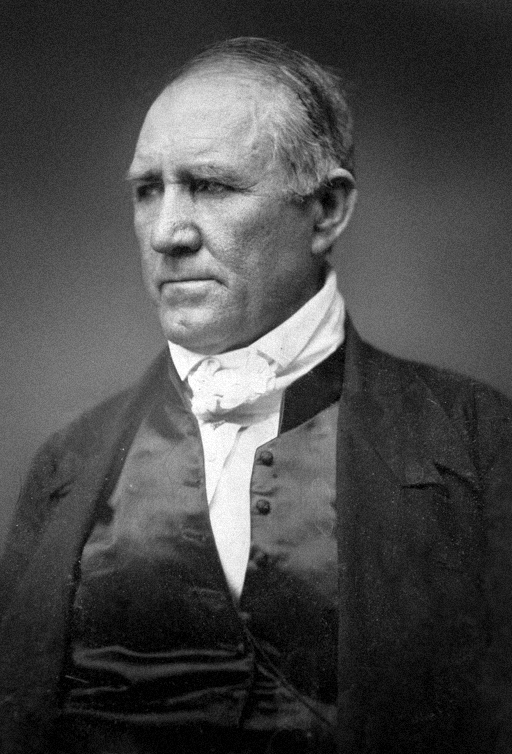
February 1, 1861 – Texas Delivers Ordinance of Grievances

After a half-shouted speech by Governor Sam Houston on January 21, the Texas state legislature begrudgingly determined that they would not be able to rally enough support to pass an act of secession over his veto. In his speech, Houston called the election of Republican Abraham Lincoln “unfortunate” but not grounds enough for the "rash action" of seceding from the Union that Texas had come into only fifteen years before. Responding to increasing tension, Houston prophesied,

"Let me tell you what is coming. After the sacrifice of countless millions of treasure and hundreds of thousands of lives, you may win Southern independence if God be not against you, but I doubt it. I tell you that, while I believe with you in the doctrine of states rights, the North is determined to preserve this Union. They are not a fiery, impulsive people as you are, for they live in colder climates. But when they begin to move in a given direction, they move with the steady momentum and perseverance of a mighty avalanche; and what I fear is, they will overwhelm the South."

The special convention which had been expected by organizers to vote overwhelmingly for secession was hamstrung by the governor’s continued Unionist pressure, but the legislature vowed to review the decision of the delegates. Houston practically hounded the convention, drumming up support for the Union and noting that the United States of America had attempted to make peace with King George before its Declaration of Independence. Many Texans supported secession for a number of reasons, but others, especially the newly settled German population, respected the Union and wished to hold to it. Finally, with only a slight majority firmly wishing to secede, the convention voted to give Washington a chance to address the grievances of Texas, mainly the failures of protection from Indian attacks, raids across the borders for the theft of property including slaves, and an assurance of white superiority. Most of all, the ordinance called for support of states’ rights, which was outlined in the Tenth Amendment and final point in the Bill of Rights, “The powers not delegated to the United States by the Constitution, nor prohibited by it to the States, are reserved to the States respectively, or to the people.” Texas would remain neutral in the matter of secession for a time. New-to-office President Lincoln offered to send 50,000 Union troops to aid Governor Houston in quelling any rebel insurrection, but the elder politician declined and counseled Lincoln to be slow to call for punishment against his fiery Southern brothers.

A Texas state referendum on February 23 confirmed the list of grievances, which gave great credence to the Peace Conference of 1861 being held in Washington. Derisively dubbed the “Old Gentlemen’s Convention” because so many of its participants were former statesmen, including former president John Tyler, the conference met to discuss the necessities to avoid a War Between the States. Many of the points to come out of the conference were similar to the Crittenden Compromise, which had failed in Congress the month before, but the sentiment for peaceful compromise was enough to spur the later convention in Virginia to call for neutrality rather than secession after Lincoln’s meeting with Virginian delegates assured them that the firing upon Fort Sumter in South Carolina would be a black mark for the Confederacy, not Union. Virginia led many border states and joined with Texas in a sense of neutrality as the Federal government worked to resolve a compromise. Meanwhile, the Cotton South descended into the long and grinding Civil War from Tennessee to Florida and Louisiana. Paramilitary forces conducted bloody guerilla combat in neutral states such as Missouri, North Carolina, Arkansas, and, especially, Texas, where Houston worked feverishly until his death in 1863 to calm the massacres of German immigrants and slave rebellions. On a positive end, the “galvanized Yanks” (Confederate POWs who volunteered to serve in forts in the West) solved the issues of Indian raids with a seeming surplus of willing soldiers.

Lincoln narrowly lost the election of 1864 to Democrat George McClellan, who began the process of Reconstruction for the Cotton South after the surrender of P.G.T. Beauregard. While the slaves of rebellious states had been freed by Lincoln’s Emancipation Proclamation (believed to have been what cost him the election in the border states), slavery would continue in the United States until advances by the Industrial Revolution, growing labor movements, and international pressure caused it to disappear by the late 1880s, with Texas to be the last state in the Union to declare it illegal in 1891.


--

In reality, Houston was largely neutral, claiming that if Texas were to secede, it should at most revert to its independent status as a republic. The Texas legislature pledged to uphold whatever decision came of the convention, which voted 166 to 7 for secession. Houston refused to acknowledge Texas’ shift to the Confederacy and was drummed out of office. After being hounded by crowds calling for reasons behind his lack of support for the Confederacy, Houston made his prophetic speech on April 19, just days after the Battle of Fort Sumter, Lincoln’s call for 75.000 volunteers to retake federal property by force, and Virginia’s resulting secession. The war would end with the cost of over 600,000 lives and an 1879-estimated $6,190,000,000.

Site Meter